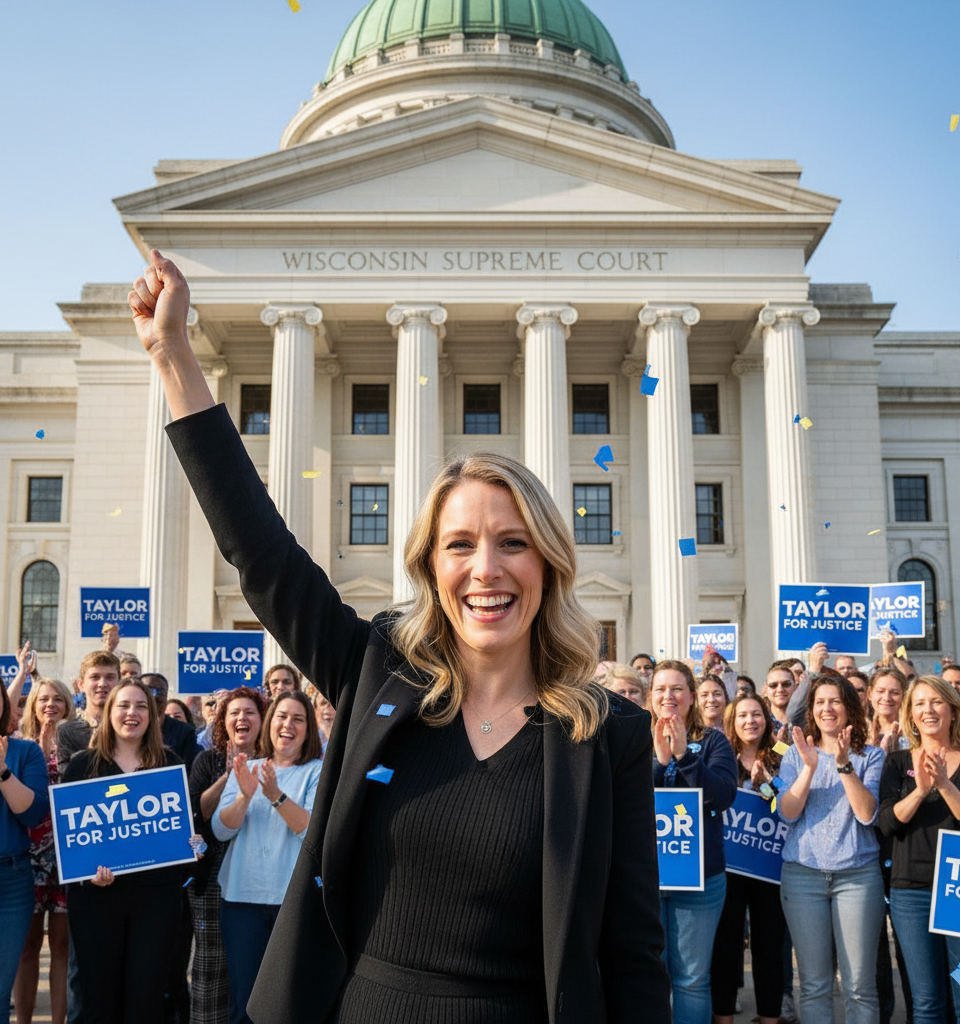
Liberal Judge Chris Taylor has decisively won her bid for a seat on the Wisconsin Supreme Court, a victory that significantly entrenches a liberal majority on the state’s highest judicial body. The election, held just last week, saw Taylor overcome her conservative challenger in a contest that, despite its profound impact on Wisconsin's legal and political future, failed to garner the widespread national attention often associated with such highly-contested statewide judicial races in the Badger State.
A Critical Shift in Judicial Power
This triumph for Judge Taylor represents more than just a single seat change; it fundamentally alters the ideological balance of the Wisconsin Supreme Court. With Taylor’s addition, liberals now command a robust 5-2 majority, a stark contrast to previous years where the court was often finely balanced or held by a narrow conservative advantage. Historically, Wisconsin Supreme Court races have been bellwethers for national political sentiment and have drawn substantial out-of-state funding and media scrutiny, particularly in contentious elections involving issues like abortion rights, voting maps, and union powers. The muted national response to this particular race, however, belies its deep significance for Wisconsin's legislative and legal future.
Election Details and Key Dynamics
Judge Taylor, a seasoned jurist known for her progressive stances on civil liberties and environmental protection, campaigned on a platform emphasizing judicial independence and the protection of democratic norms. While specific vote percentages are still being finalized, preliminary results indicate a comfortable margin of victory, reflecting strong support in urban and suburban areas and a successful mobilization of the Democratic base. Her opponent, a more conservative jurist, struggled to gain traction amidst a less politically charged environment compared to previous election cycles, which saw turnout rates for Supreme Court races occasionally surpassing 30% of eligible voters.
Broad Implications for Wisconsin's Legal Landscape
The newly solidified liberal majority is poised to significantly influence critical legal battles in Wisconsin. Forthcoming cases are expected to touch upon highly contentious issues, including the state’s restrictive abortion laws, the redrawing of congressional and legislative maps, environmental regulations, and worker's rights. The court's previous conservative leaning had often sided with Republican-led legislative efforts, leading to policies that have faced strong opposition from progressive groups. With Taylor's ascension, advocates on the left anticipate a more favorable judicial review of progressive legislation and challenges to existing conservative policies.
Expert Analysis on Political Ramifications
Political analysts are quick to highlight the long-term implications of this shift. Dr. Sarah Jenkins, a political science professor at the University of Wisconsin-Madison, noted, “This isn't just about one judge; it’s about a pivot in the court's direction that could redefine the legal framework for critical issues for the next decade. We will likely see a cascade of cases brought forward testing the boundaries of this new majority.” She added that the election's outcome showcases the persistent, albeit underreported, efforts of liberal groups to influence state-level judiciaries, a strategy that has proven highly effective in Wisconsin.
What Lies Ahead: A Reshaping of State Policy
The immediate future will likely see a flurry of legal challenges brought before the now-liberal-controlled Supreme Court. Activist groups and the Democratic Party are expected to capitalize on this judicial alignment to push for policy changes that have long been stymied by conservative courts. This includes potential re-examinations of the state's 1849 abortion ban, challenges to Act 10 (the controversial union-limiting law), and aggressive litigation concerning electoral district boundaries ahead of the 2030 census. The conservative legislative majority in Wisconsin may find its policy agendas increasingly constrained by a more assertive and ideologically aligned judiciary.
Financial and Strategic Efforts
Although national attention was muted, the race still saw significant financial investment from state-level organizations. Reports suggest that combined spending by both campaigns and independent expenditure groups neared $15 million, with a slight edge in liberal-aligned spending. This local investment underscores the strategic importance placed on judicial elections within Wisconsin, irrespective of the broader national spotlight. The successful mobilization of grassroots efforts and targeted local media campaigns proved pivotal in securing Judge Taylor's victory.
A New Era for Wisconsin Judiciary
This election marks the dawn of a new era for the Wisconsin Supreme Court. Judge Chris Taylor’s victory does not just alter the numerical balance; it signals a potential paradigm shift in how the state’s most pressing legal and constitutional questions will be interpreted and resolved. The ramifications of this change will undoubtedly reverberate through state politics, policy, and daily life for all Wisconsinites for years to come, making this seemingly quiet election a profoundly impactful one.