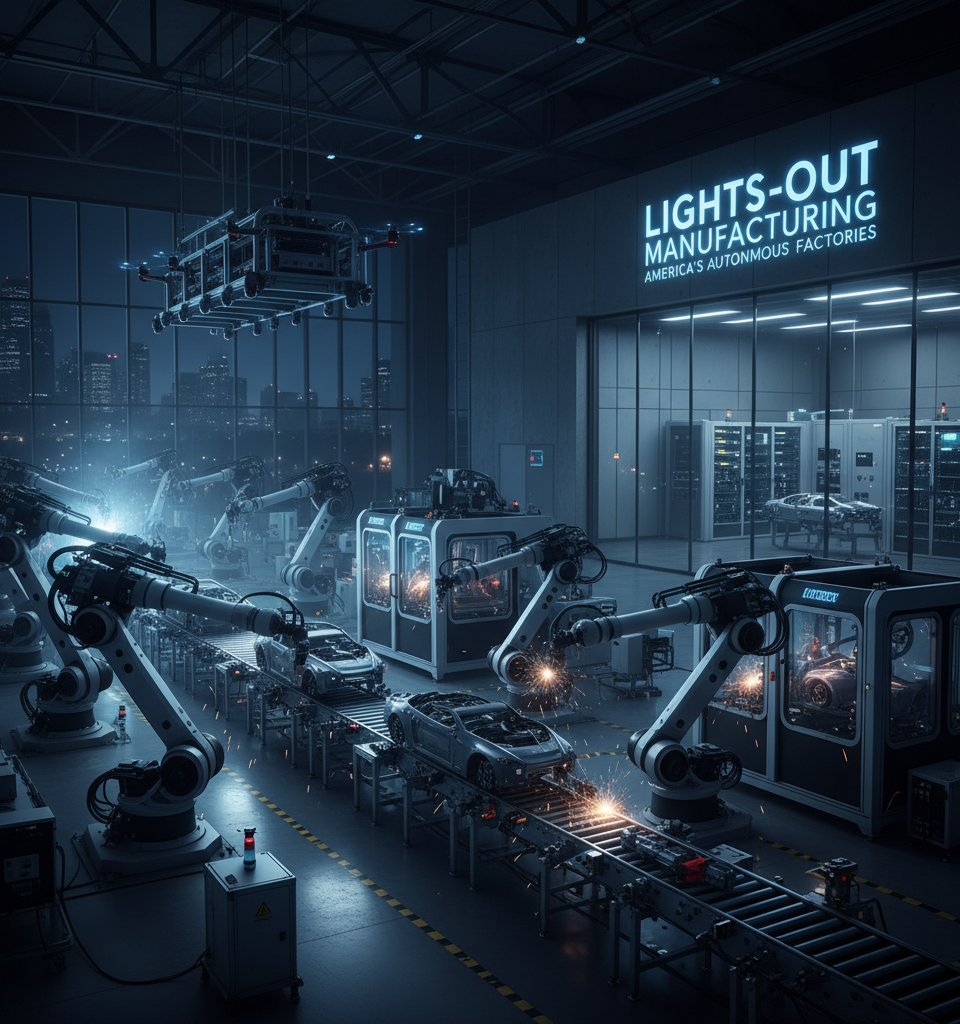
As of June 26, 2026, the global manufacturing landscape is witnessing an accelerating push towards autonomous operations, with a particular focus on the concept of 'lights-out' manufacturing. This advanced model, where factories can operate without human intervention, is drawing considerable attention from industry leaders and policymakers alike, especially as major economic powers re-evaluate their industrial strategies. The United States, facing global competition and a drive for enhanced efficiency, is actively exploring the extent to which its manufacturing sector can embrace and implement these cutting-edge technologies.
The Drive Towards Automation
The allure of lights-out manufacturing stems from its promise of unparalleled efficiency, reduced operational costs, and the potential for continuous production. By minimizing human presence, factories can operate in environments unsuitable or unsafe for workers, reduce energy consumption (hence 'lights-out'), and diminish the risks associated with human error. The strategic importance of adopting such advanced manufacturing paradigms is not lost on leading industrial nations. This shift is not merely about incremental improvements but represents a fundamental transformation in how goods are produced, potentially reshaping global supply chains and economic competitiveness.
China's Aggressive Stance
China has notably embraced the lights-out manufacturing concept with significant national investment and industrial policy support. This 'all-in' approach positions China at the forefront of implementing fully autonomous production facilities. Their strategy often involves substantial government subsidies, research and development initiatives, and the rapid deployment of robotics and AI across various industrial sectors. This aggressive push serves as a benchmark and a competitive motivator for other industrialized nations, including the United States, to accelerate their own automation efforts to maintain or gain a competitive edge in the global market.
American Investment and Progress
In the United States, manufacturers are indeed increasing their investments in robotics, advanced automation systems, and artificial intelligence. This investment surge reflects a clear recognition of the benefits these technologies offer, from boosting productivity and quality to addressing labor shortages and enhancing resilience against supply chain disruptions. However, the path to fully autonomous, lights-out factories in America is complex. While individual companies are making significant strides in automating specific processes or assembly lines, the holistic transformation of entire facilities to operate without human interaction remains a formidable challenge.
Hurdles and Considerations for Full Autonomy
The transition to lights-out manufacturing in the U.S. faces several significant hurdles. These include the substantial capital investment required for state-of-the-art machinery and AI systems, the need for a highly skilled workforce capable of developing, deploying, and maintaining these complex technologies, and regulatory considerations. Furthermore, the integration of diverse automated systems into a seamlessly functioning, fully autonomous enterprise demands sophisticated software and robust cybersecurity measures. The technical complexity and financial commitment mean that while the vision is clear, its comprehensive realization across the American manufacturing base is a long-term endeavor.
The Strategic Imperative
The strategic imperative for American manufacturing to advance towards greater autonomy is multifaceted. It involves not only competitive pressures from nations like China but also a domestic drive for increased innovation, reshoring of production, and creating high-value jobs. The integration of AI and machine learning into manufacturing processes goes beyond mere automation; it enables predictive maintenance, optimized production schedules, and intelligent quality control, leading to a more adaptive and resilient manufacturing ecosystem. Moving forward, the focus will likely remain on strategic, phased implementations rather than immediate, widespread lights-out operations.
Future Outlook
Looking ahead, it is anticipated that American manufacturers will continue to progressively integrate more advanced robotics and AI into their operations, moving closer to, but perhaps not immediately achieving, full lights-out capability across the board. The next few years are expected to see significant advancements in modular automation, collaborative robotics, and AI-driven decision-making systems that will gradually reduce the human footprint on factory floors. The journey towards pervasive lights-out manufacturing in the U.S. will likely be characterized by continued innovation, strategic investments, and a steady evolution of technological capabilities and workforce adaptation rather than a singular, sudden shift.