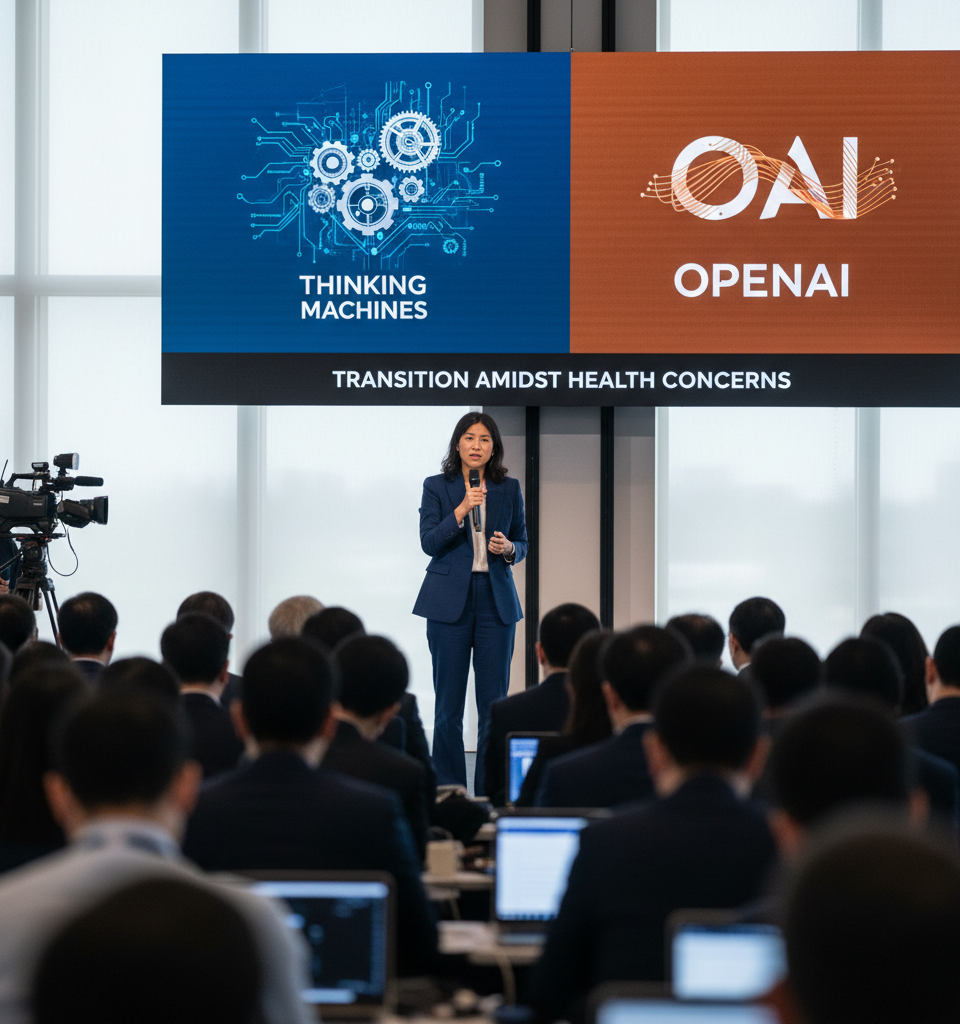
Lilian Weng, a prominent figure in the artificial intelligence landscape, has reportedly exited Thinking Machines, the company she co-founded, attributing her departure to health-related concerns. This significant professional shift has been followed by her integration into OpenAI, a leading AI research and deployment company, where she is known to have previously held the position of Vice President of AI Safety Research.
Context and Background
Thinking Machines, while still in its formative stages, has been viewed as a potentially influential player in the burgeoning AI sector. The departure of a co-founder, especially one with Weng's expertise, can create considerable ripple effects within a startup environment. Her previous tenure as VP of AI Safety Research at OpenAI underscores her deep commitment to ethical and secure AI development, making her return noteworthy. This move highlights the dynamic and often fluid talent landscape within the high-stakes AI industry, where key individuals frequently transition between groundbreaking startups and established giants.
Key Details
Weng's stated reason for leaving Thinking Machines, health issues, provides a personal dimension to what is otherwise a significant professional development. While specific details regarding the nature of these health concerns have not been disclosed, such personal challenges often necessitate difficult career decisions. Her subsequent re-engagement with OpenAI, a company deeply invested in the responsible evolution of AI, aligns with her established professional focus. Her prior role involved spearheading crucial initiatives aimed at mitigating risks and ensuring the ethical deployment of advanced AI systems.
Industry and Market Impact
This transition could have varied implications for both organizations. For Thinking Machines, the exit of a co-founder may prompt a re-evaluation of leadership and strategic direction, particularly if Weng was integral to its initial vision or technological roadmap. For OpenAI, Weng's return, especially given her background in AI safety, could reinforce its commitment to responsible AI development amidst growing global scrutiny. It also signifies the competitive nature of attracting and retaining top-tier talent in the AI domain, where individuals with specialized expertise like Weng are highly sought after. The broader AI market continues to experience rapid evolution, with talent mobility playing a critical role in shaping the industry's future trajectory.
Future Implications
Looking ahead, Weng's role at OpenAI will be closely watched, particularly given the increasing emphasis on AI safety and alignment within the global tech community. Her experience could prove invaluable as OpenAI navigates the complexities of deploying increasingly powerful AI models. Meanwhile, Thinking Machines will need to demonstrate resilience and adaptability in the wake of a co-founder's departure. The coming months will likely reveal how both organizations adjust to these developments and what strategic shifts may emerge as a result. The movement of key personnel such as Weng illustrates the constant flux and strategic realignments characteristic of the rapidly advancing artificial intelligence sector.