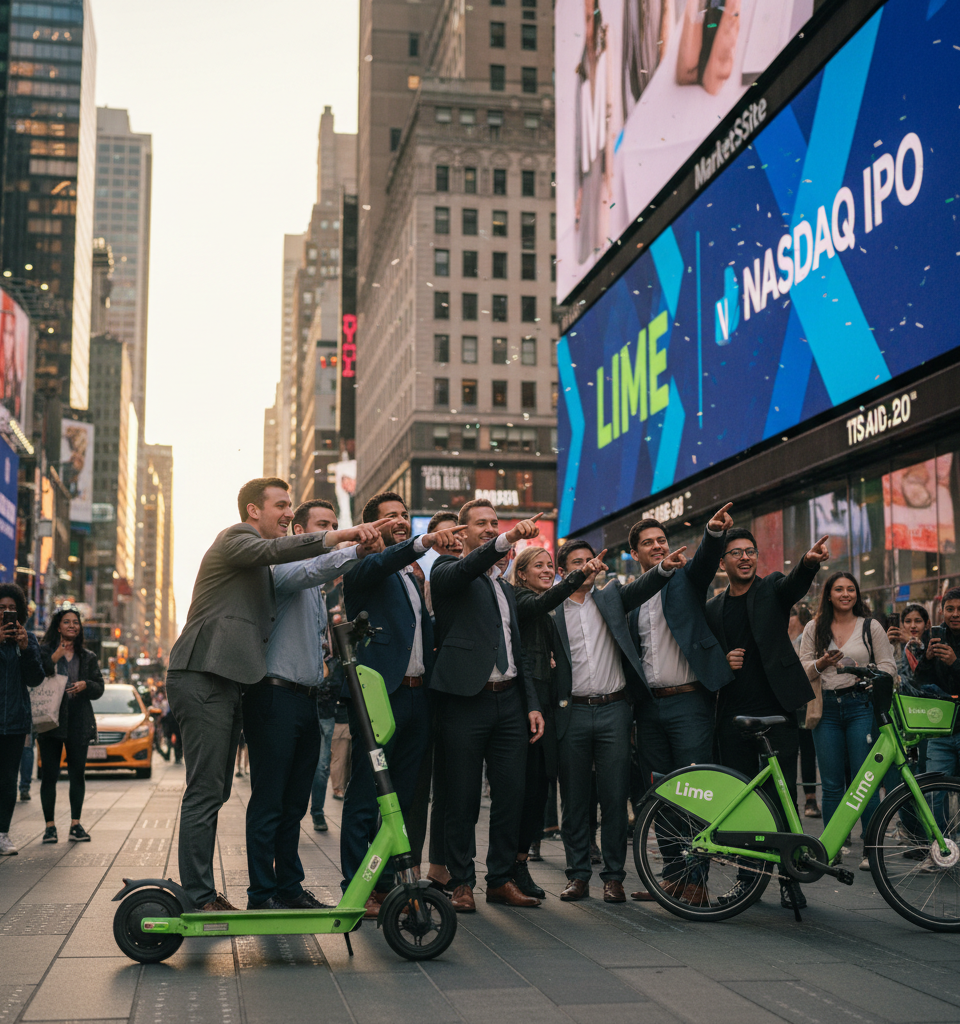
Lime, the globally recognized shared scooter and e-bike operator, has formally initiated its journey to become a publicly traded company, filing for an Initial Public Offering (IPO) on the Nasdaq stock exchange under the ticker symbol LIME. Operating officially as Neutron Holdings, the San Francisco-based firm has appointed Goldman Sachs and JPMorgan as joint book-runners for the offering. This highly anticipated IPO represents a critical juncture for the broader micromobility sector, as Lime's financial performance—including $686 million in 2024 revenue and two consecutive years of positive free cash flow—sets a new benchmark, a financial stability largely unattained by its predecessors and competitors in the space.
Historical Context and Market Significance
The micromobility industry, while offering innovative urban transit solutions, has historically struggled to achieve sustained profitability, often characterized by rapid growth followed by significant capital burn. Companies like Bird and Spin, once high-flying startups, faced considerable financial headwinds and market skepticism, with Bird ultimately delisting from the NYSE. Lime’s decision to go public now, riding on a wave of proven financial performance, aims to break this pattern. The offering comes eight years after the initial boom of shared electric scooters, providing a mature test case for investor confidence in the long-term viability of sustainable urban transport. This IPO could unlock new funding avenues for the entire sector, validating business models focused on operational efficiency and user adoption.
Key Financials and Operational Strengths
Lime’s S-1 filing reveals a robust financial profile that distinguishes it from previous micromobility ventures. The company reported a significant $686 million in revenue for 2024, signaling strong market penetration and user engagement. Crucially, Lime has achieved two consecutive years of positive free cash flow, a remarkable feat in a capital-intensive industry known for its razor-thin margins. This financial discipline is attributed to optimized fleet management, strategic market entries, and a focus on unit economics. The strategic backing from Uber, a long-time investor and partner, also provides a strong foundation, lending credibility and potentially facilitating synergistic opportunities within the broader mobility ecosystem.
Industry and Competitive Landscape Impact
Lime's IPO is poised to send ripples across the micromobility and broader urban mobility landscape. A successful public offering could invigorate investor interest in sustainable transport solutions, potentially opening doors for other agile operators or technology providers in the sector. It serves as a strong validation for subscription models, diversified hardware offerings (scooters and e-bikes), and data-driven operational strategies. Competitors, both established and emerging, will closely watch Lime's stock performance and investor reception, potentially recalibrating their own growth and funding strategies. This move also highlights the increasing integration of micromobility into city planning and public transportation networks, signaling a shift from a novel service to an essential component of urban infrastructure.
Expert Analysis and Future Outlook
Market analysts view Lime’s IPO with cautious optimism. Industry experts like Sarah Chen, a mobility sector analyst at Tech Investments Group, note, "Lime's consistent free cash flow generation is a game-changer. It demonstrates that micromobility can be not just innovative, but also profitable and sustainable.
" Others point to the company's strong brand recognition and expansive global footprint as key advantages. The challenge, however, will be maintaining growth momentum while navigating regulatory complexities in diverse urban environments and fending off competitive pressures. Investors will scrutinize Lime's ability to scale profitability, innovate its hardware, and expand into new markets efficiently.
The IPO will be a litmus test for whether the market values recurring revenue and operational efficiency over sheer growth at all costs.
What Lies Ahead
Following the filing, the IPO process will involve a roadshow where Lime's management team will present their business case to institutional investors. The success of the offering will depend on investor demand, market conditions, and the perceived valuation. Post-IPO, Lime will face increased public scrutiny and quarterly reporting requirements, demanding transparency and consistent performance. The capital raised will likely be deployed to further expand its fleet, invest in technology, potentially explore new vehicle types or services, and strengthen its global operational presence. Its performance could significantly influence the appetite for future public offerings from other private mobility companies, marking a new chapter for the global micromobility industry.