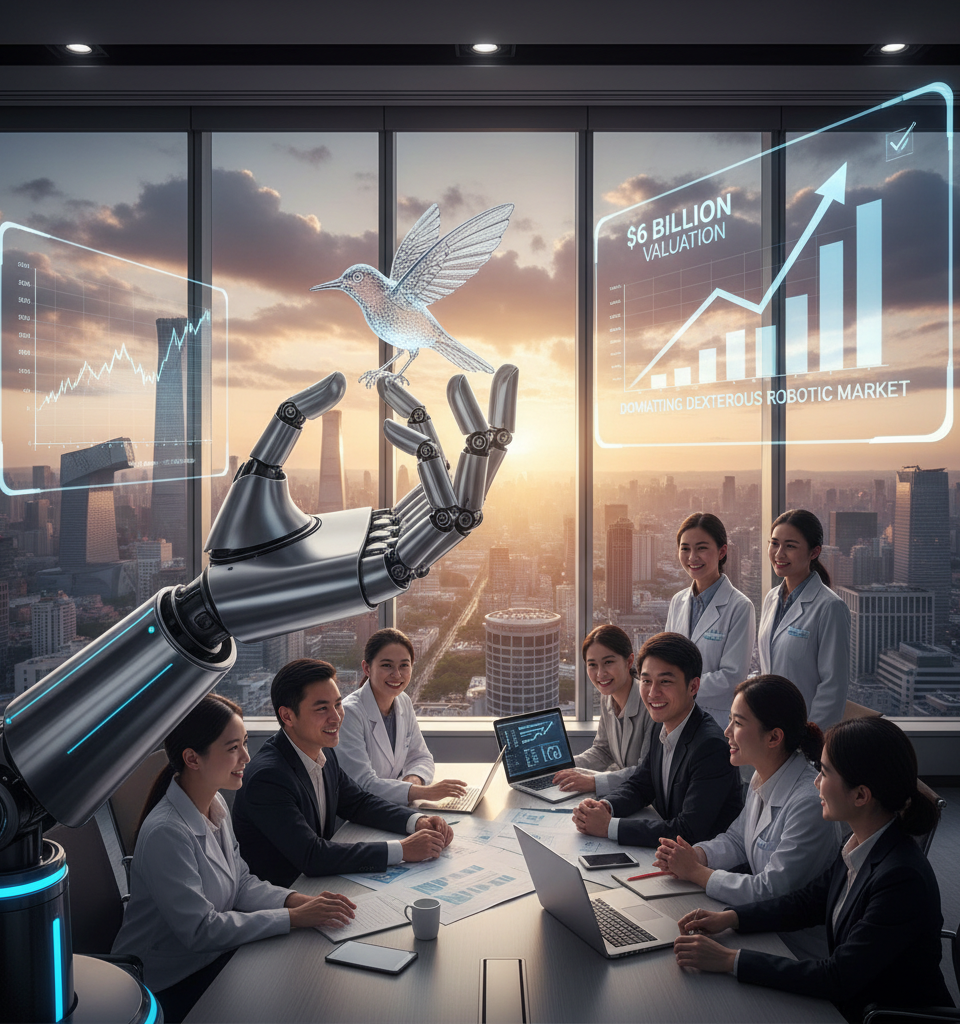
Linkerbot, the Beijing-based innovator leading the charge in dexterous robotic hands, is reportedly targeting an audacious $6 billion valuation, signaling a profound shift in investor perception within the robotics sector. Founded just two years ago by an engineer whose vision was sparked by Japanese animation, the company has rapidly ascended to command an astonishing 80% share of the global market for these intricate robotic appendages. This aggressive pursuit of capital underlines the company's ambition and the perceived strategic importance of its technology in the evolving landscape of humanoid robotics and automation.
The Unconventional Rise of a Robotics Niche
Historically, the intricate hands of humanoid robots have rarely captured the primary focus of investors, who tend to gravitate towards more overtly functional components like mobility systems (legs), manipulators (arms), or cognitive processing units (the head). Linkerbot's success, however, challenges this conventional wisdom, demonstrating that specialized, high-performance components can indeed dominate a critical niche. The company's rapid growth and increasing valuation underscore a maturation in the robotics industry, where subtler, yet essential, functionalities are gaining significant traction and investment interest. Their innovation represents a departure from traditional industrial grippers, focusing instead on the nuanced dexterity required for human-like interaction and manipulation.
Driving Forces Behind Linkerbot's Ascent
Linkerbot's remarkable market dominance, securing 80% of the global dexterous robotic hand market, is underpinned by several key factors. Reports indicate a valuation doubling within a matter of months, a testament to its technological prowess and market adoption. While specific financial figures beyond the target valuation remain proprietary, the rapid revaluation suggests intense investor confidence driven by strong sales volumes and a compelling technological roadmap. The company’s inspiration from Japanese animation suggests a design philosophy that prioritizes not just functionality, but also a degree of biomimicry and intuitive usability, which could be a significant differentiator in product development and market appeal.
Industry Repercussions and Market Dynamics
Linkerbot's ascendance is reshaping the dynamics of the broader robotics industry, particularly in the components sector. Its success demonstrates the commercial viability of specializing in precise, complex robotic end-effectors, moving beyond the traditional purview of industrial automation. This could spur increased research and development in other specialized robotic components, fostering a more competitive and innovative environment. The concentration of an 80% market share by a single entity also raises questions about potential monopolistic tendencies and the ease of entry for new competitors in this rapidly accelerating technology field. The demand for such advanced hand technology is likely increasing with the proliferation of humanoid robots in logistics, healthcare, and sensitive manufacturing.
Expert Insights on Valuation and Future Growth
Robotics industry analysts are closely watching Linkerbot's trajectory. "A $6 billion valuation for a company specializing in robotic hands, even with 80% market share, is extremely aggressive but not entirely unfounded given the projected growth of the humanoid robot market," stated a leading robotics analyst who requested anonymity due to ongoing client discussions. "Their ability to secure such a dominant position in a critical component, combined with the increasing sophistication demanded by next-generation automation, positions them exceptionally well. However, sustained innovation and fending off new entrants will be crucial for maintaining such a premium." The analyst further suggested that Linkerbot's technology could become a de-facto standard in dexterous manipulation, akin to certain operating systems in their respective domains.
The Path Forward: Expansion and Innovation
Looking ahead, Linkerbot is expected to continue its aggressive expansion, potentially leveraging its dominant market position to explore new applications beyond conventional humanoid robotics. Future developments could include enhanced haptic feedback systems, more advanced material integration for increased durability and sensitivity, and further miniaturization for specialized tasks. Strategic partnerships with major robot manufacturers and integration into broader automation ecosystems will likely be key to sustaining growth and justifying its ambitious valuation. The company's ability to diversify and adapt its core technology will be paramount as the robotics landscape continues its rapid evolution, potentially setting new benchmarks for dexterous manipulation in both industrial and service applications.
Broader Implications for Automation and AI
Linkerbot's success story is not merely about robotic hands; it reflects a larger trend in the convergence of advanced automation, artificial intelligence, and sophisticated mechanical engineering. As robots become more ubiquitous and are tasked with increasingly complex and nuanced operations, the demand for human-like manipulation capabilities will only intensify. The company’s pioneering work in creating dexterous, sensitive robotic hands is thus fundamentally enabling a new generation of automated systems capable of performing tasks previously exclusive to human operators, with profound implications for industries ranging from precision manufacturing and surgical assistance to domestic service robotics and space exploration. This valuation hunt, therefore, is also an investment in the future of human-robot interaction and collaboration.