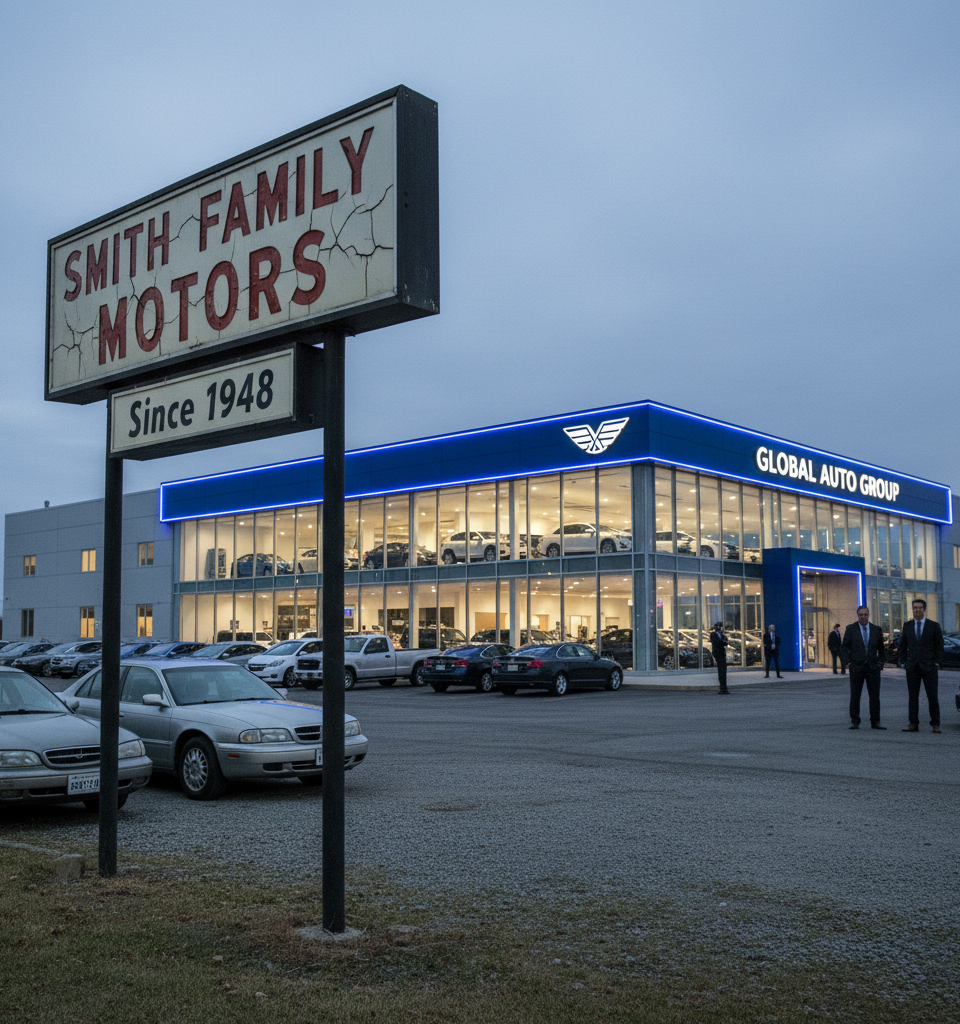
New York, NY – The independent, family-owned auto dealership, a cornerstone of many American communities for generations, is under unprecedented pressure as a relentless wave of industry consolidation pushes a stark 'grow-or-die' narrative. Multi-billion dollar dealership groups, often backed by private equity, are aggressively expanding their footprints, fundamentally reshaping the competitive landscape and leaving smaller retailers grappling with an existential choice: join the conglomerates or risk being left behind.
This consolidation isn't a new phenomenon, but its intensity has accelerated significantly in the last decade. Historically, the U.S. auto retail sector was highly fragmented. However, driven by economies of scale, access to capital, and the allure of increased market share, larger groups have systematically acquired smaller, independent operations. This trend, exacerbated by inflationary pressures and supply chain disruptions of recent years, positions independent dealers at a significant disadvantage against the operational efficiencies and purchasing power of their mega-retailer counterparts.
Key figures underscore the dramatic shift. According to data from the National Automobile Dealers Association (NADA), the number of auto dealerships in the U.S. has steadily declined from over 22,000 in the early 2000s to approximately 18,300 today. While the total number of dealerships has shrunk, the average revenue per dealership has soared, indicating that fewer, larger entities are capturing a greater share of the market. Experts point to the concept of 'scale' as the primary driver. "It's just scale," commented David Rosenberg, a veteran M&A advisor specializing in auto retail. "Mega-dealers can negotiate better terms with manufacturers, spread their marketing costs across dozens of locations, and invest in technology and training that a single-store operator simply can't afford."
The impact on the broader automotive industry is multifaceted. For consumers, the consolidation could lead to fewer choices, potentially limiting negotiation power over vehicle prices and service costs as local competition diminishes. For auto manufacturers, dealing with fewer, larger dealer groups offers streamlined logistics and potentially stronger relationships, but also consolidates power on the retail side. From an economic perspective, the acquisition of local businesses by national or regional chains can shift profits and decision-making away from local communities, impacting employment and civic engagement.
Industry analysts and investment bankers largely agree that the consolidation trend shows no signs of abating. "We're still in the middle innings of this process," noted an analyst from J.P. Morgan, highlighting the robust appetite for acquisitions, particularly among private equity firms eyeing the stable, cash-generating nature of dealerships. These firms bring not only capital but also sophisticated operational efficiencies and technological platforms that can further optimize dealer performance, making them even more attractive acquisition targets.
Looking ahead, the landscape for independent dealerships will likely grow increasingly challenging. Those electing to remain independent will need to double down on hyper-local customer service, specialized niches, and innovative digital strategies to differentiate themselves. Many are exploring dealership groups or cooperative models to achieve a semblance of scale without surrendering ultimate control. Conversely, the acquisition market for dealerships is expected to remain hot, with valuation multiples remaining attractive for sellers in desirable markets. The long-term trajectory suggests a U.S. auto retail sector dominated by fewer, larger entities, fundamentally altering the traditional blueprint of car buying for future generations.
The ramifications extend beyond simple business transactions; they touch upon the very fabric of local economies and the entrepreneurial spirit that has long characterized the auto retail sector. As the 'grow-or-die' mantra intensifies, the coming years will be pivotal in determining the ultimate structure of how Americans buy and service their vehicles.