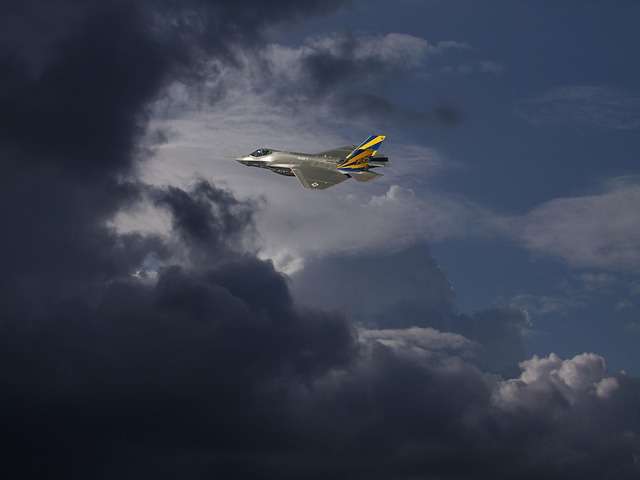
Lockheed Martin, the world's largest defense contractor, is forecasting robust revenue growth amidst a burgeoning global defense supercycle, driven by escalating geopolitical tensions and increased national security budgets worldwide. While new orders and expanded programs promise a healthy top-line expansion, the company faces considerable challenges in translating this into proportional profit gains, primarily due to inflationary cost pressures, supply chain disruptions, and substantial investments in future technologies and production capacity. This outlook, articulated in recent investor communications and earnings calls, suggests a complex financial landscape ahead for the Bethesda, Maryland-based aerospace giant.
Context and Background
The current uptick in defense spending represents a significant shift from the post-Cold War era of declining budgets. The Russian invasion of Ukraine, coupled with heightened tensions in the Indo-Pacific and persistent threats from state and non-state actors, has spurred a re-evaluation of defense readiness across numerous nations. Countries like Germany, Japan, and Poland have announced historic increases in military expenditure, directly benefiting major defense contractors like Lockheed Martin, which produces iconic systems such as the F-35 fighter jet, Patriot missile defense system, and Black Hawk helicopter. This geopolitical environment creates a fertile ground for sustained demand for advanced defense capabilities.
Key Details and Financial Outlook
Lockheed Martin's management has projected high single-digit revenue growth in the coming years, driven by its diverse portfolio spanning Aeronautics, Missiles and Fire Control, Rotary and Mission Systems, and Space. For instance, the demand for F-35s remains strong, with multiple international orders on the horizon, and significant backlogs in missile systems are expected to be drawn down. However, CEO Jim Taiclet has specifically highlighted that current market conditions mean that even with substantial revenue increases, profit margins may not expand at the same rate. The company is grappling with elevated material costs, rising labor expenses, and the need to invest heavily in its supply chain and manufacturing facilities to meet accelerated delivery schedules. These factors are expected to temper profitability, at least in the near term, even as sales volumes climb.
Industry and Market Impact
The dynamics at play within Lockheed Martin reflect broader trends across the defense industry. Companies like RTX (formerly Raytheon Technologies), Northrop Grumman, and Boeing's defense unit are also navigating similar complexities. While the surge in demand presents an undeniable opportunity for growth, the sector as a whole is contending with a constrained labor market, particularly for skilled engineers and technicians, and a fragile global supply chain still recovering from pandemic-era disruptions. The emphasis on faster production and technological innovation also requires substantial upfront capital expenditure, which can temporarily weigh on free cash flow and earnings per share, even with robust order backlogs.
Expert Perspective
Analysts generally concur with Lockheed Martin's cautious optimism regarding profitability. "While the revenue outlook for defense primes like Lockheed Martin is incredibly strong, investors need to temper expectations for immediate margin expansion," noted aerospace and defense analyst, Mark Strouse, recently. "The sector is in a reinvestment phase. Companies are ramping up production, absorbing higher input costs, and pouring money into R&D for next-generation systems. This is a long-term play, and while top-line growth is assured, the 'supercycle' for profits might lag, or be less pronounced than historic norms, for a few years." He emphasized that efficient cost management and successful execution of new programs will be critical differentiators.
What's Next: Future Implications
Looking ahead, Lockheed Martin's strategy will center on operational efficiency, supply chain resilience, and continued innovation in areas like hypersonics, artificial intelligence, and cyber warfare. The company is actively working with suppliers to mitigate inflationary effects and is exploring advanced manufacturing techniques to improve productivity. Furthermore, success in securing lucrative contracts for next-generation platforms, such as the Next Generation Air Dominance (NGAD) program, will be crucial for sustaining long-term growth beyond the immediate supercycle. Investors will keenly watch for signs that the company can eventually leverage its increased scale into greater profitability, once the current investment cycle matures and supply chain pressures abate, potentially leading to a more favorable margin environment in the mid to long term.