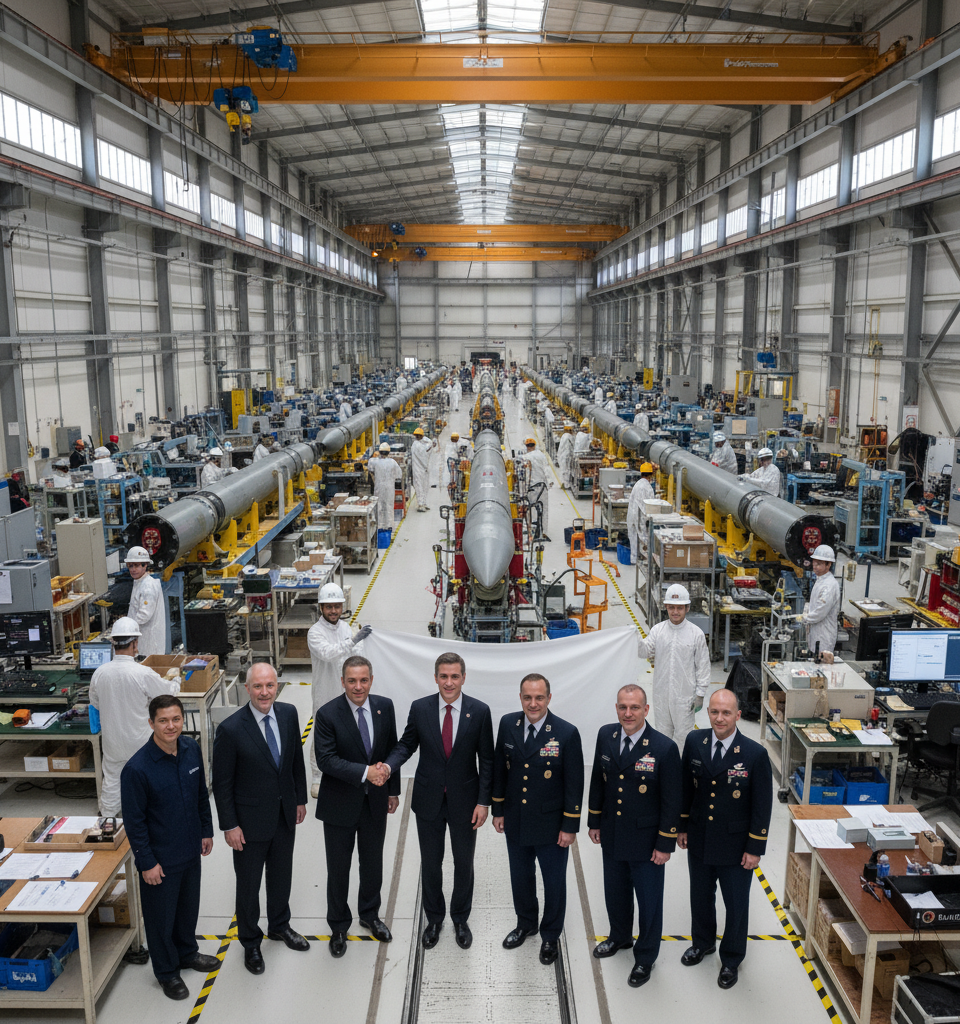
Lockheed Martin has officially secured a momentous $35 billion contract from the U.S. Department of Defense (DoD), an agreement designed to dramatically increase the production of THAAD (Terminal High Altitude Area Defense) interceptor missiles. This strategic partnership will see the defense giant quadruple its manufacturing output of these critical missile rounds, with operations distributed across its facilities in Texas, California, Arkansas, and Alabama. The signing of this contract signals a robust commitment to bolstering national defense infrastructure and responding to a heightened demand for advanced missile defense systems.
This substantial investment arrives amid a complex global security landscape, where the proliferation of ballistic missile threats necessitates robust and rapidly deployable defense solutions. The THAAD system, renowned for its ability to intercept short, medium, and intermediate-range ballistic missiles in their terminal phase, is a cornerstone of the U.S. and allied missile defense architecture. The quadrupling of production capacity is a direct response to both current operational needs and future strategic requirements, reflecting a long-term commitment to maintaining a technological edge in missile defense.
The contract's staggering value of $35 billion represents one of the largest defense procurement efforts in recent memory, emphasizing the critical importance placed on missile defense capabilities. Lockheed Martin's plan to expand production across multiple states — including Texas, California, Arkansas, and Alabama — highlights a distributed manufacturing approach aimed at optimizing efficiency and resilience. This geographic diversification not only leverages existing infrastructure but also creates economic opportunities and secures specialized jobs within the defense industry in these regions.
Beyond the immediate terms of the contract, Lockheed Martin is reportedly investing over $9 billion of its own capital to further support and enhance munitions production through 2030. This significant corporate investment demonstrates a proactive stance by the company to meet projected demand and solidify its position as a leading supplier of advanced defense technologies. Such self-funded expansion underscores the anticipated long-term market for these systems and the company's confidence in its operational capabilities to deliver at an accelerated pace.
The expansion of THAAD interceptor production is expected to have far-reaching implications for the broader defense industry and supply chain. Increased demand will likely cascade through various tiers of suppliers, impacting manufacturers of components, raw materials, and specialized services. This could stimulate innovation and investment within the defense industrial base, fostering growth and enhancing the overall resilience of the U.S. defense manufacturing sector. Smaller businesses, often critical partners in the defense supply chain, stand to benefit from new contracts and increased order volumes.
Looking ahead, the ramp-up in THAAD production is poised to significantly augment the inventory available to the U.S. military and its allies, enhancing deterrence capabilities and providing greater operational flexibility. The sustained focus on missile defense, as evidenced by this contract and Lockheed Martin's internal investments, indicates a strategic priority that will likely shape defense expenditures and technological development for the remainder of the decade. The coming years will undoubtedly see an intensified effort to refine and integrate these advanced systems into multilateral defense frameworks, adapting to an ever-evolving threat environment.