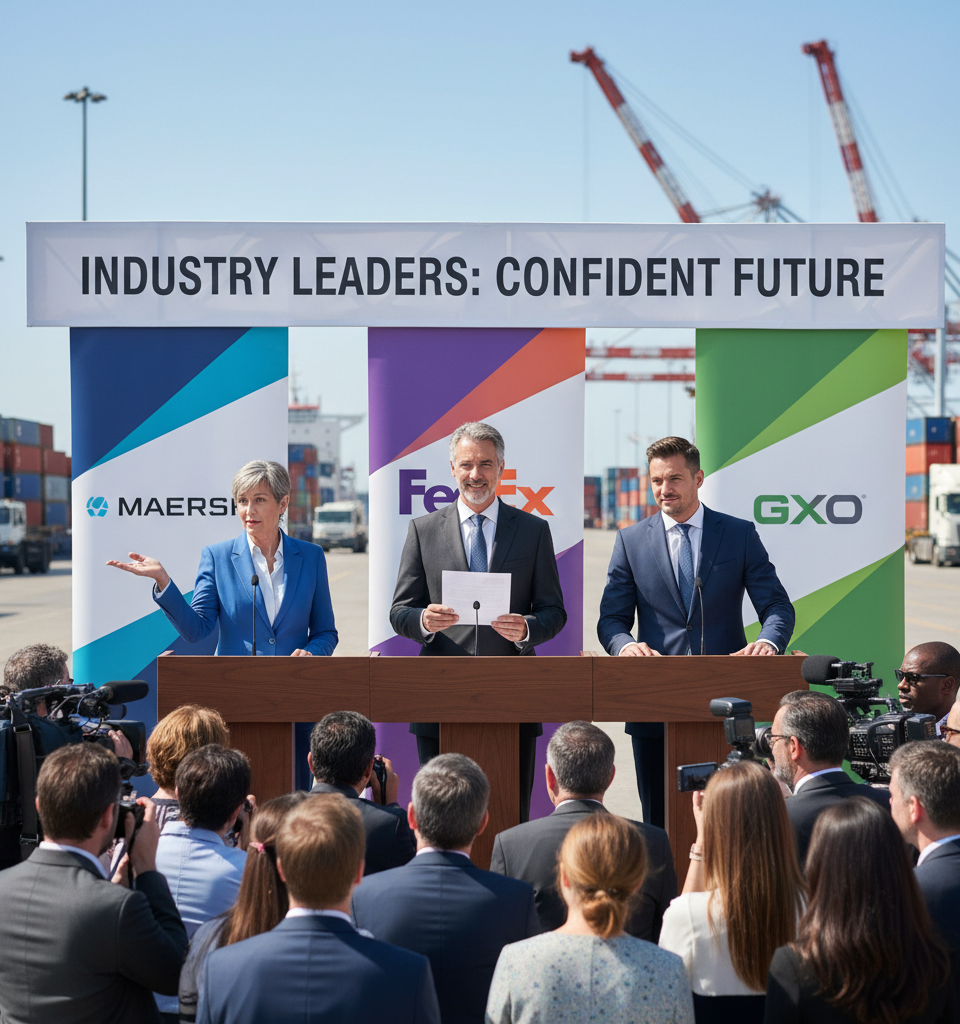
Amidst Amazon's strategic push into providing comprehensive supply chain services to external businesses, leading global logistics providers FedEx, Maersk, and GXO Logistics have collectively adopted a tone of cautious defiance, publicly asserting that Amazon’s expanded offerings pose no significant competitive challenge to their established operations. This declaration aims to reassure investors and clients that the e-commerce behemoth's foray into third-party logistics (3PL) is unlikely to disrupt their core business models, citing fundamental differences in scale, specialization, and customer focus.
Context and Industry Shift
Amazon's move, dubbed Supply Chain by Amazon, represents a significant evolution from its long-standing internal logistics capabilities. Initially designed to optimize its own vast e-commerce operations, the company is now making these services, including warehousing, transportation, and fulfillment, available to all businesses, regardless of whether they sell on Amazon. This strategy is widely seen as an attempt to leverage its immense infrastructure and technological prowess to capture a slice of the lucrative global logistics market, estimated to be worth trillions of dollars annually. For traditional logistics firms, Amazon's entry, particularly with its end-to-end proposition, could signal an intensification of competition, especially for small to medium-sized enterprises (SMEs).
Leading Companies' Stance
Executives from the challenged companies have been swift to articulate their distinct value propositions. Raj Subramaniam, CEO of FedEx, emphasized the company's global air network and end-to-end transportation solutions, stating that FedEx operates on a scale and complexity that differs fundamentally from Amazon's focus. P.
Moller – Maersk, a titan in ocean shipping and integrated logistics, highlighted its deep expertise in international freight forwarding and complex supply chain management, areas where Amazon's current external offerings are perceived as less developed. GXO Logistics, a pure-play contract logistics provider, pointed to its specialized warehousing, automation, and industry-specific solutions, often handling highly customized and intricate logistics operations that require a level of bespoke service Amazon has yet to demonstrate for external clients.
Market Impact and Competitive Landscape
While Amazon's deep pockets and technological innovation are undeniable, its competitive impact on these logistics giants may hinge on its strategic choices and execution. Analysts suggest that Amazon is likely to initially target smaller businesses and those already selling on its platform, offering attractive rates and seamless integration. However, capturing market share from large, multinational corporations that rely on the established providers for their global, multi-modal, and often highly specialized logistics needs will be a far greater challenge. The incumbent players boast decades of client relationships, extensive physical infrastructure, and a global footprint that Amazon would take years to replicate for non-Amazon businesses.
Expert Perspectives and Analysis
Logistics industry analysts generally concur with the assessment that the immediate threat to FedEx, Maersk, and GXO is limited. "While Amazon poses a disruption threat in many sectors, logistics is incredibly complex and capital-intensive," noted Sarah Miller, a senior analyst at Freight Insights Group. "Its current external offering is compelling for e-commerce, but it lacks the deep, bespoke relationships and diversified asset base that the legacy leaders possess for enterprise clients. Think global cold chains, complex industrial project cargo, or highly regulated pharmaceutical logistics – these are not Amazon’s wheelhouse right now." Miller added that the real impact might be felt more by smaller, less specialized 3PLs rather than the diversified giants.
Future Implications and Developments
The long-term landscape, however, remains a subject of speculation. Amazon's history of aggressively expanding into new verticals suggests that its current supply chain services could evolve significantly. Should Amazon continue to invest heavily in non-e-commerce logistics infrastructure, acquire specialized assets, and build out a more diverse client base beyond its own seller ecosystem, the competitive pressure could intensify. For now, FedEx, Maersk, and GXO are focusing on leveraging their existing strengths, investing in technology, and enhancing their customer service to reinforce their positions. The coming years will reveal whether Amazon can transform its internal logistics prowess into a dominant force in the broader, highly fragmented, and fiercely competitive third-party logistics market.
Strategic Responses and Innovation
In response to the evolving market dynamics, traditional logistics companies are accelerating their own innovation efforts. FedEx, for instance, is heavily investing in AI-driven optimization for route planning and package sorting, as well as expanding its e-commerce delivery solutions. Maersk is solidifying its integrated logistics strategy, aiming to provide end-to-end solutions from factory to consumer, encompassing warehousing, distribution, and multimodal transport.
GXO Logistics continues to differentiate through its advanced automation within warehouses and specialized solutions for various industries, including retail, technology, and food and beverage. These strategic moves underscore their commitment to maintaining leadership by focusing on differentiated services and technological superiority. The narrative from these established players is clear: while Amazon's entry is notable, their deep industry expertise and comprehensive capabilities offer a level of service and trust that an emerging competitor will find challenging to replicate quickly across all segments.