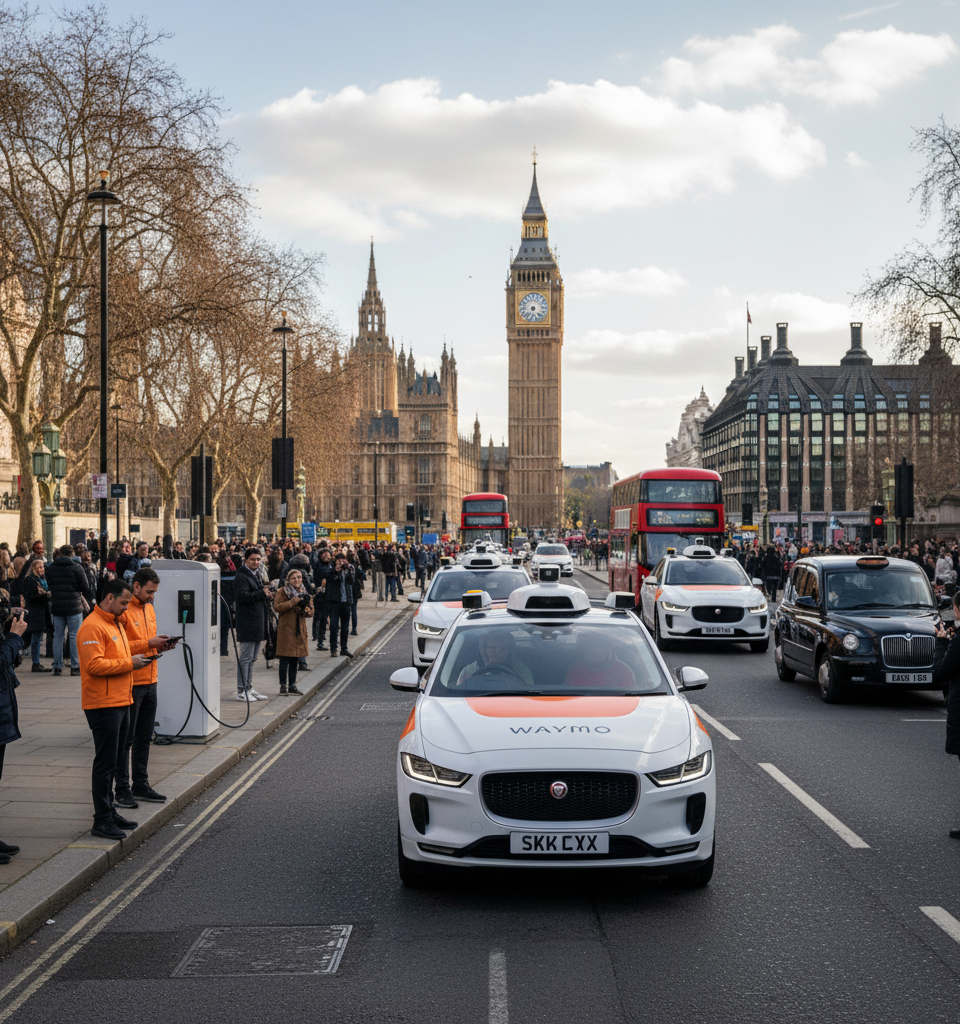
London is moving closer to the advent of its first commercial robotaxi service as Waymo, a leader in autonomous driving technology, has officially initiated testing of its vehicles within the city. This development signals a pivotal moment for the integration of self-driving cars into urban transport infrastructure in the United Kingdom, with a commercial rollout anticipated to follow successful testing and subsequent regulatory endorsements from the British government.
The commencement of Waymo's operations in London underscores the accelerating global trend towards autonomous mobility solutions. As major cities grapple with issues such as traffic congestion, air quality, and the efficiency of public and private transportation, robotaxi services are increasingly viewed as a potential answer. This move by Waymo, a subsidiary of Alphabet Inc., positions London as a key battleground for the future of urban transport, echoing similar developments seen in cities across the United States and other parts of the world.
Advancing Autonomous Mobility in a Global Metropolis
For London, a sprawling metropolis with one of the most complex transportation networks globally, the introduction of Waymo's testing phase represents a significant technical and logistical undertaking. The company's methodology typically involves a phased approach, starting with supervised testing by trained safety drivers to meticulously map routes, assess road conditions, and refine their autonomous driving software for local nuances. The eventual goal is to transition to fully driverless operations, offering rides to the public via a dedicated service.
The regulatory pathway for autonomous vehicles in the UK has been a subject of ongoing discussion and legislative efforts. The British government has expressed a desire to be at the forefront of autonomous vehicle technology, recognizing its potential economic and societal benefits. Waymo's move into London could serve as a vital case study, providing real-world data and insights that will inform future policy and legislation regarding the safe and effective deployment of self-driving cars on UK roads.
Regulatory Landscape and Future Prospects
Crucially, the launch of any commercial robotaxi service by Waymo in London is contingent upon formal approval from UK governmental bodies. This involves stringent safety assessments, adherence to national and local traffic laws, and addressing public concerns regarding insurance liability, cybersecurity, and data privacy. The regulatory framework is still evolving, and Waymo's testing phase will likely contribute valuable data to help shape these future guidelines.
From an industry perspective, Waymo's expansion into London could intensify competition within the nascent autonomous vehicle market. Other players are also vying for market share and regulatory approval across various global cities. A successful deployment in London would不僅 bolster Waymo's international presence but also solidify its reputation as a leading innovator in self-driving technology. The implications extend beyond passenger transport, potentially influencing logistics, public transport integration, and urban planning.
Economic and Social Impact
The economic impact of a fully operational robotaxi service in London would be substantial. It could create new job opportunities in areas such as fleet management, maintenance, and technological support, even while potentially altering the landscape for traditional taxi and ride-sharing services. Socially, the technology promises enhanced accessibility for individuals who cannot drive, reduced traffic accidents attributable to human error, and more efficient use of urban space.
Looking ahead, the immediate focus for Waymo will be on the rigorous testing phase, building confidence with local authorities and the public. Data collection and software refinement will be paramount to demonstrating the safety and reliability of their autonomous system in London's unique environment. The journey from initial testing to a full commercial launch is often protracted, involving multiple stages of review and approval. However, this initial step marks a significant leap towards transforming London's urban mobility landscape, potentially ushering in an era of ubiquitous, self-driving transportation.