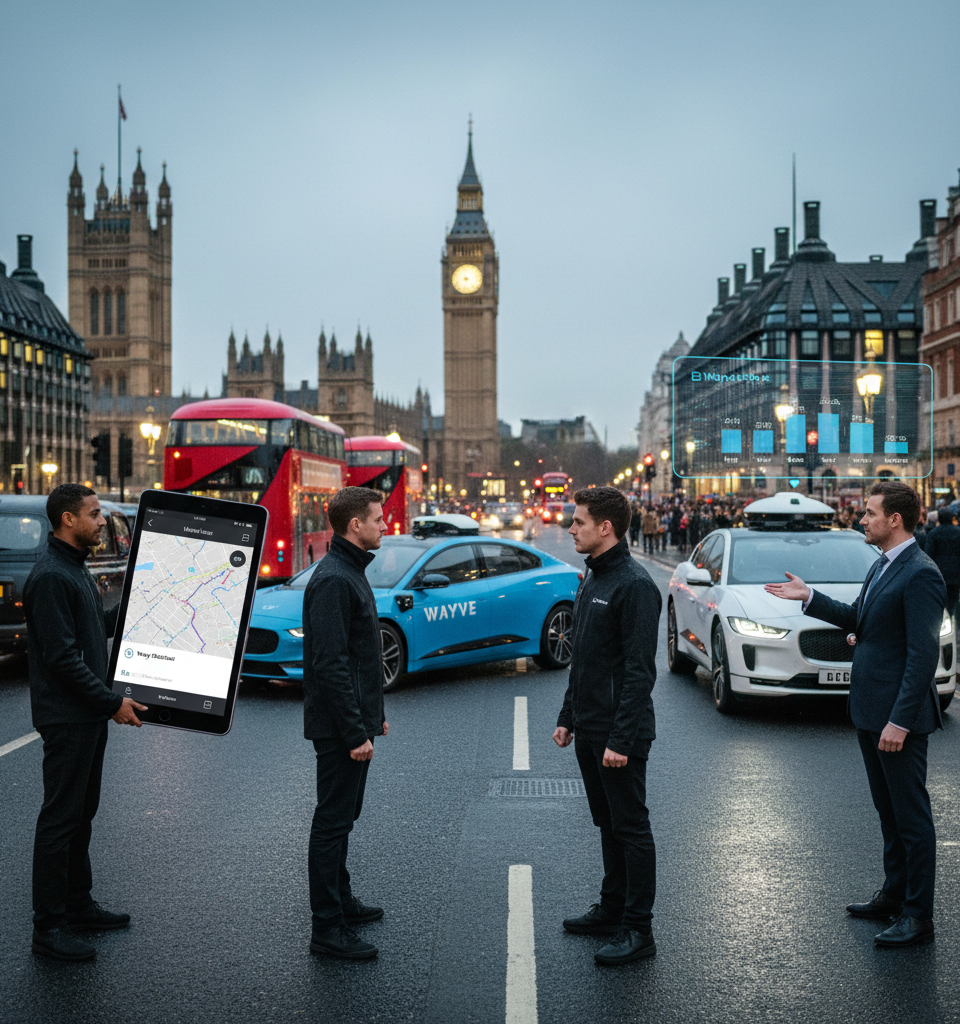
London is set to become a focal point for the global robotaxi industry as Uber, in partnership with UK-based autonomous driving startup Wayve, prepares to introduce self-driving vehicle services. This strategic alliance signals an impending competitive showdown with Waymo, Google's self-driving car company, as all three entities appear to be converging on the British capital to establish dominance in the evolving autonomous ride-hailing market. The entry of Wayve-powered Uber vehicles, with customers now able to join an interest list to potentially be matched with a robotaxi, marks a critical step towards scaling autonomous operations within a major international city.
The Autonomous Revolution in Urban Transport
The introduction of robotaxis represents a significant technological leap in urban transportation, promising enhanced efficiency, safety, and potentially lower operational costs compared to human-driven vehicles. For Uber, integrating autonomous vehicles from Wayve into its vast network offers a pathway to address driver shortages, optimize service delivery, and navigate tightening regulatory environments. Wayve, as a prominent European player in autonomous technology, benefits from Uber's extensive customer base and operational infrastructure, providing a crucial platform for real-world deployment and data collection.
The decision to select London as an initial battleground underscores the city's status as a global hub for technological innovation and a complex, yet lucrative, market for ride-hailing services. The historical context of ride-hailing in London, marked by intense competition and regulatory scrutiny, sets the stage for what could be a defining chapter in autonomous mobility.
Key Players and Their Strategies
Uber's strategy with Wayve focuses on a phased rollout, beginning with an interest list that allows early adopters to signal their preference for an autonomous ride. This approach helps manage expectations, gather user feedback, and gradually integrate the new service. Wayve's technology, particularly its emphasis on machine learning and end-to-end deep learning, positions it as a strong contender.
This method aims to allow vehicles to learn to drive in diverse and complex urban environments, which is particularly relevant for London's intricate street network., is expected to leverage its proven technology stack and operational expertise. While Waymo's direct plans for a London launch are not explicitly detailed in the current development, the industry anticipates its entry, setting the stage for a three-way contest.
The competition is not merely about launching vehicles but about mastering a complex interplay of technology, regulation, public acceptance, and operational scalability.
Industry Impact and Regulatory Landscape
The impending robotaxi showdown in London carries significant implications for the broader automotive and technology industries. It will accelerate the development and refinement of autonomous driving technologies, pushing companies to innovate rapidly to gain a competitive edge. Success in a challenging environment like London could set a precedent for deployments in other major cities worldwide.
Moreover, the deployment of self-driving vehicles on a large scale will inevitably lead to increased scrutiny from regulators. London's transport authorities will play a crucial role in shaping the operational parameters, safety standards, and licensing requirements for these services. The outcomes of this competition could influence future regulatory frameworks globally, impacting everything from insurance models to urban planning strategies.
Public perception and trust will also be critical factors, with companies needing to demonstrate the safety and reliability of their autonomous offerings to gain widespread acceptance.
Future Implications and Market Trajectories
Looking ahead, the London robotaxi market is projected to be a dynamic and rapidly evolving landscape. The initial phase will likely involve cautious expansion, with limited service areas and operational hours. As technology matures and regulatory clarity increases, a more aggressive rollout is anticipated.
This competition could lead to significant advancements in artificial intelligence, sensor technology, and vehicle-to-infrastructure communication. The long-term implications include a potential reshaping of urban mobility, a reduction in traffic congestion, and a decrease in accident rates attributed to human error. For consumers, the promise is a more convenient, accessible, and potentially more affordable mode of transport.
The ultimate winner in this race may not only capture a substantial market share in London but also establish a blueprint for global autonomous ride-hailing operations, significantly influencing the future of mobility worldwide.