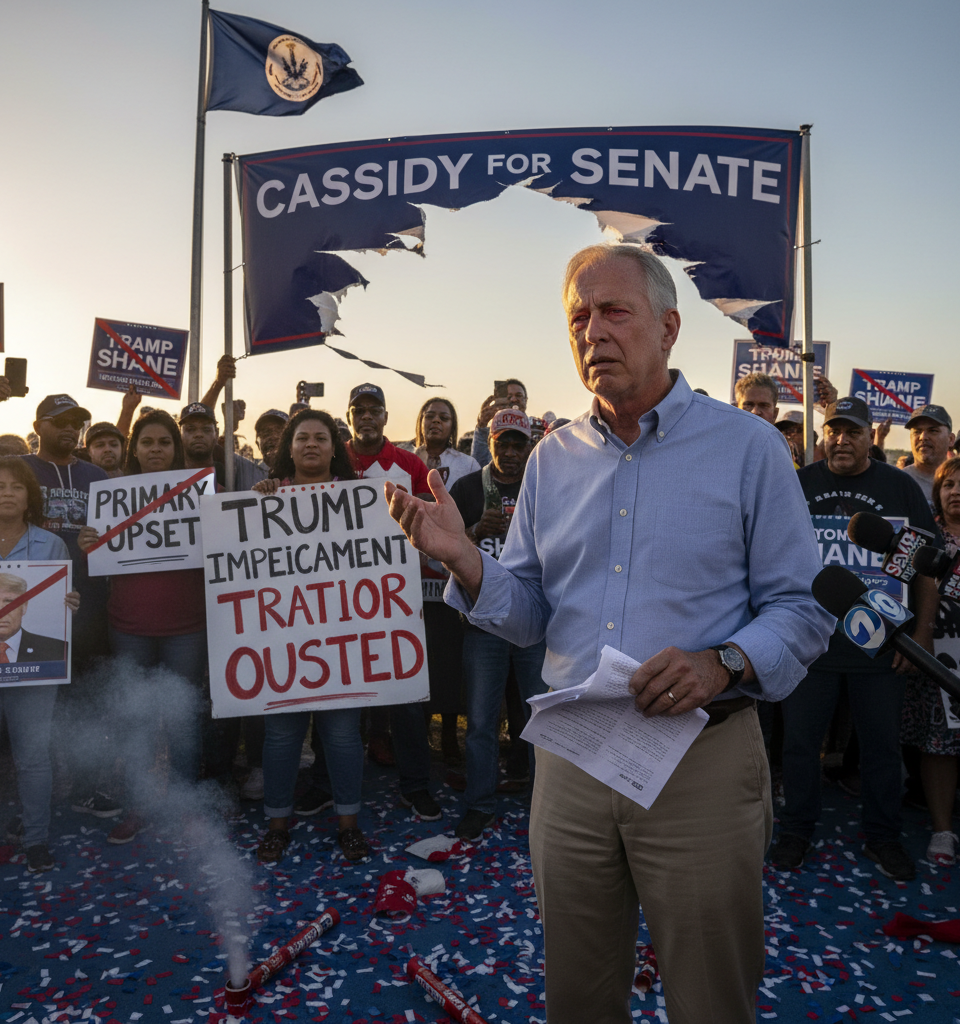
Senator Bill Cassidy, a Republican representing Louisiana, was unseated in a primary election held this week, failing to secure enough votes to advance to a runoff. His defeat marks a notable political repercussion for his vote to convict then-President Donald Trump during his second impeachment trial in 2021. The outcome solidifies Trump’s continued sway over the Republican base, particularly in states like Louisiana, and sends a clear message to other GOP incumbents considering similar politically fraught decisions.
Context and Background
Cassidy's loss is a stark reminder of the former president's formidable power within the Republican Party. After the January 6th Capitol attack, Cassidy was one of only seven Republican senators who voted to convict Trump on charges of inciting an insurrection. This move was widely seen as a courageous stand by some, but a betrayal by others within his party and constituency. His political career, previously marked by a consistent conservative voting record and two comfortable Senate victories, encountered insurmountable headwinds due to this single, high-profile divergence from party loyalty. The political environment in Louisiana, a deeply red state, makes such a deviation particularly perilous, with Trump enjoying high approval ratings among Republican voters there.
Key Details of the Election
The primary election saw Cassidy garner approximately 42% of the vote, falling short of the 50% plus one vote required to avoid a runoff under Louisiana's unique primary system. He was surpassed by challengers who heavily campaigned on their unwavering loyalty to former President Trump and criticized Cassidy's impeachment vote. The specific breakdown of votes showed a clear mobilization of the Trump-aligned base against the incumbent. One particular challenger, a relatively unknown state legislator, managed to siphon off a significant percentage of votes by directly appealing to Trump's base, effectively splitting the anti-Cassidy vote. Cassidy's campaign struggled to articulate a compelling reason for his impeachment vote to a skeptical electorate, often emphasizing his legislative successes and traditional conservative credentials, which proved insufficient against the populist tide.
Broader Political Impact
This result carries significant implications for the broader Republican Party. It reinforces the notion that defying Donald Trump, even on matters of grave constitutional importance, can be a career-ending move for a Republican politician, especially one seeking reelection in a reliably conservative state. This chilling effect could deter other Republicans from breaking ranks with the former president's base, potentially solidifying Trump's influence over the party's future direction and policy agenda. It also suggests that the debate over the 2020 election and the events of January 6th remains a potent and polarizing force within the GOP electorate, capable of shaping election outcomes in unexpected ways.
Expert Analysis
Political analysts are quick to interpret Cassidy’s defeat as a quintessential example of "Trumpism without Trump" dominating Republican primary elections. Dr. Elaine Thompson, a political science professor at Louisiana State University, noted, "This isn't merely about personal loyalty to Trump; it’s about aligning with the ideological and cultural grievances that Trump articulates. Cassidy failed to bridge that gap, and his traditional conservative bona fides couldn't overcome the perception of disloyalty." Others point to the effectiveness of single-issue campaigning, where the impeachment vote became a potent litmus test for voters, overshadowing other policy discussions and legislative achievements.
What's Next
The Senate seat will now be contested in a runoff election next month between the top two vote-getters, neither of whom is Cassidy. The upcoming contest will likely see both candidates vie for the support of Cassidy's former voters, particularly those who were not fully aligned with the Trump faction but were unwilling to support the incumbent. The focus will now shift to how the remaining candidates differentiate themselves, and whether the primary's anti-Cassidy sentiment can coalesce around a single candidate or split further. For the Republican Party nationally, this outcome will undoubtedly be used as a cautionary tale, underscoring the formidable challenge of independent action within an increasingly unified, Trump-centric political landscape.