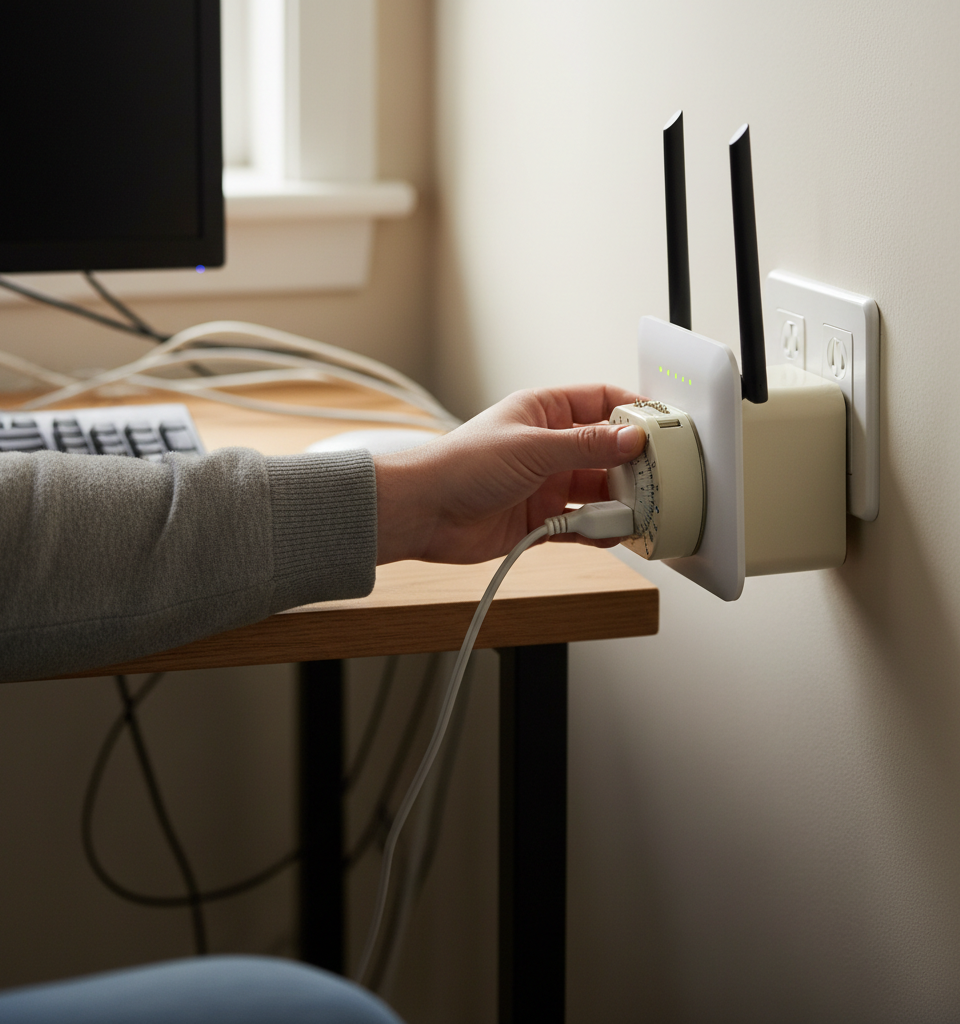
Amidst the growing demand for uninterrupted internet connectivity in homes and small businesses, a remarkable yet starkly simple intervention is gaining traction: the automated router reboot. This week, reports highlight a user-implemented solution involving a $4 timer, which has dramatically improved internet reliability and speed by simply scheduling regular power cycles for conventional Wi-Fi routers. This grassroots innovation addresses a common pain point for millions of users experiencing intermittent drops and slowdowns, proving that sometimes, the most effective remedies are the least complicated and most affordable.
The Persistent Problem of Internet Fluctuation
For years, internet service providers (ISPs) and consumers alike have grappled with the ephemeral nature of home Wi-Fi. Factors ranging from signal interference and firmware glitches to memory leaks within the router itself can degrade performance over time, often manifesting as reduced speeds, dropped connections, or unresponsive smart home devices. While ISPs frequently suggest manual reboots as a first troubleshooting step, the sporadic and often inconvenient nature of these interruptions means users rarely perform them with optimal regularity. This ongoing challenge underscores a significant gap in the consumer electronics market: robust, self-maintaining network hardware that doesn't require constant user intervention. The current landscape, dominated by often proprietary and sometimes underpowered ISP-provided equipment, exacerbates these issues.
The Elegant Simplicity of a Timer Switch
The core of this burgeoning trend lies in the widespread availability and affordability of basic electrical timer switches. These devices, readily available at retail for under $10, and often as low as $4-$5, allow users to set specific on/off schedules for any connected appliance., 3:00 AM), users report a marked improvement in network stability and perceived speed.
Anecdotal evidence suggests that this routine prevents the accumulation of data packet errors, clears temporary caches, and refreshes IP addresses, effectively resetting the router to its optimal operating state each day. The cost-benefit ratio of this solution is astounding; for an investment of less than a cup of coffee, households can significantly enhance their digital experience. This direct action sidesteps the complexities of router firmware updates or the expense of upgrading to higher-end, but not necessarily more stable, networking hardware.
Industry Implications and Consumer Empowerment
This low-tech fix has broader implications for both consumers and the telecommunications industry. For consumers, it represents a significant step towards self-sufficiency and empowerment in managing their home networks, reducing reliance on often frustrating and time-consuming customer support interactions with ISPs. It suggests that a substantial portion of internet performance issues at the user end might not be due to bandwidth limitations or infrastructure, but rather the operational characteristics of the last-mile hardware.
For ISPs and router manufacturers, this trend serves as a tacit critique of current product design and support models. If a simple daily reboot can dramatically improve user satisfaction, it raises questions about the software stability and long-term performance of mass-market routers. The estimated global residential router market was valued at approximately $12 billion in 2022, with millions of units sold annually, yet widespread stability issues persist.
Expert Perspectives on Router Longevity and Performance
Network engineers and tech analysts acknowledge the efficacy of regular router reboots. "Routers, like any complex electronic device handling continuous data streams, benefit from periodic resets," states Dr. Evelyn Reed, a telecommunications analyst. "These devices have operating systems, memory, and processors that can become bogged down. A reboot clears temporary files, re-initializes network protocols, and can resolve minor software glitches that accumulate over time. While modern routers are designed for sustained operation, they aren't infallible, and a simple power cycle remains an incredibly effective diagnostic and maintenance tool." She adds that while this $4 timer is a practical stop-gap, the long-term solution lies in more robust router firmware design that incorporates automated self-diagnostic and self-reboot features, which some high-end units already have developed.
The Future of Consumer Network Management
The success of the $4 timer solution will likely spur further innovation and discussion within the home networking sphere. We may see an increased demand for routers with built-in, user-configurable reboot scheduling functionalities, effectively integrating this simple fix into the hardware itself. Furthermore, it could prompt ISPs to re-evaluate the quality and feature sets of the routers they provide to subscribers, potentially leading to more stable, higher-performing default equipment. As smart homes become standard and reliance on seamless connectivity intensifies, solutions that combine affordability with tangible performance improvements will be paramount. This simple timer, initially a hack, could pave the way for a new standard in home network stability, forcing manufacturers and service providers to prioritize reliability as much as speed.