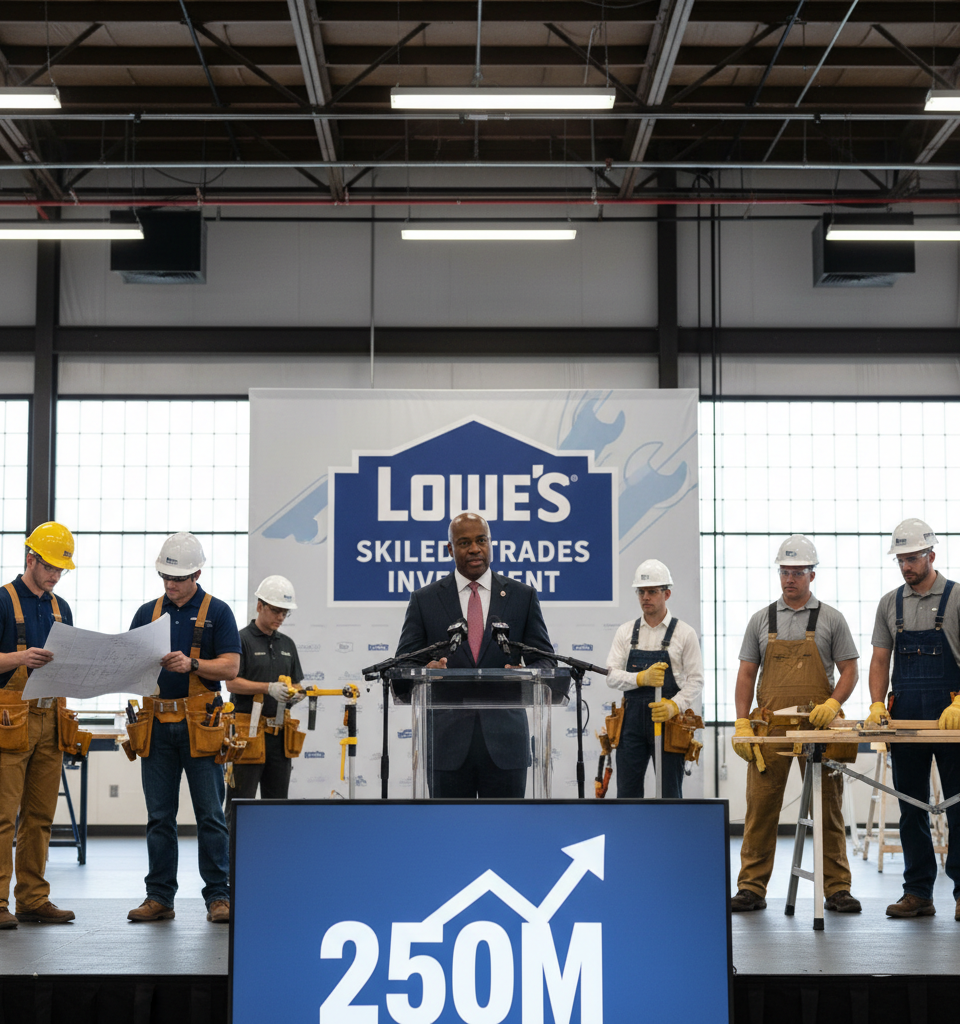
MOORESVILLE, NC – [Date] – Lowe's Companies, Inc. (NYSE: LOW), one of the nation's largest home improvement retailers, has announced a monumental $250 million investment aimed at training and developing skilled trades professionals, including plumbers, carpenters, and electricians. This quadrupling of its previous commitments underscores the company's strategic vision to combat a burgeoning labor shortage in critical industries, a challenge Lowe's CEO Marvin Ellison explicitly states cannot be solved by artificial intelligence or automation alone.
This significant financial injection arrives at a crucial time when the demand for skilled labor far outstrips supply across the United States. For years, educators and policymakers have voiced concerns over a diminishing pipeline of tradespeople, a trend exacerbated by a societal emphasis on four-year university degrees over vocational training. Lowe's initiative seeks to reverse this trajectory, recognizing that core infrastructure and home maintenance rely heavily on these indispensable crafts.
The $250 million commitment, a substantial increase from previous allocations, will be channeled into various programs, including Lowe's "Track to the Trades" initiative, which provides tuition reimbursement for employees pursuing trade apprenticeships. The funding will also support community college partnerships, pre-apprenticeship programs, and scholarships designed to attract new talent to professions crucial for residential and commercial construction and maintenance. CEO Marvin Ellison articulated that while AI offers immense potential, it cannot replicate the nuanced, hands-on expertise required for tasks such as repairing complex electrical systems or constructing homes from the ground up, deeming these skills "critical to the future."
The implications of Lowe's extensive investment ripple far beyond its own customer base, affecting the broader construction, home services, and retail sectors. A more robust supply of skilled tradespeople can alleviate project backlogs, reduce costs for consumers, and foster greater efficiency in the residential market. For other retailers and service providers dependent on these trades, Lowe's move could set a precedent, potentially spurring similar investments from competitors or industry associations seeking to secure their own future workforce needs.
Industry analysts have largely hailed Lowe's commitment as both a strategic business decision and a vital societal contribution. "This is more than just corporate social responsibility; it's a savvy business move that addresses a foundational bottleneck in the economy," commented Dr. Eleanor Vance, a labor market economist specializing in vocational training. "Lowe's, as a direct beneficiary of a healthy home improvement market, is investing in the very ecosystem that sustains its business. It also highlights the growing realization that not all labor shortages can be solved with technology; some require a renewed focus on fundamental human skills."
Looking ahead, Lowe's plans to closely monitor the efficacy of its various programs, with a focus on metrics such as graduation rates, job placement, and long-term retention within the trades. The company expects to scale successful initiatives and explore new partnerships to broaden its reach. This sustained effort aims not just to fill immediate labor gaps but to cultivate a new generation of skilled workers, ensuring the longevity and robustness of essential industries. The investment signals a long-term commitment, suggesting that the drive to rebuild the skilled trades workforce will be an ongoing priority for the home improvement giant for years to come.
The retail giant's proactive stance is expected to not only benefit the individuals receiving training but also contribute significantly to the economic health of communities by fostering job creation and supporting critical infrastructure. This quarter-billion-dollar pledge represents a tangible step towards recognizing and empowering the hands-on expertise that underpins modern society.