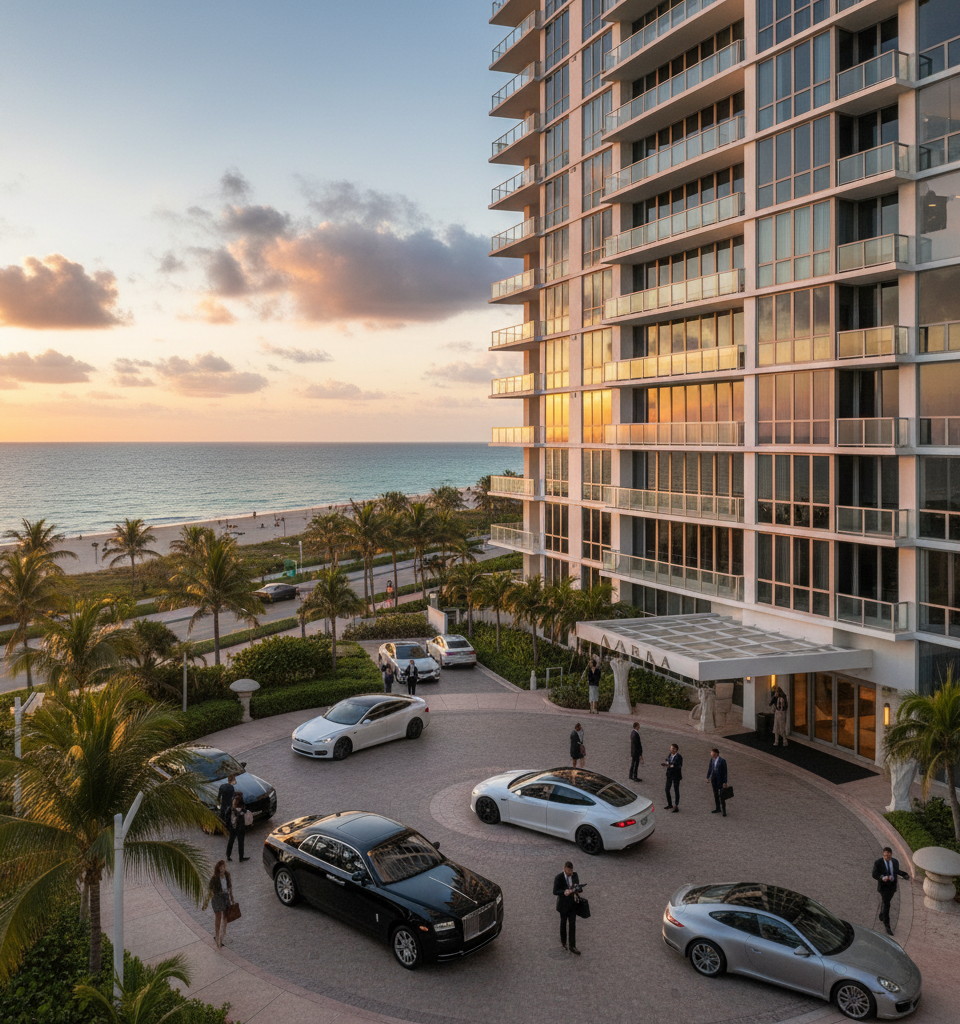
Miami Beach is witnessing a significant paradigm shift among its wealthiest residents, as high-income professionals increasingly choose luxury rentals over homeownership. Avara Miami Beach has emerged as a prime example of this trend, attracting an elite cohort of "renters by choice" seeking to establish Florida residency and preserve substantial liquidity. This move challenges long-held notions of homeownership as the ultimate status symbol, prioritizing flexibility and financial agility in an uncertain economic climate.
The Allure of Rental Flexibility
The phenomenon of high-net-worth individuals eschewing property purchases gained traction in the wake of volatile real estate markets and rising interest rates. For many, the decision to rent is a calculated financial maneuver, allowing them to avoid substantial down payments, property taxes, maintenance costs, and capital tied up in illiquid assets. Florida, with its favorable tax laws — notably the absence of state income tax — offers a compelling incentive for individuals to establish residency, making luxury rentals a streamlined path to achieving this goal without the long-term commitments of ownership. This strategy is particularly appealing to those engaged in dynamic industries, where geographic mobility and rapid capital deployment are critical.
Avara Miami Beach: A Case Study
Avara Miami Beach, a 280-unit luxury development, exemplifies the appeal of this new rental lifestyle. Offering expansive residences, resort-style amenities, and white-glove services, Avara caters specifically to a discerning demographic. Units at Avara, some exceeding 3,000 square feet, command monthly rents starting at approximately $15,000 and can escalate significantly for penthouses. The development boasts features such as private chefs, chauffeured services, and direct beach access, effectively packaging the luxury experience without the burdens of ownership. Interviews with residents reveal a common refrain: the ability to deploy capital more efficiently into other investments, coupled with the desire for a turn-key, hassle-free lifestyle.
Redefining Luxury Living and Investment Strategies
This trend has substantial implications for both the luxury real estate market and broader investment strategies. Developers are increasingly recognizing the demand for ultra-luxury rental products, shifting focus from outright condominium sales to high-end lease offerings. This adjustment reflects a more sophisticated understanding of the affluent buyer, who now values experiences, services, and financial optionality as much, if not more, than mere asset ownership. For individuals, it signifies a departure from traditional wealth accumulation models, favoring immediate access to prime living conditions and diversified financial portfolios over a single, large real estate investment.
Expert Perspectives on the Shifting Landscape
Real estate economists and wealth managers are closely observing this evolution. Dr. Eleanor Vance, a lead economist at a prominent financial institution, notes, "The psychology of wealth is changing. For generations, homeownership was intrinsically linked to financial success. Now, for a segment of the very rich, liquidity and minimizing tax liabilities are paramount. Luxury rentals offer a sophisticated solution to these evolving priorities." She adds that this trend is likely to persist, particularly in high-growth, high-tax states where residents seek an exit strategy to more tax-friendly locales, while still desiring an elevated living standard.
The Future of Affluent Housing
The trajectory of luxury rentals suggests a continued expansion of this market segment. Developers in other high-demand urban centers, such as New York, Los Angeles, and Aspen, are exploring similar models. Future developments are expected to integrate even more advanced smart home technologies, personalized services, and wellness amenities to attract this discerning clientele. We anticipate a deeper integration of concierge services, private jet access programs, and bespoke lifestyle management within these luxury rental communities, pushing the boundaries of what constitutes an ideal living arrangement for the global elite. This evolution also presents opportunities for innovative financial products designed around long-term luxury leases.
Economic Impact and Market Signals
The economic impact extends beyond direct rental revenues. These affluent renters contribute significantly to local economies through high-end retail, fine dining, and luxury services, bolstering the service sector in areas like Miami Beach. Their presence also signals continued confidence in regional growth and stability. While the broader housing market faces affordability challenges, this niche segment operates with different drivers, acting as a bellwether for shifts in wealth management and luxury consumption patterns. The demand for such residences reflects a robust desire for premium living without the encumbrances of ownership, indicating a mature and strategic approach to personal finance by the nation's wealthiest.