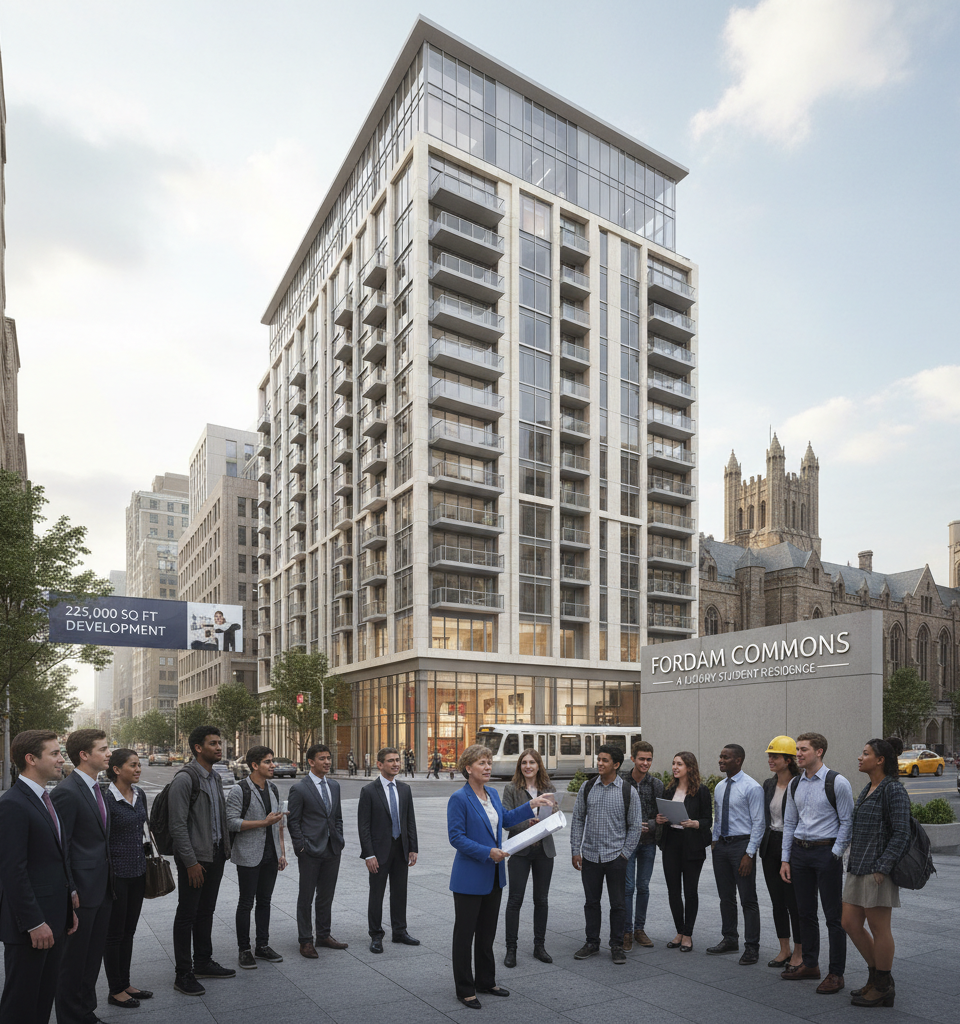
A significant new development is poised to reshape student housing dynamics in the Fordham University vicinity of the Bronx. Maddd Equities and the Stagg Group have partnered to construct a 12-story, 225,000-square-foot student housing complex at 2740 Webster Avenue. This ambitious project aims to offer a premium living experience, challenging the traditional, often spartan, perception of student accommodations within the university's vibrant urban context.
Context and Background
The initiative comes at a critical time for urban universities grappling with increasing enrollment numbers and a perennial shortage of adequate student housing. Fordham, a prominent institution in the Bronx, has long been a focal point for real estate developers looking to capitalize on demand from its student body. The area around the university, often dubbed Fordham's "fiefdom," has seen a mix of university-owned dorms and privately managed options, many of which are decades old and lack modern amenities. This new development directly addresses a market need for high-quality, purpose-built student housing that aligns with contemporary student expectations for comfort, convenience, and community.
Key Details of the Development
The facility at 2740 Webster Avenue is designed to house a substantial number of students, though exact bed count figures are still emerging. Initial plans indicate a focus on amenities and aesthetic appeal, moving beyond basic dormitories. The architectural blue-prints suggest common areas, study lounges, fitness centers, and potentially retail spaces on the ground floor, creating a holistic living environment. Maddd Equities, known for its diverse real estate portfolio in New York City, and the Stagg Group, a prolific developer in the Bronx, bring considerable experience to the project, promising a robust and well-executed construction. The project's substantial square footage underscores its scale, indicating a significant investment in the area's student housing infrastructure.
Industry and Market Impact
This development is expected to have a ripple effect on the broader student housing market, both within the Bronx and potentially across other urban university settings. By raising the bar for amenities and design, it could pressure existing private landlords and even university housing departments to upgrade their offerings or risk falling behind. The potential for luxurious student living also attracts a different demographic of students, possibly leading to an uptick in applications from those prioritizing upscale accommodations. Furthermore, the construction phase will generate local employment, and the completed building will contribute to the local economy through increased foot traffic and potential retail tenants.
Expert Perspectives
Real estate analysts view this project as a strategic move to tap into an underserved segment of the student market. "The demand for high-quality student housing near reputable urban universities like Fordham continues to outstrip supply," notes Sarah Jenkins, a senior analyst at Urban Housing Insights. "Developers who can deliver modern, amenity-rich properties are positioned for significant returns. This partnership signals confidence in the long-term growth of the area and the student population." Others point to the potential for gentrification, with concerns about affordability for students from lower-income backgrounds, though developers often cite varied pricing models to accommodate different financial situations.
What’s Next?
Construction is anticipated to commence in the coming months, with project completion expected within two to three years. The developers will likely release more specific details regarding floor plans, amenities, and rental pricing as the project progresses. This development could catalyze further investment in supportive infrastructure and services in the immediate vicinity, enhancing the overall appeal of the Fordham neighborhood. Its success could also serve as a blueprint for similar luxury student housing initiatives near other universities grappling with similar housing challenges, marking a new chapter in collegiate urban living.