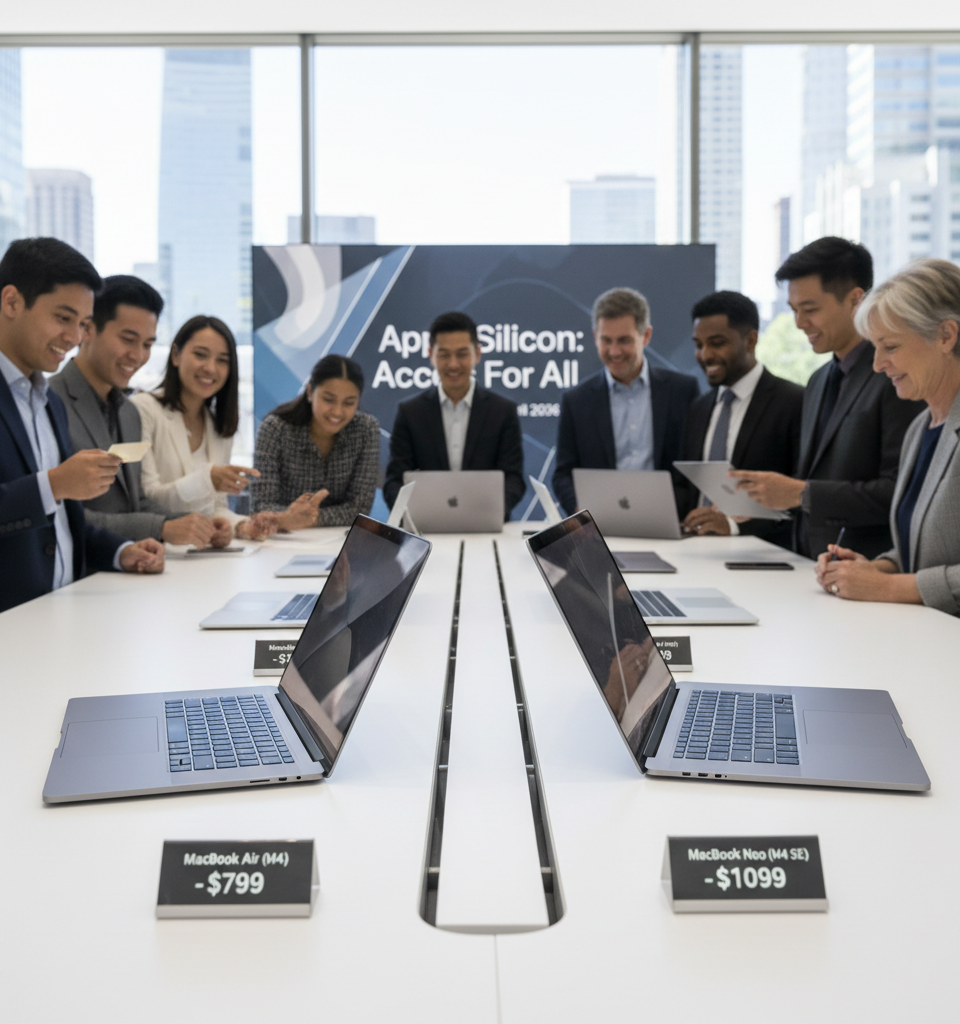
The landscape of premium portable computing is undergoing a significant transformation, as Apple’s strategic pivot to its proprietary Apple Silicon processors continues to yield substantial benefits for consumers. As revealed in an April 2026 buyer's guide, the cost of powerful MacBook configurations has plummeted, making advanced technology more accessible than ever before. For instance, a MacBook Air boasting 512GB of storage and 16GB of unified memory, once priced at $1,599 just a few years ago, is now directly available from Apple for an attractive $1,099. This aggressive pricing, coupled with the introduction of new entry-level models like the "MacBook Neo," is fundamentally altering consumer expectations and market dynamics.
This downward trend in pricing is a direct consequence of Apple's vertical integration strategy, moving away from Intel processors and designing its own chips. The inherent efficiency and cost-effectiveness of producing Apple Silicon, coupled with optimized supply chain management, have allowed the company to pass significant savings onto consumers. This strategic realignment is not merely a pricing adjustment; it represents a deliberate effort to broaden Apple's market penetration, attracting new segments of users who previously found MacBooks to be cost-prohibitive. The shift is particularly impactful in a global economic climate where value and performance are increasingly critical purchase drivers.
Beyond the headline-grabbing price drops, the current market offers an abundance of opportunities for discerning buyers. While Apple's direct pricing is competitive, secondary retailers and authorized resellers are frequently featuring additional incentives. For example, some electronics chains are bundling accessories or offering trade-in bonuses that further reduce the effective cost of ownership. The introduction of the MacBook Neo, specifically designed to be an entry-point product, signifies Apple's intent to capture a larger share of the budget-conscious market, without compromising the core user experience or ecosystem integration that defines the brand.
This aggressive pricing strategy is having a ripple effect across the entire personal computing industry. Competitors, particularly those in the premium Windows laptop segment, are under increased pressure to innovate on both performance and price. The improved price-to-performance ratio of MacBooks powered by Apple Silicon challenges traditional perceptions that Apple products are inherently more expensive. This forces PC manufacturers to either lower their margins, enhance their product offerings significantly, or risk losing market share to an increasingly competitive Apple.
Industry analysts are largely optimistic about Apple's long-term strategy. "Apple's sustained focus on vertical integration, epitomized by Apple Silicon, allows them unparalleled control over hardware and software optimization, which translates directly into cost efficiencies and superior user experience," explains Sarah Chen, a senior tech analyst at Global Insight Partners. "This isn't just about selling more units; it's about solidifying their ecosystem and expanding their addressable market, particularly in education and creative industries where performance and value are paramount."
The future implications of this pricing trend are substantial. We can anticipate continued innovation in Apple Silicon, potentially leading to even more powerful and energy-efficient chips that could further drive down manufacturing costs. There's also the possibility of more diversified MacBook lines targeting specific niches, much like the introduction of the Neo. Furthermore, the increased affordability may incentivize a wider range of software developers to optimize their applications for the Apple Silicon architecture, further enriching the macOS ecosystem and strengthening Apple's competitive advantage. The coming months will likely see sustained pressure on competitors to respond, potentially ushering in an overall more competitive and consumer-friendly laptop market.
As the April 2026 buyer's guide underscores, prospective MacBook owners are in an advantageous position. The combination of powerful, efficient Apple Silicon and strategic pricing has made high-performance MacBooks more accessible than ever before, marking a significant milestone in Apple's product evolution and a positive shift for consumers worldwide. Buyers are encouraged to explore not only Apple's direct offerings but also the broader market for additional promotional incentives.