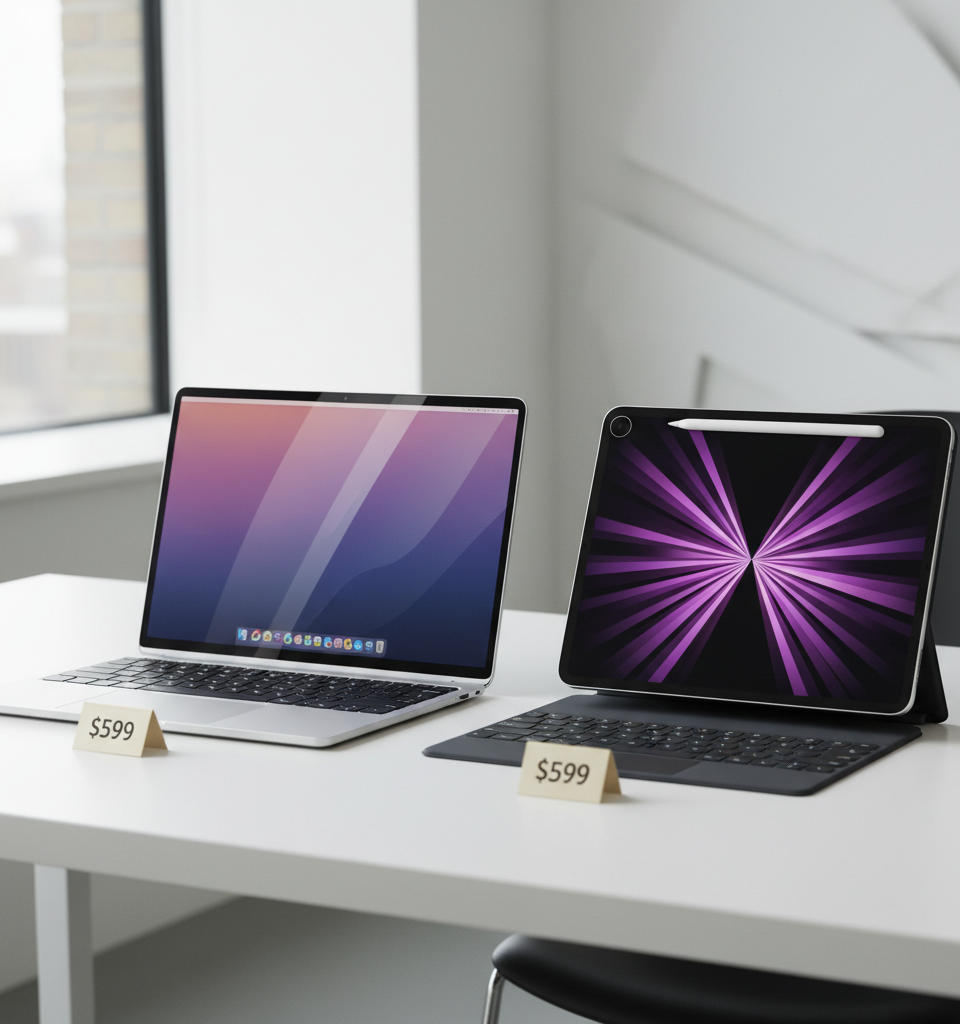
Apple's recent strategic pricing move has placed two of its marquee devices, the MacBook Neo and the 11-inch iPad Air M4, in direct financial competition, both retailing at an accessible starting price of $599. This parallel cost has ignited a robust debate among tech enthusiasts and everyday consumers alike regarding the optimal choice for productivity, creativity, and entertainment. The decision hinges significantly on user priorities, with each device offering specialized strengths tailored to different workflows and lifestyles.
A Shifting Landscape in Personal Computing
This pricing parity underscores a broader trend in personal computing: the blurring lines between traditional laptops and high-performance tablets. For years, Apple has championed the iPad as a potential laptop replacement, incrementally enhancing its capabilities with more powerful processors and sophisticated operating systems. The M4 chip, now in the iPad Air, represents a significant leap, bringing desktop-class performance to the tablet form factor, effectively challenging the conventional dominance of the MacBook in terms of raw processing power within certain price tiers. This development is particularly important as hybrid work models and on-the-go productivity continue to gain traction, demanding versatile devices that can adapt to various environments.
Core Distinctions and User Profiles
The fundamental differentiator between the MacBook Neo and the iPad Air M4 lies in their core operating philosophies and design. The MacBook Neo, a traditional clamshell laptop, offers a full desktop operating system (macOS), an integrated physical keyboard, and a trackpad, making it inherently optimized for sustained typing, multi-window management, and traditional software applications. Its robust file system and peripheral connectivity often appeal to users requiring dedicated workstation capabilities.
In contrast, the iPad Air M4, while equally powerful with its M4 chip, fundamentally operates as a touch-first device running iPadOS. Its strength lies in its portability, touch interface, Apple Pencil support for drawing and note-taking, and its ability to transform with accessories like the Magic Keyboard Folio (which adds significant cost, pushing the total price well beyond $599). This makes the iPad Air M4 particularly attractive to creatives, students, and users who prioritize mobility and a more interactive, tactile experience.
Market Impact and Competitive Dynamics
This direct pricing overlap is expected to intensify internal competition within Apple's own product ecosystem and redefine consumer expectations for entry-level premium devices. By offering M4 performance in an iPad Air at the same price as a MacBook Neo, Apple is effectively forcing consumers to decide between form factor and operating system preference, rather than solely on raw processing power. This strategy could potentially cannibalize sales of the entry-level MacBook if consumers perceive the iPad Air M4 as a more flexible or modern alternative, particularly given its advanced display technology and lighter form factor. Conversely, it solidifies Apple's market dominance by offering compelling options at a crucial price point, fending off competition from Windows-based laptops and Android tablets.
Expert Insights on the Value Proposition
Technology analysts are weighing in on the implications of this pricing structure. "Apple is cleverly segmenting its market not just by price, but by workflow paradigm," observes Sarah Chen, a senior analyst at Tech Insights Group. "The MacBook Neo targets traditional productivity users who need a robust, familiar desktop experience for tasks like coding, extensive document creation, or heavy data analysis. The iPad Air M4, however, is being positioned for the modern creative, the student, or anyone who values touch, mobility, and app-centric experiences, especially when paired with the Apple Pencil." She emphasizes that for users who primarily consume media or handle lighter tasks, the iPad Air's versatility often presents a stronger value proposition, provided they are comfortable with iPadOS’s inherent limitations compared to macOS.
The Road Ahead: Evolving Ecosystems
The long-term implications of this strategy point towards a continued evolution of both macOS and iPadOS, with Apple likely aiming to further bridge the functional gap between its desktop and tablet operating systems. Future iterations may see macOS incorporating more touch-friendly features, or iPadOS gaining even more robust multitasking and peripheral support. The convergence of hardware capabilities, driven by chips like the M4, suggests that the distinction between a "laptop" and a "tablet" will increasingly become a matter of user interface preference and specific application needs, rather than raw power.
Consumers can anticipate more nuanced choices from Apple, requiring a deeper understanding of their personal computing habits to make the optimal investment. This competitive dynamic ensures that both product lines will continue to innovate, offering enhanced features and performance at accessible price points.
Ultimately, the choice between the MacBook Neo and the iPad Air M4 at the $599 price point boils down to a personal audit of one's computing needs. For dedicated word processing, coding, or intensive multi-application workflows, the MacBook Neo stands as the more traditional and arguably more efficient choice. For those prioritizing portability, touch interaction, creative tasks with the Apple Pencil, and a more app-centric experience, the iPad Air M4 represents a compelling and powerful alternative, provided the cost of essential accessories like the Magic Keyboard Folio is factored into the total investment decision.