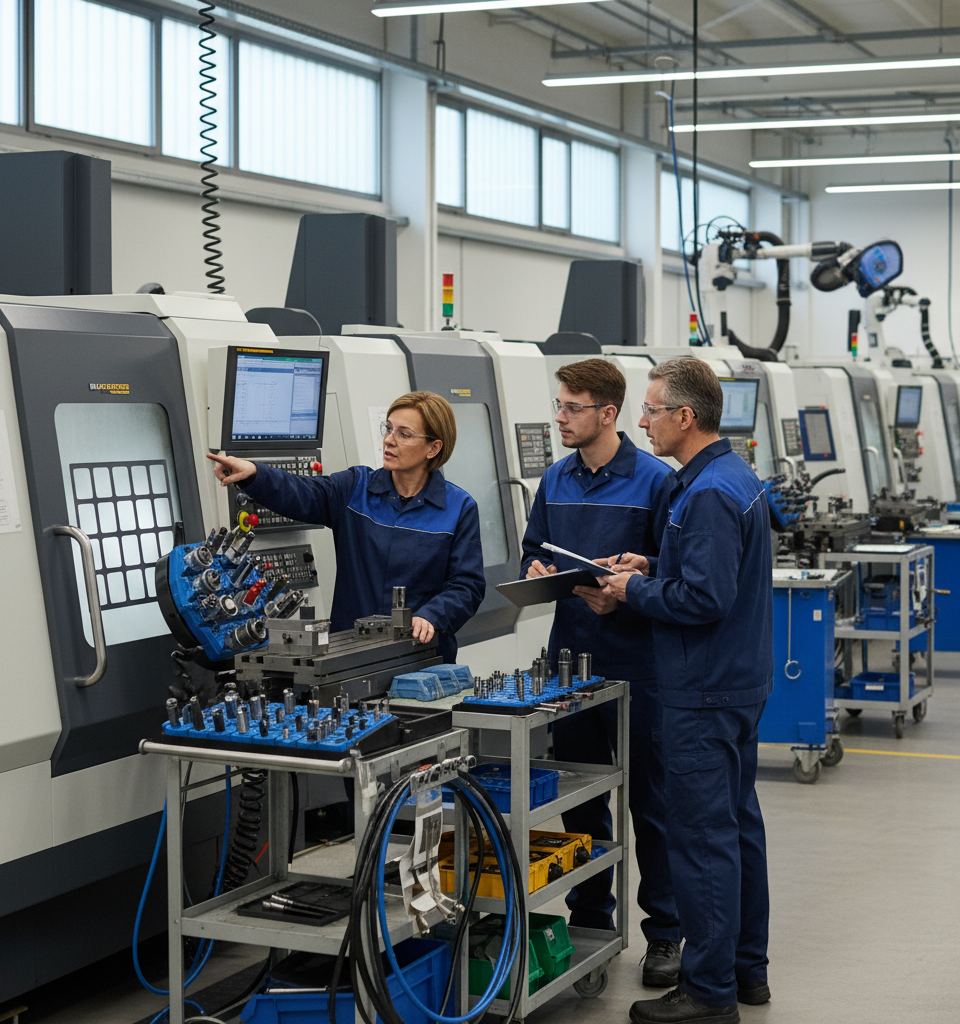
Manufacturing facilities, particularly machine shops, are increasingly turning their attention inward, leveraging existing resources to unlock substantial efficiency improvements. This strategic shift comes amid growing pressure to enhance productivity and reduce operational costs without embarking on expensive, full-scale automation projects. A recent analysis outlines actionable steps machine shops can take to transform common operational bottlenecks into significant gains in throughput, spindle uptime, and the critical efficiency of job changeovers.
The Urgency of Optimization in Modern Manufacturing
The machining industry operates on tight margins, where every second of spindle downtime and every minute of job changeover directly impacts profitability. While lights-out automation represents the pinnacle of modernization for many, its substantial capital expenditure and complex implementation often put it out of reach for numerous small to medium-sized enterprises (SMEs). This scenario has driven a renewed focus on lean manufacturing principles and incremental improvements. The global manufacturing sector, facing supply chain disruptions and skilled labor shortages, is particularly keen on strategies that yield quick returns on investment and improve operational resilience. Recent industry reports indicate that average machine shop utilization rates often hover around 60-70%, leaving significant untapped potential in their existing infrastructure.
Core Strategies for Enhanced Efficiency
The comprehensive analysis pinpoints five critical areas where machine shops can achieve immediate and measurable improvements. Firstly, optimized tool management and prepositioning can drastically cut setup times. By organizing and staging tools efficiently before a job begins, shops can reduce the non-cutting time associated with tool searches and changes.
Secondly, streamlined job scheduling and sequencing are vital. Implementing advanced planning systems or even better manual coordination can ensure a smooth flow of work, minimizing idle machine time between jobs. Thirdly, predictive maintenance and proactive spindle health monitoring are crucial for maintaining high uptime.
Instead of reacting to breakdowns, shops can anticipate and address potential issues, often preventing costly, unscheduled downtime. Fourthly, standardized setup procedures and work instructions empower operators to execute tasks more quickly and consistently, reducing errors and rework. Finally, cross-training operators enhances flexibility and resilience, allowing shops to adapt to varying workloads and unexpected personnel absences without significant disruption.
For instance, a recent case study from a Midwest fabrication plant showed a 15% reduction in job changeover time after implementing standardized procedures and an 8% increase in spindle uptime through better tool management.
Impact on the Broader Manufacturing Landscape
These efficiency-driven strategies have significant implications beyond individual shops. Across the manufacturing sector, a collective improvement in operational efficiency can bolster domestic production capabilities, making industries more competitive globally. By reducing lead times and improving production consistency, these practices can strengthen supply chains and decrease reliance on overseas manufacturing. Furthermore, optimizing existing assets through lean principles can free up capital that might otherwise be allocated to new equipment, allowing businesses to invest in workforce development, R&D, or market expansion. This approach resonates with the broader industry trend towards Industry 4.0, where data-driven insights are used to optimize processes, even without necessarily integrating fully automated systems.
Expert Insights on Sustainable Growth
Manufacturing consultants and industry analysts consistently advocate for these targeted optimization efforts. Dr. Evelyn Reed, a leading expert in production efficiency at the Institute of Manufacturing Excellence, commented recently, "The allure of 'lights-out' can overshadow the fundamental gains achievable through meticulous process optimization. Many shops overlook the 'low-hanging fruit' – the 10-15% efficiency improvements waiting in their current operations. These aren't just one-off fixes; they embed a culture of continuous improvement, which is far more sustainable in the long run than simply throwing technology at every problem." She further emphasized that these strategies often require minimal capital outlay but demand a commitment to training and data analysis.
The Path Forward: Continuous Improvement and Data Integration
Looking ahead, machine shops that successfully implement these strategies will likely find themselves in a stronger competitive position. The next phase of development will involve leveraging data analytics more deeply, not necessarily for full automation, but to refine these operational improvements. Integrating simple data collection points for job changeover times, spindle utilization, and tool wear can provide invaluable insights for further optimization. We can expect to see increased adoption of digital twin concepts for process simulation, even in smaller shops, enabling them to test changes virtually before committing resources. Furthermore, the emphasis will continue to be on empowering the existing workforce with better tools, clear procedures, and continuous training, transforming operational gaps into robust gains in productivity and profitability for years to come.