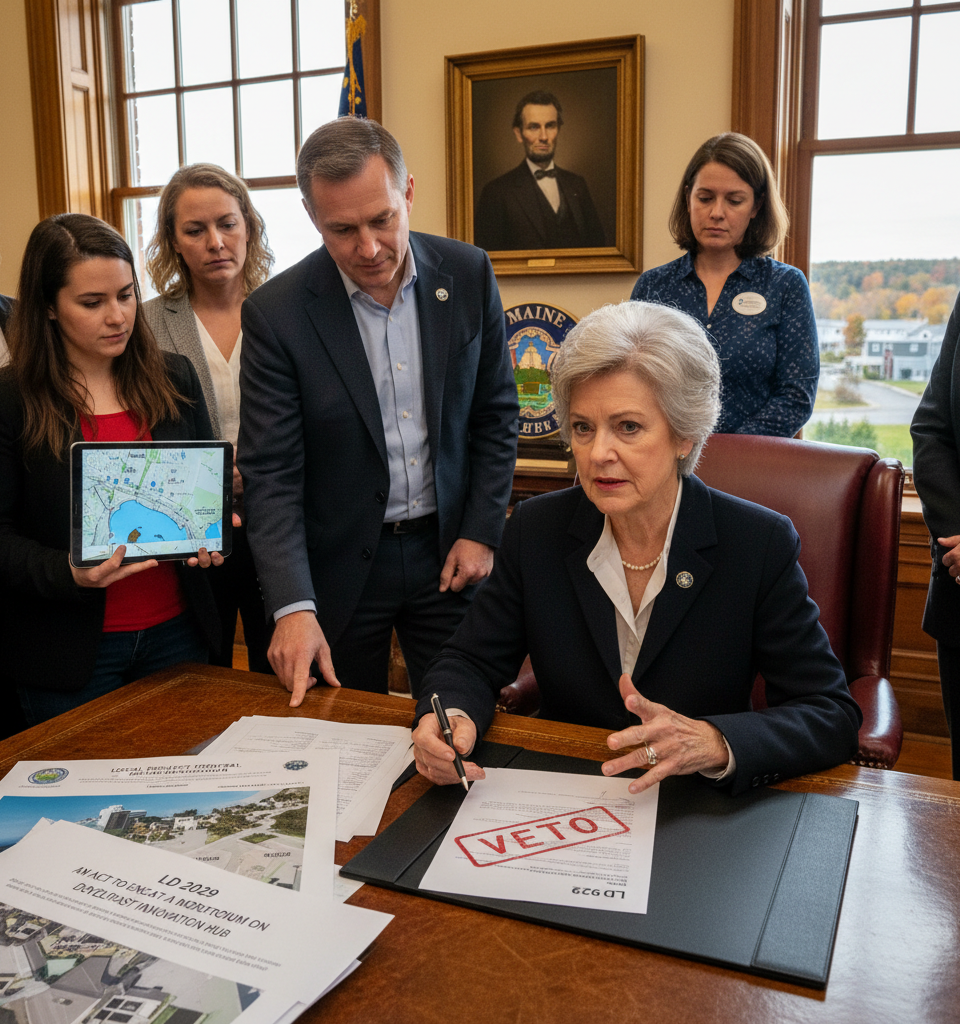
Maine Governor Janet Mills on Monday vetoed a highly anticipated bill that sought to implement a temporary moratorium on the construction of large data centers across the state until the fall of 2027. The legislative measure, which had successfully passed both chambers of the Maine Legislature on April 14, aimed to curb the rapid proliferation of energy-intensive data facilities. However, Governor Mills' decision underscores a nuanced policy struggle, particularly concerning an established data center project in Jay, Maine, which she believes should be exempt from such restrictions.
Context and Background
The debate surrounding data centers in Maine reflects a broader national discussion about the environmental impact and energy demands of an increasingly digital economy. Large data centers are notorious for their substantial electricity consumption, often drawing tens of megawatts of power to operate servers and cooling systems. This high energy demand raises concerns about grid stability, renewable energy targets, and potential increases in electricity costs for residents and businesses. States across the U.S. are grappling with how to balance technological advancement with environmental stewardship, making bills like Maine's proposed moratorium significant benchmarks in this evolving policy landscape.
Key Details and Specifics Governor
Mills' veto message emphasized her support for the concept of a temporary moratorium to allow state agencies adequate time to develop comprehensive energy and environmental policies specifically addressing data centers. "I am supportive of the goal of establishing a temporary pause on the construction of large-scale data centers while the State studies their impact," Mills stated in her official veto explanation. However, the critical sticking point was the bill's failure to carve out an exemption for the existing data center project in Jay, a facility described as crucial for local economic development. The proposed legislation specifically targeted data centers consuming 20 megawatts of power or more, directing state agencies like the Public Utilities Commission and the Department of Environmental Protection to study their long-term effects. The bill, identified as a legislative priority by environmental groups, sought to prevent what some described as an unchecked expansion of energy-guzzling facilities.
Industry and Market Impact
The veto has immediate implications for both existing and prospective data center developers in Maine. For companies considering new, large-scale facilities, the absence of a moratorium, for now, signals a less restrictive environment, albeit one under intense scrutiny. Conversely, the uncertainty surrounding future regulations could deter long-term investments. The data center industry, which relies heavily on stable energy prices and infrastructure, views such legislative actions with a keen eye. While a temporary ban might have been seen as a hurdle, the current situation still suggests that without clear guidelines, rapid development could face future, potentially more stringent, regulations. Developers in the 20+ megawatt category will be particularly mindful of ongoing legislative dialogue.
Expert Perspective Energy policy experts and environmental advocates have offered mixed reactions. Dr. Eleanor Vance, an energy economist at the Maine Policy
Institute, noted, "Governor Mills' veto highlights the delicate balance between supporting economic projects and addressing statewide energy challenges. While a moratorium offers a pause for reflection, a blanket ban without considering local nuances can stifle beneficial development." Environmental groups, however, expressed disappointment, with representatives from the Maine Environmental Council stating, "This veto is a missed opportunity to safeguard Maine's energy future and ensure sustainable growth. We believe a comprehensive moratorium is essential to prevent uncontrolled energy demand spikes." The consensus among analysts is that the state must develop a robust regulatory framework to manage data center growth sustainably, rather than repeatedly engaging in reactive legislative battles.
What's Next? The veto sends the bill back to the Maine
Legislature, where lawmakers will have the opportunity to attempt an override. A two-thirds majority in both the House and Senate would be required to overturn the Governor's decision, making an override a challenging, though not impossible, outcome. Should the veto be sustained, the legislative energy will likely shift towards crafting a revised bill that incorporates the Governor's concerns regarding the Jay project while still addressing the broader issue of data center energy consumption. Looking ahead, state agencies are still expected to continue their studies into optimal energy policies for large-scale energy consumers. The long-term prognosis suggests that Maine will eventually institute some form of oversight on data center development, but the specifics of that framework remain uncertain, with new legislative proposals likely to emerge in upcoming sessions.