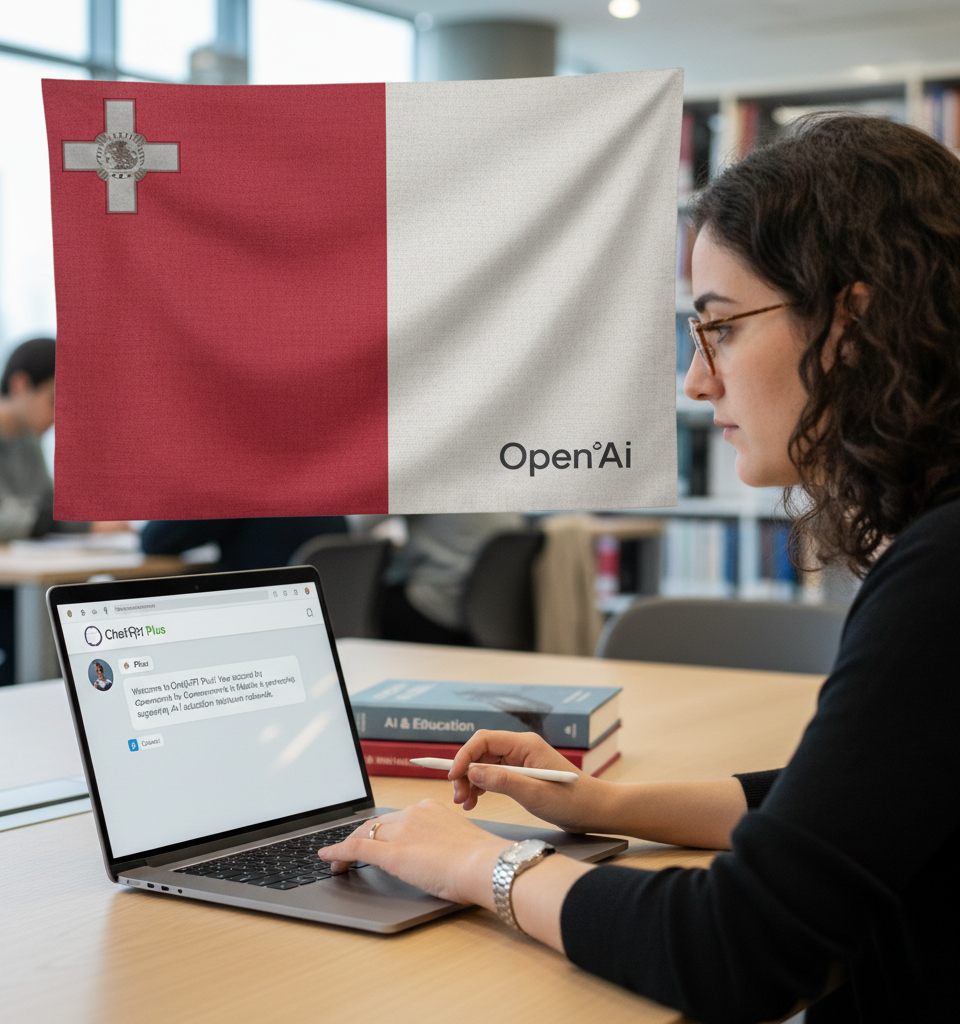
In a pioneering move demonstrating a national commitment to AI literacy, OpenAI has collaborated with the government of Malta to provide every Maltese citizen with a free one-year subscription to ChatGPT Plus. The initiative, slated to roll out imminently, is uniquely structured: recipients must first successfully complete an online educational course designed to familiarize them with the fundamentals of artificial intelligence, its capabilities, and its ethical considerations. This program positions Malta at the forefront of nations actively integrating AI education with practical application as a public service.
Context and Significance
This partnership extends beyond mere product distribution; it represents a strategic investment in human capital. Malta, a small island nation in the Mediterranean, has long aimed to establish itself as a technology hub, particularly in emerging fields such as blockchain and artificial intelligence. By offering universal access to a premium AI tool, coupled with mandatory educational training, the government seeks to foster a digitally savvy populace capable of leveraging AI for personal and professional growth. This initiative could serve as a blueprint for other nations grappling with the challenge of preparing their citizens for an AI-driven future, highlighting the importance of both access and understanding.
Program Details and Implementation
The free ChatGPT Plus subscriptions, valued at approximately $240 per user annually (based on the standard $20 per month fee), will become accessible to all eligible Maltese citizens following the completion of the prerequisite AI course. The course, developed in conjunction with local educational institutions, covers key topics such as machine learning basics, natural language processing, data privacy, and the responsible use of AI. Maltese officials have indicated that the sign-up process will be managed through a secure government portal, ensuring equitable access and verifying citizenship. Specific details regarding the course curriculum and enrollment procedures are expected to be announced in the coming weeks, with a target rollout date in the latter half of this year.
Industry and Market Impact
The collaboration signals a significant shift in how AI providers might engage with sovereign states, moving beyond enterprise contracts to direct citizen empowerment. For OpenAI, this represents a massive public relations win and an unparalleled opportunity to deepen its user base within a structured national framework. It could also spur other AI companies to explore similar government-backed initiatives, potentially democratizing access to various AI technologies on a global scale. This model could reshape consumption patterns for AI services, particularly in smaller economies or developing nations looking to quickly upscale their digital capabilities. The aggregate economic impact on Malta, particularly in sectors like education, small business, and public services, could be substantial as citizens begin to integrate advanced AI into their daily routines.
Expert Perspectives
Industry analysts have lauded Malta's proactive approach. Dr. Elena Petrov, a leading AI policy expert at the European Institute of Technology, stated, "Malta's strategy is remarkably forward-thinking. It addresses not just access, but also the critical need for AI literacy. Simply giving people tools isn't enough; they need to understand how to use them effectively and ethically. This model could significantly reduce the digital divide concerning AI." Others noted the potential for Malta to become a testbed for national AI adoption strategies, offering invaluable insights into the social, economic, and educational outcomes of such widespread access.
Future Implications and Developments
The success of Malta's program could pave the way for similar initiatives in other countries, potentially influencing global policy on AI education and accessibility. Discussions are already underway to assess the long-term impact of integrating AI tools into public services and educational curricula. Furthermore, this partnership could inspire OpenAI and other major tech firms to develop more bespoke educational modules tailored to national contexts, fostering a more informed global citizenry. The Maltese government has expressed interest in evaluating the program's effectiveness after the first year, with potential extensions or expansions based on citizen engagement and demonstrated benefits in productivity and innovation across the island nation.