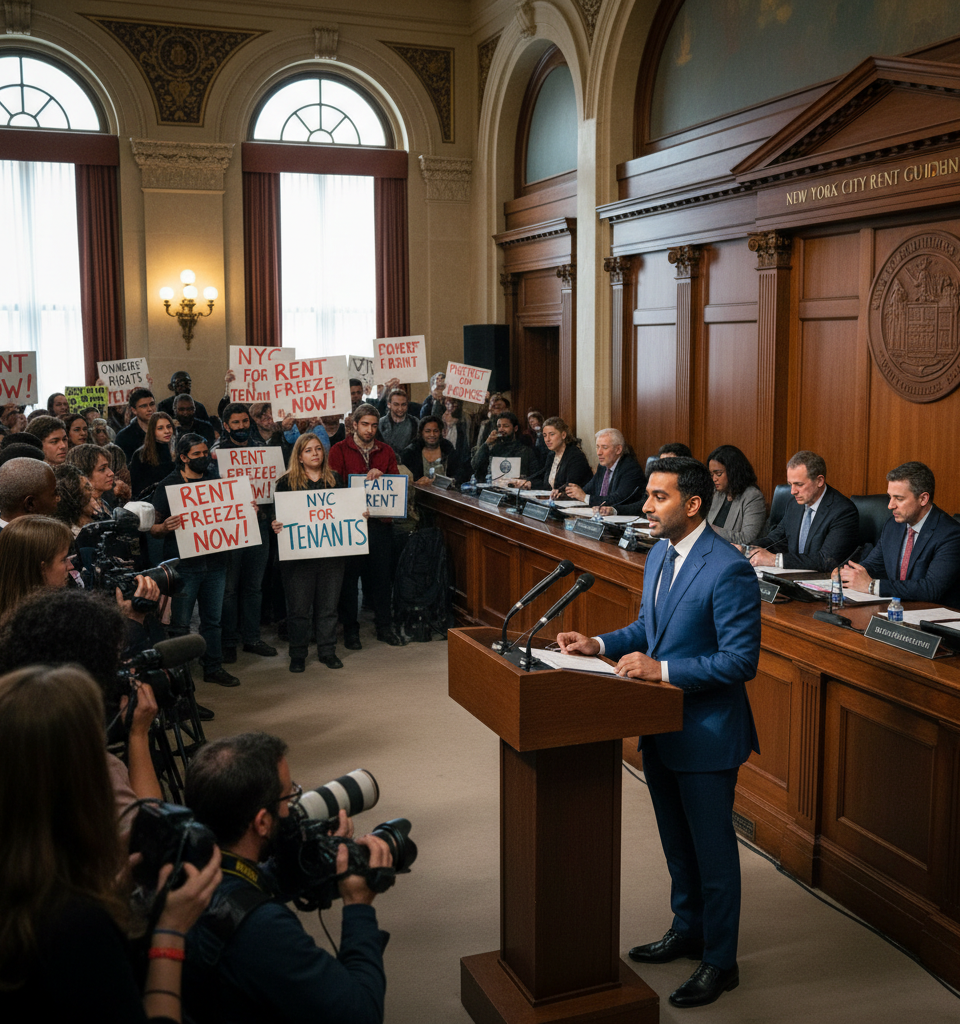
New York City's Rent Guidelines Board (RGB) is poised for a pivotal preliminary vote this week on rent adjustments for approximately one million rent-stabilized apartments, setting the stage for the first major challenge to Assemblymember Zohran Mamdani's ambitious call for a rent freeze. The vote, a critical early indicator, comes as the city grapples with a persistent housing affordability crisis and a vocal segment of small property owners warning of severe financial insolvency should a freeze be enacted.
Context and Stakes
This year's RGB deliberations are particularly charged, following a period of significant rent increases in recent years. Last year, the board approved increases of 3% for one-year leases and 5% for two-year leases, sparking outrage among tenant advocates. Historically, debates around rent adjustments have been contentious, reflecting the deep divisions between tenant groups advocating for affordability and landlord associations citing rising expenses. Mamdani's push for a 0% increase, a full rent freeze, represents a significant escalation in tenant demands, aiming to provide immediate relief to struggling New Yorkers. The proposal has garnered considerable support from progressive political factions and tenant organizations, who highlight the disproportionate impact of inflation and stagnant wages on working-class communities.
Key Details and Perspectives
During the board's public hearings, small property owners testified extensively on their escalating costs. Data presented by groups representing these landlords indicated a significant uptick in expenses, with some reporting 10-15% increases in insurance premiums alone over the past year. Property taxes, water, sewer, and maintenance costs have also seen substantial rises.
Joseph Strasburg, president of the Rent Stabilization Association, warned that a freeze would be a “death knell” for many owners, particularly those holding portfolios of older, pre-1974 buildings that often require more intensive and costly maintenance. He cited specific examples of buildings facing 20-30% increases in heating oil and boiler repair costs, directly impacting their ability to provide essential services to tenants. Mamdani, conversely, argues that any increase places an undue burden on tenants already struggling with high costs of living, emphasizing that landlords should absorb current economic pressures.
Industry and Market Impact
A rent freeze, or even a significantly low increase, would send ripple effects through New York City's complex real estate market. For private equity firms and larger corporate landlords, the impact might be absorbed more readily due to diversified portfolios and economies of scale. However, for the city's vast network of mom-and-pop landlords, who own a substantial portion of the older rent-stabilized stock, the financial strain could be existential.
These owners often rely on rental income directly to cover mortgage payments, property taxes, and maintenance. A freeze could lead to deferred maintenance, decreased building quality, and potentially, increased distress sales to larger, less local entities, altering the character of many neighborhoods and accelerating gentrification in some areas. The long-term supply of affordable housing could paradoxically be threatened if existing housing stock deteriorates due to lack of investment.
Expert Analysis
Real estate economists and housing policy experts offer varied perspectives. Dr. Emily Carter, a professor of urban economics at NYU, noted, “While the humanitarian argument for a rent freeze is strong, the economic reality for owners of older buildings cannot be ignored. A blanket freeze without corresponding relief for property owners, such as tax abatements or subsidies for repairs, risks accelerating the deterioration of affordable housing stock.” She suggested that a more nuanced approach, perhaps tiered increases based on building age or owner income, might be more sustainable. Conversely, tenant advocates, like Sarah Jenkins of the NYC Tenants Union, highlight that a freeze is necessary to prevent a wider housing crisis, arguing that landlords often exaggerate cost increases and that profits are prioritized over tenant well-being.
The Road Ahead
The preliminary vote this week is just the first step. Following this initial determination, the RGB will conduct additional public hearings throughout the spring, gathering more testimony and data. The board typically holds a final vote in late June, with the new rent guidelines taking effect for leases commencing on or after October 1. The political pressure on the board is immense from both sides, and the specific composition of the RGB, often appointed by the Mayor, can significantly influence the outcome. Activist groups on both sides are already mobilizing for further demonstrations and lobbying efforts, making it clear that the battle over rent adjustments is far from over. The outcome will not only dictate the financial lives of millions of New Yorkers but also send a powerful message about the city's approach to housing affordability and property rights.
Navigating the delicate balance between tenant protection and property owner viability remains the RGB's central, and increasingly difficult, challenge in the coming months.