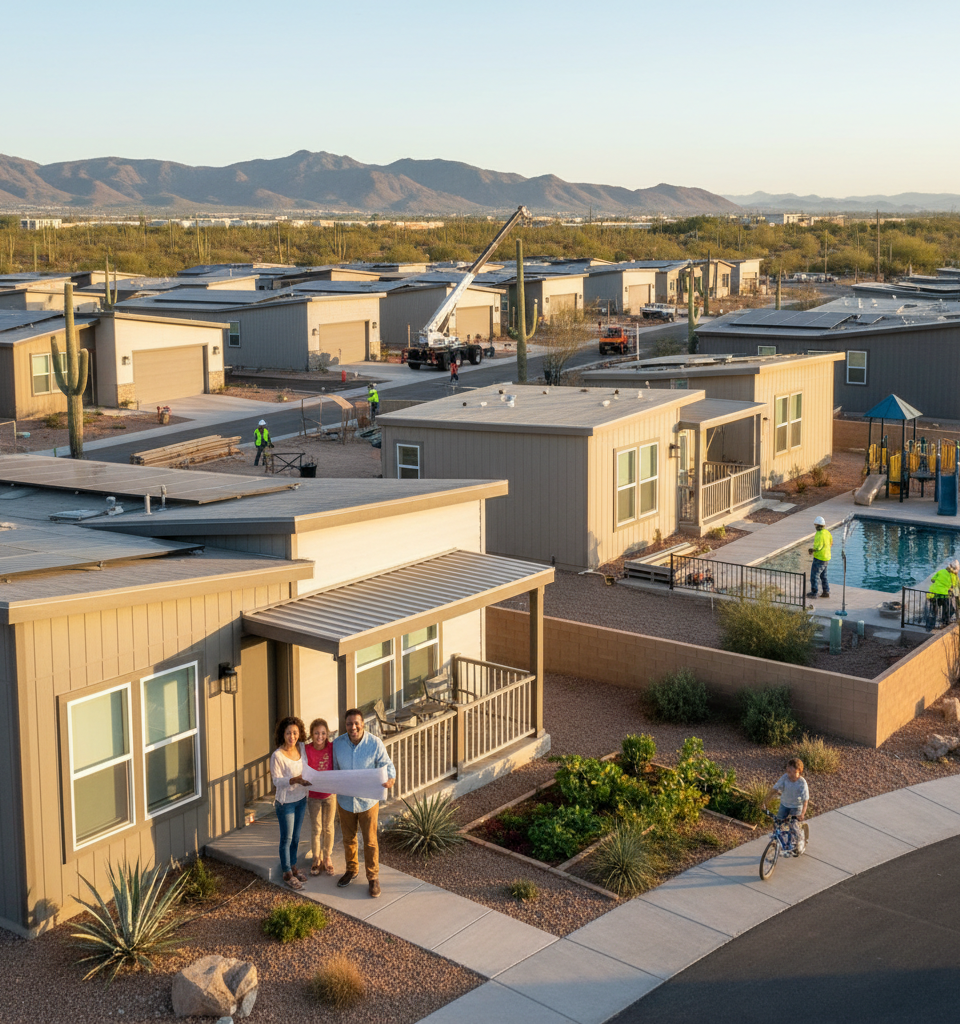
WASHINGTON D.C. — As the United States grapples with an acute housing affordability crisis, a viable and often overlooked solution – manufactured housing – continues to be hampered by systemic barriers. Experts and industry leaders are increasingly pointing to this segment as a powerful tool for expanding homeownership and delivering economic stability, but outdated perceptions, restrictive zoning ordinances, and persistent financing gaps are preventing its broader adoption and impact.
The urgency of the housing crisis cannot be overstated. Median home prices across the U.S. have soared to unprecedented levels, pushing homeownership out of reach for a significant portion of the population. According to the National Association of Realtors, the median existing home sale price in November 2023 was $387,600, a stark contrast to the average manufactured home price, which typically ranges from $100,000 to $200,000. This substantial cost differential highlights manufactured housing's potential to bridge the affordability gap for low-to-moderate-income families, offering a pathway to asset building and wealth creation.
Key studies underscore the financial viability of manufactured housing. Data consistently shows that these homes, when properly sited and maintained, appreciate at rates comparable to or even exceeding traditional stick-built homes in many markets. For instance, a 2018 study by the Federal Housing Finance Agency (FHFA) found that manufactured homes appreciated by an average of 3.8% annually, aligning closely with conventional homes. This dispels common misconceptions about their long-term value, presenting them not just as affordable housing, but as sound investments.
The impact on the broader housing landscape could be transformative. By providing a quicker and more cost-effective construction method, manufactured housing could alleviate supply shortages that plague many metropolitan areas. Factory production allows for economies of scale, quality control, and reduced construction times, circumventing many of the labor and material challenges faced by traditional builders. Expanding its footprint could inject much-needed inventory into constrained markets, potentially tempering overall price escalation.
“The potential for manufactured housing to address our housing woes is immense, yet it remains largely untapped,” asserts Sarah Bloom Raskin, a former Federal Reserve governor and housing policy expert. “The biggest hurdles are not manufacturing quality or homeowner demand, but rather the antiquated regulatory frameworks and the lack of equitable access to financing. Many municipalities, often driven by a lack of understanding or perceived stigma, still impose zoning restrictions that effectively ban manufactured homes, even on single-family lots. This is a policy failure that demands immediate attention.” Raskin notes that only about 20% of all manufactured home loans are eligible for conventional mortgages, with the majority falling under chattel loans, which carry higher interest rates and shorter terms, significantly increasing the cost of homeownership for these buyers.
Looking ahead, advocates are pushing for comprehensive policy reforms. This includes federal and state-level initiatives to pre-empt discriminatory zoning laws, encouraging municipalities to integrate manufactured housing into their affordable housing strategies, and expanding access to conventional mortgage financing. The Manufactured Housing Institute (MHI) is actively lobbying Congress to modernize lending regulations and promote greater education among lenders and consumers. Furthermore, innovations in design and energy efficiency are elevating the perception and quality of modern manufactured homes, making them increasingly indistinguishable from their site-built counterparts.
With escalating demand for affordable housing showing no signs of abating, the imperative to fully embrace manufactured housing as a legitimate and robust solution has never been clearer. Overcoming the existing policy and financial barriers would not only unlock significant economic opportunities but also provide millions of Americans with the dignity and stability of homeownership.