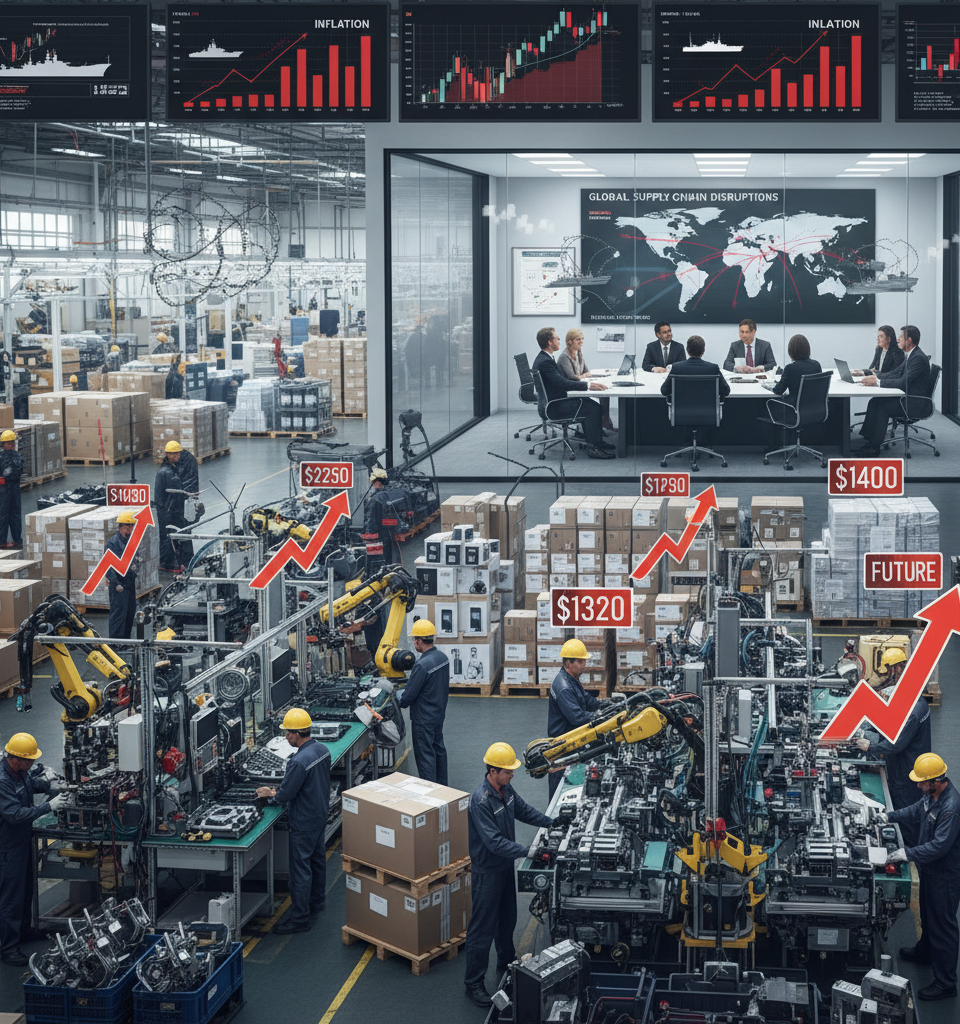
U.S. manufacturing continued its upward trajectory in April, marking the fourth consecutive month of expansion, according to the latest report from the Institute for Supply Management (ISM). This sustained growth indicates a resilient industrial base, yet the positive sentiment is tempered by growing concerns over inflation as all six of the largest manufacturing industries reported price increases during the month. These rising costs are largely attributed to the protracted conflict in Iran and the persistent impact of tariffs, exerting considerable pressure on supply chains and profitability.
Context and Background
The current manufacturing expansion arrives after a period of volatility and uncertainty, stemming from global supply chain disruptions and fluctuating demand. The Purchasing Managers' Index (PMI), a key indicator of economic health for the manufacturing sector, has consistently shown improvement, reflecting a stabilizing and gradually strengthening industrial landscape. This sustained growth is crucial for overall economic health, contributing significantly to job creation and GDP.
However, the current geopolitical climate, particularly the escalating tensions in the Middle East and their impact on global energy markets, coupled with existing trade policies, creates a complex environment where growth is continually battling inflationary headwinds. The current scenario echoes historical periods where geopolitical events have directly translated into price shocks for commodities and manufactured goods, raising concerns about the potential for stagflation if not carefully managed.
Key Details and Industry Specifics
The ISM report highlighted that every major manufacturing industry — including Food, Beverage & Tobacco Products; Transportation Equipment; Chemical Products; Fabricated Metal Products; Computer & Electronic Products; and Machinery — experienced price hikes in April. This widespread impact underscores the systemic nature of the inflationary pressures. While specific percentage increases were not uniformly disclosed for each sector, the overall sentiment points to significant jumps in input costs, ranging from raw materials to transportation and labor.
For instance, manufacturers reported increased costs for steel, aluminum, crude oil, and various electronic components. " This direct impact on input costs inevitably translates into higher prices for consumers or reduced profit margins for manufacturers.
Broader Industry and Market Impact
The persistent price increases pose a dual challenge for the manufacturing sector and the broader economy. For manufacturers, these rising costs can erode profit margins, necessitating difficult decisions regarding pricing strategies, operational efficiencies, and investment plans. Industries heavily reliant on imported raw materials or those with extensive international supply chains are particularly vulnerable.
For consumers, the upstream price hikes are likely to translate into higher prices for finished goods, further fueling inflation and potentially dampening consumer spending. S. goods more expensive in international markets.
The stock market has shown sensitivity to inflationary reports, with sectors like industrials and materials often reacting to commodity price fluctuations and supply chain news.
Expert Perspectives
Economists and market analysts are closely monitoring these trends, with many expressing concern over the enduring inflationary pressures. Dr. Evelyn Reed, a senior economist at Global Macro Advisors, noted, "While the manufacturing expansion is a positive signal for economic activity, the embedded inflation poses a significant risk. The Iran conflict and tariffs act as persistent cost push factors, making it challenging for central banks to achieve their inflation targets without impacting growth." Other analysts suggest that businesses may need to become more agile in their sourcing strategies, exploring diversified supply chains and more localized production to mitigate geopolitical risks. There's also a growing debate on whether current policies are adequately addressing the root causes of these price increases, particularly concerning trade tariffs.
Future Implications and Outlook
The outlook for the coming months will heavily depend on the trajectory of geopolitical events and the effectiveness of policy responses. Should tensions in Iran escalate further, or if new tariffs are implemented, manufacturers could face even greater cost pressures. Conversely, any de-escalation or resolution of existing conflicts could provide some relief to commodity markets and supply chains.
Businesses are likely to continue exploring strategies to insulate themselves from these external shocks, including investing in automation, diversifying sourcing, and renegotiating supplier contracts. Policymakers face the delicate task of balancing economic growth with inflation control, potentially through targeted measures to alleviate supply chain bottlenecks or by re-evaluating certain trade policies. The ability of manufacturers to absorb or pass on these costs will be a critical determinant of economic stability in the near term.
In summary, the manufacturing sector demonstrates robust growth, a testament to its resilience. However, the persistent and widespread price increases, driven by complex geopolitical factors and trade policies, present a formidable challenge that promises to be a central focus for businesses and policymakers alike throughout the remainder of the year.