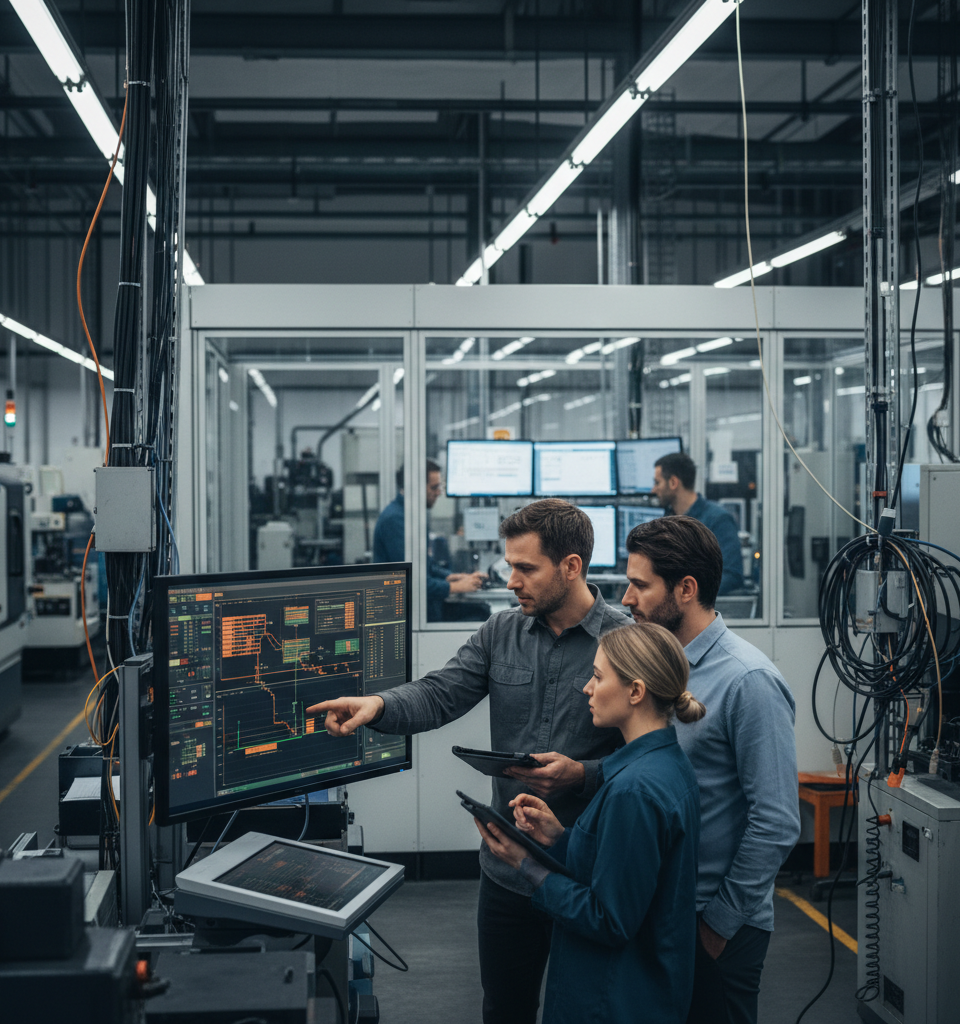
The manufacturing sector is aggressively pursuing the transformative power of artificial intelligence, heralding a new era of efficiency and innovation across production lines worldwide. From real-time quality control to predictive analytics that avert costly downtimes, AI promises to revolutionize industrial operations. However, this ambitious embrace of advanced technology is colliding with a stark reality: the foundational network infrastructure within many factories is proving woefully inadequate to handle the sheer volume and velocity of data required by AI applications.
This disparity not only hinders progress but also introduces significant operational risks, prompting industry leaders to reassess their digital transformation strategies with a renewed focus on network modernization.
The Unseen Bottleneck
Historically, operational technology (OT) networks were designed for reliability and specific, often isolated, control functions, prioritizing uptime over high-bandwidth data transfer. These legacy systems, frequently comprising a patchwork of proprietary protocols and aging hardware, are now confronting the immense data streams generated by ubiquitous sensors, high-resolution cameras, and edge AI devices. AI models, particularly those involved in machine vision or complex process optimization, demand continuous, low-latency access to vast datasets for training, inference, and real-time decision-making. The current infrastructure often buckles under this pressure, leading to delayed insights, throttled performance, and ultimately, a failure to fully capitalize on AI's promise. The urgency is amplified as more manufacturers look to integrate AI for critical tasks, raising concerns about operational stability and cybersecurity.
Data Demands and Performance Pitfalls Implementing AI on the factory floor typically involves several layers of data processing, starting from the edge – sensors and cameras directly on machinery – to local servers and potentially cloud-based analytics platforms.
Each layer necessitates robust connectivity. For instance, a single industrial camera recording high-definition video for AI-driven defect detection can generate tens of gigabytes of data per hour. Multiply this across dozens or hundreds of such devices on a single production line, and the data burden quickly becomes astronomical. Traditional Ethernet networks, often running at 100 Mbps or even 1 Gbps, are simply not built for this scale, leading to network congestion, packet loss, and unacceptable latency. This performance deficit directly impacts the effectiveness of AI, turning real-time insights into historical data that arrives too late to make a difference.
Industry Impact and Strategic Imperatives
The implications of this network-AI mismatch are profound for the manufacturing industry. Companies unable to modernize their networks risk falling behind competitors who can leverage AI for superior quality, faster time-to-market, and reduced operational costs. The market for industrial AI solutions is projected to grow from an estimated $5.1 billion in 2022 to over $16.7 billion by 2027, according to MarketsandMarkets, underscoring the enormous potential at stake. However, realizing this potential hinges on strategic infrastructure investment. Manufacturers are increasingly realizing that AI adoption cannot be an isolated project; it must be part of a holistic digital transformation that starts with a resilient, high-performance network foundation. This often means upgrading to industrial-grade gigabit or even 10-gigabit Ethernet, exploring 5G private networks for wireless flexibility, and implementing robust cybersecurity measures to protect integrated systems.
Expert Insights on Phased Modernization
Industry analysts and technology experts are unified in their recommendation: a phased approach is paramount. "Jumping headfirst into a full-scale AI deployment without a commensurate network upgrade is akin to putting a Formula 1 engine into a bicycle frame," states Dr. Evelyn Reed, a leading industrial IoT consultant. "It's not just about bandwidth; it's about network segmentation, redundancy, low-latency capabilities, and security protocols designed for heterogeneous IT/OT environments." Experts advise starting with pilot projects in contained areas, rigorously testing network performance and AI efficacy before scaling. This allows for validation of connectivity requirements, identification of bottlenecks, and iterative improvements to the network architecture. Gartner predicts that by 2025, 75% of industrial organizations will have converged their IT and OT networks, a testament to the growing understanding of network as a foundational AI enabler.
The Path Forward: Integration and Intelligence
The future of AI on the factory floor is inextricably linked to the evolution of industrial networks. The immediate next steps for manufacturers must involve a comprehensive audit of existing OT infrastructure, identifying critical vulnerabilities and upgrade requirements. Investment in technologies like Time-Sensitive Networking (TSN), industrial 5G, and robust edge computing capabilities will become non-negotiable. Furthermore, the convergence of IT and OT teams, dismantling traditional organizational silos, will be crucial for designing and managing these complex, data-intensive environments. As AI continues to mature, its dependency on intelligent, high-capacity, and secure networks will only intensify, making proactive network modernization not just beneficial, but essential for competitive survival and sustained innovation in the manufacturing landscape.