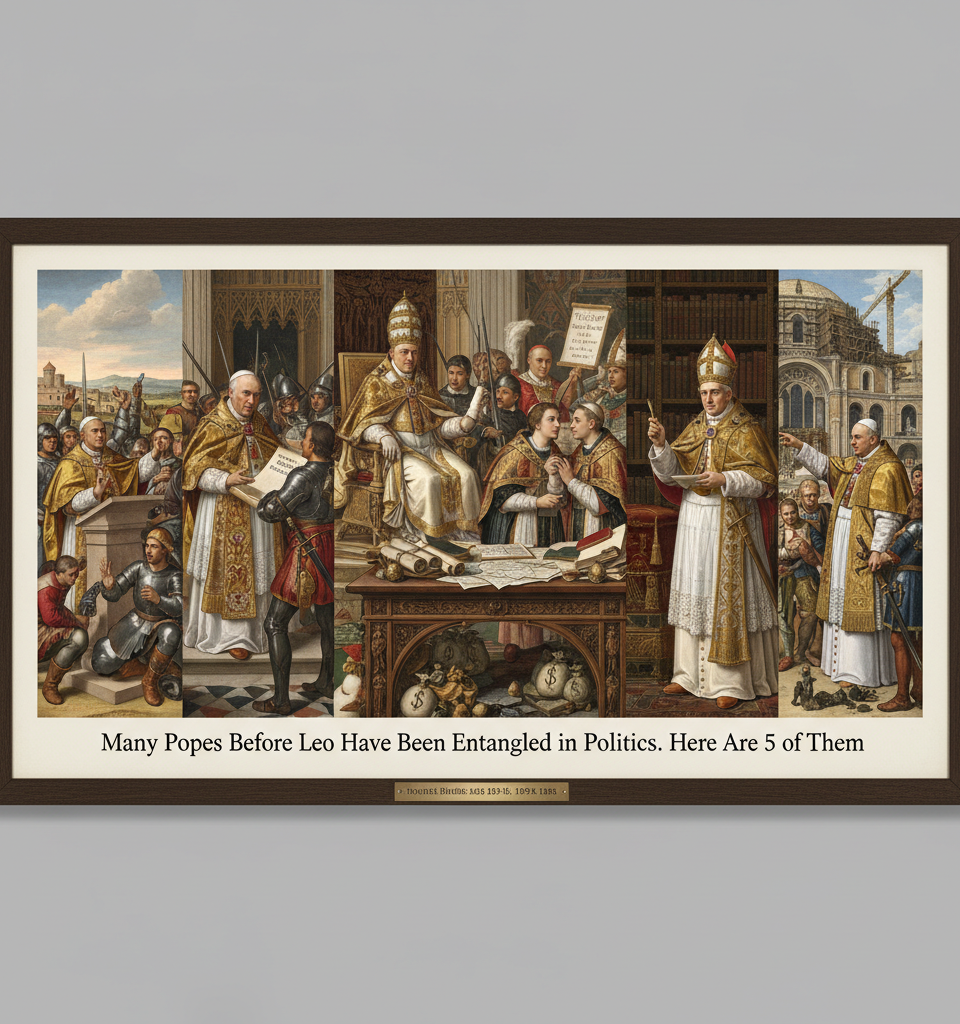
VATICAN CITY – Pope Leo XIV finds himself at the center of a significant political controversy, facing direct criticism from President Trump. This recent development underscores a recurring theme throughout the history of the papacy: the unavoidable entanglement of spiritual authority with worldly politics. Indeed, Leo XIV’s current challenges are not an anomaly but rather a continuation of a historical pattern, echoing the experiences of numerous predecessors who have confronted and engaged with political issues, often under intense scrutiny.
A Legacy of Intervention
The papacy's engagement with political affairs has taken many forms over the centuries, ranging from direct governance of the Papal States to influential moral pronouncements on global conflicts and social justice. Popes have historically wielded significant temporal power, negotiating with monarchs, mediating disputes between nations, and at times, directly challenging secular rulers. This historical context provides crucial perspective on Pope Leo XIV’s present situation, suggesting that such confrontations are less a deviation and more an inherent aspect of the papal office, particularly given its global moral and ethical footprint.
Modern Precedents: Francis and John Paul II
Among Leo XIV's more recent predecessors, both Pope Francis and Pope John Paul II stand out for their notable engagements with pressing political issues. Pope Francis has consistently addressed global challenges ranging from climate change and economic inequality to migration and international conflicts, often drawing both praise and criticism from political leaders and the public alike. His pronouncements on social justice and his advocacy for the poor and marginalized have frequently intersected with, and at times challenged, governmental policies worldwide.
Similarly, Pope John Paul II was a towering figure on the global political stage, famously credited by many historians with playing a pivotal role in the collapse of communism in Eastern Europe. His steadfast opposition to totalitarian regimes, his visits to his native Poland, and his unwavering defense of human rights were deeply political acts that had profound geopolitical consequences. These examples illustrate how recent pontiffs have navigated, and at times actively shaped, the international political landscape, setting precedents for Leo XIV’s contemporary challenges.
The Inherent Nexus of Faith and State
The ongoing dynamic between Pope Leo XIV and President Trump serves as a potent reminder of the inherent and often unavoidable nexus between religious authority and political power. Historically, the Catholic Church, as a global institution with over a billion adherents, possesses a moral authority that transcends national borders, often leading its leader to comment on or intervene in matters of state that affect the welfare of its faithful or broader humanity. This position inevitably places the Pope in dialogue, and sometimes in direct conflict, with secular governments and leaders.
Global Implications of Papal Politics
When a pontiff assumes a political stance, particularly one that draws direct criticism from a head of state as powerful as the U.S. President, the implications resonate globally. Such interactions can influence diplomatic relations, energize political movements among Catholic populations, and shape public discourse on a wide array of ethical and social issues. The Church's moral voice can also impact international policy debates on matters such as peace, human rights, and humanitarian aid, making papal political engagements a matter of significant international import.
Looking Ahead: The Future of Papal Diplomacy
As Pope Leo XIV continues to navigate the complexities of his papacy, his ongoing interactions with political figures like President Trump will undoubtedly be closely scrutinized. These events not only shape the immediate discourse but also contribute to the evolving legacy of papal diplomacy and the Catholic Church's role in a rapidly changing world. The question of how Pope Leo XIV will manage these political pressures, and what impact his stances will have on both the Church and international relations, remains a critical area of observation for political analysts and religious scholars alike.