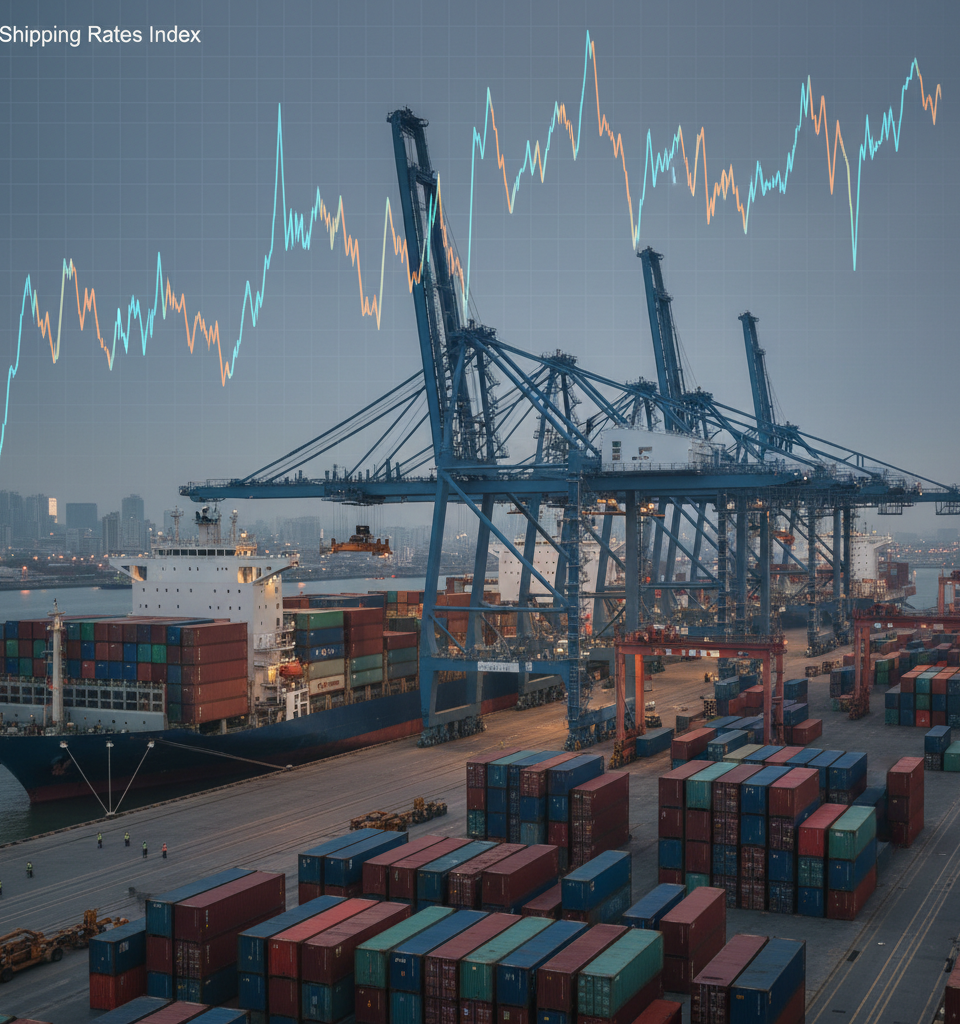
Global businesses reliant on cross-border trade are confronting renewed uncertainty as maritime shipping costs enter another unpredictable phase. The current volatility directly impacts supply chain planning, inventory management, and profit margins for companies sourcing and selling internationally, potentially forcing critical adjustments to pricing strategies and global market access.
Maritime shipping rates are experiencing a renewed period of significant volatility, even as container import demand remains consistently elevated. This latest fluctuation is prompting close scrutiny from industry analysts, who are questioning the underlying factors contributing to these unpredictable shifts and their implications for overall market stability.
Context and Background
The shipping industry has been a bellwether for global economic health, particularly since the disruptions of the early 2020s. Following periods of unprecedented rate hikes driven by pandemic-induced supply chain bottlenecks and surges in consumer demand, the market saw some stabilization. However, the current situation suggests that fundamental issues within the global logistics framework persist, challenging the predictability that businesses crave for long-term planning. The sustained high import demand indicates a robust, albeit perhaps uneven, economic recovery or continued consumer spending patterns that are putting pressure on shipping capacity and infrastructure.
Key Details
The core issue revolves around the paradoxical relationship between strong demand and volatile pricing. Typically, elevated demand would lead to more predictable, and often higher, rates as carriers capitalize on limited space. However, the current environment shows rates swinging unpredictably, suggesting that demand is not the sole, or even primary, driver of the present instability. This hints at other, potentially systemic, issues influencing carrier strategies, port efficiencies, or macroeconomic headwinds.
Industry and Market Impact
For industries heavily dependent on international trade, such as retail, manufacturing, and e-commerce, this renewed volatility poses considerable challenges. Businesses face increased costs for transporting goods, which can erode profit margins or necessitate price increases for consumers. Furthermore, the unpredictability makes forecasting and budgeting exceptionally difficult, potentially deterring new investments in global supply chain expansion or diversification. The ripple effect could extend to consumer prices and inflation, as higher shipping costs are often passed down the value chain.
Expert Perspective
Analysts are currently scrutinizing a range of potential causes for these fluctuations. They are investigating whether this volatility is a result of geopolitical tensions affecting key shipping lanes, changes in fuel prices, evolving port congestion patterns, or strategic capacity management decisions by major shipping lines. There is also consideration for how lingering labor issues at ports and inland logistics points might be contributing to efficiency bottlenecks, exacerbating rate instability even amidst strong demand. The consensus emerging is that a confluence of factors, rather than a single cause, is likely at play.
What's Next
The immediate future for maritime shipping rates appears to be one of continued uncertainty. Businesses are advised to monitor market developments closely, engage in flexible contracting strategies, and potentially explore diversification of their logistics partners and routes where feasible. Analysts will continue to track key indicators such as vessel utilization rates, newbuild orders, and global trade volumes to better understand the trajectory of these rates. The market stability, or lack thereof, will be a critical factor influencing global trade dynamics in the coming months.