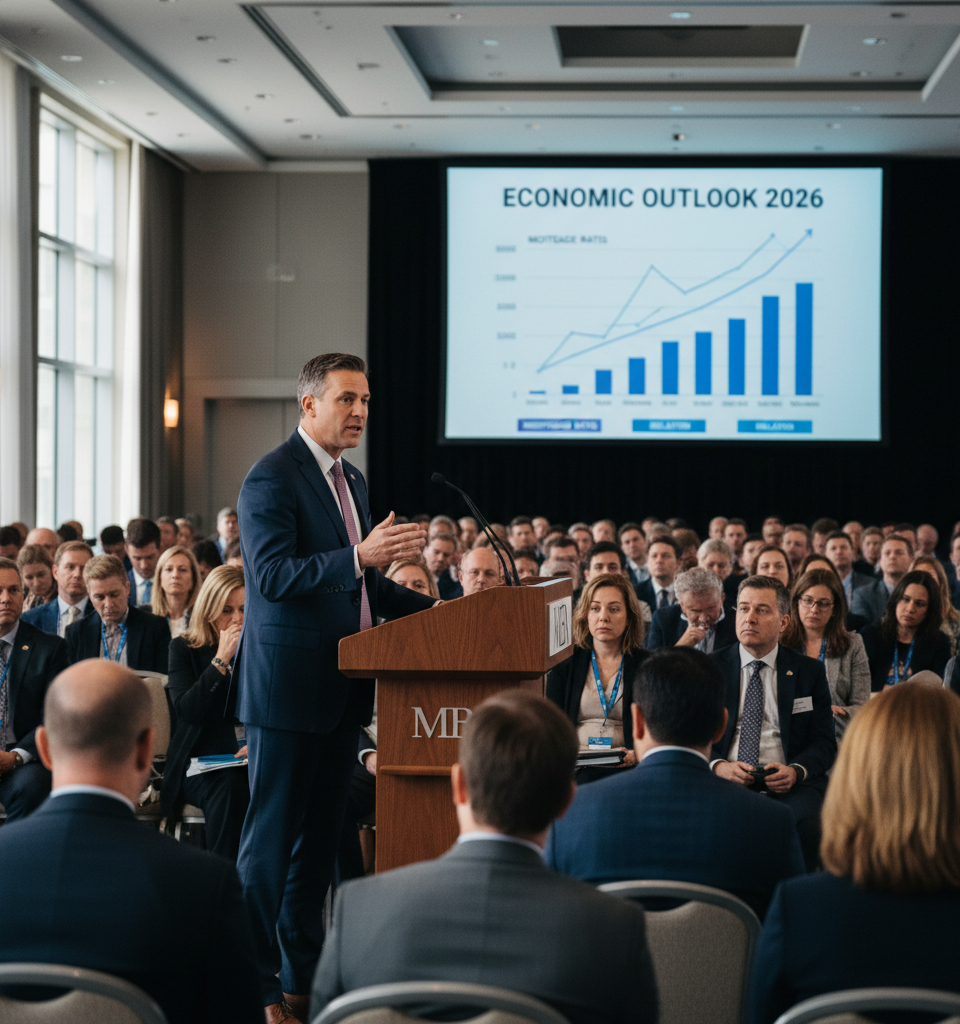
Washington D.C. — The U.S. housing market and broader economic landscape face a protracted period of elevated costs, as Mortgage Bankers Association (MBA) Chief Economist Mike Fratantoni projects that both mortgage rates and inflation will remain stubbornly high through 2026. Speaking at a recent industry event, Fratantoni indicated that inflation would likely hover stubbornly close to 4% for the foreseeable future, a level significantly above the Federal Reserve’s target of 2%. This persistent inflationary pressure, coupled with the MBA’s expectation of no interest rate cuts from the Federal Reserve, signals a challenging environment for prospective homebuyers, existing homeowners considering refinancing, and the mortgage industry at large.
Context and Background
This forecast, if accurate, represents a significant shift from earlier predictions that anticipated a more rapid return to lower interest rates and a cooling of inflationary pressures. For years following the 2008 financial crisis, the U.S. economy operated in an era of historically low interest rates. The rapid inflation spurred by post-pandemic supply chain issues, unprecedented fiscal stimulus, and robust consumer demand has fundamentally altered this paradigm. The Federal Reserve's aggressive rate hike campaign, which began in March 2022, aimed to curb inflation but has also pushed mortgage rates to multi-decade highs, profoundly impacting housing affordability and market activity.
Key Details of the Forecast
Fratantoni’s analysis underscores several critical points. He posited that the current inflationary environment is more entrenched than previously understood, citing factors such as wage growth, geopolitical tensions impacting energy and commodity prices, and structural shifts in global supply chains. Specifically, he stated, "We don't anticipate inflation falling meaningfully below 4% for the next two to three years." This outlook directly informs the MBA's projection that the Federal Reserve will maintain its current hawkish stance, foregoing any substantial rate cuts before 2026. Consequently, this implies that benchmark interest rates, and by extension, 30-year fixed mortgage rates, currently hovering around 7%, will likely remain in a similar high-single-digit range, potentially experiencing only marginal fluctuations.
Industry and Market Impact
For the housing and mortgage industries, Fratantoni’s predictions paint a somber picture. Elevated mortgage rates significantly dampen housing demand by reducing affordability. Prospective buyers face higher monthly payments, narrowing the pool of eligible purchasers and slowing transaction volumes. Refinance activity, which historically surged during periods of lower rates, is expected to remain minimal. Mortgage originators and servicers will need to adapt to a prolonged period of lower volume and potentially tighter margins. The ripple effect extends to ancillary services, including real estate agents, home builders, and even financial institutions reliant on mortgage-backed securities.
Expert Perspective and Analyst Views
While some economists maintain a more optimistic view of a gradual decline in inflation and subsequent Fed rate cuts, Fratantoni's outlook aligns with a growing cohort of analysts who acknowledge the stickiness of current inflationary pressures. Analysts at major financial institutions like JPMorgan Chase and Goldman Sachs have also revised their projections, often pushing back the timeline for significant Fed easing. The consensus among this group is that the Fed prioritizes controlling inflation, even if it means maintaining higher rates for longer, potentially at the expense of economic growth. This prudence is rooted in the lessons of the 1970s, where premature easing led to a resurgence of inflation.
What's Next: Future Implications and Developments
The implications of this extended period of elevated rates and inflation are far-reaching. Consumers will continue to grapple with higher costs for goods and services, reducing discretionary spending and potentially impacting broader economic growth. For the housing market, this translates to a continued cooling of home price appreciation in some regions, and potentially even slight declines in others, as demand struggles to keep pace with existing inventory. Policymakers will face increasing pressure to address the structural causes of inflation, while the Federal Reserve will need to carefully navigate its dual mandate of price stability and maximum employment without tipping the economy into a deep recession. Market participants will be closely watching upcoming inflation data, Fed statements, and geopolitical developments for any shifts that could alter this challenging long-term outlook.