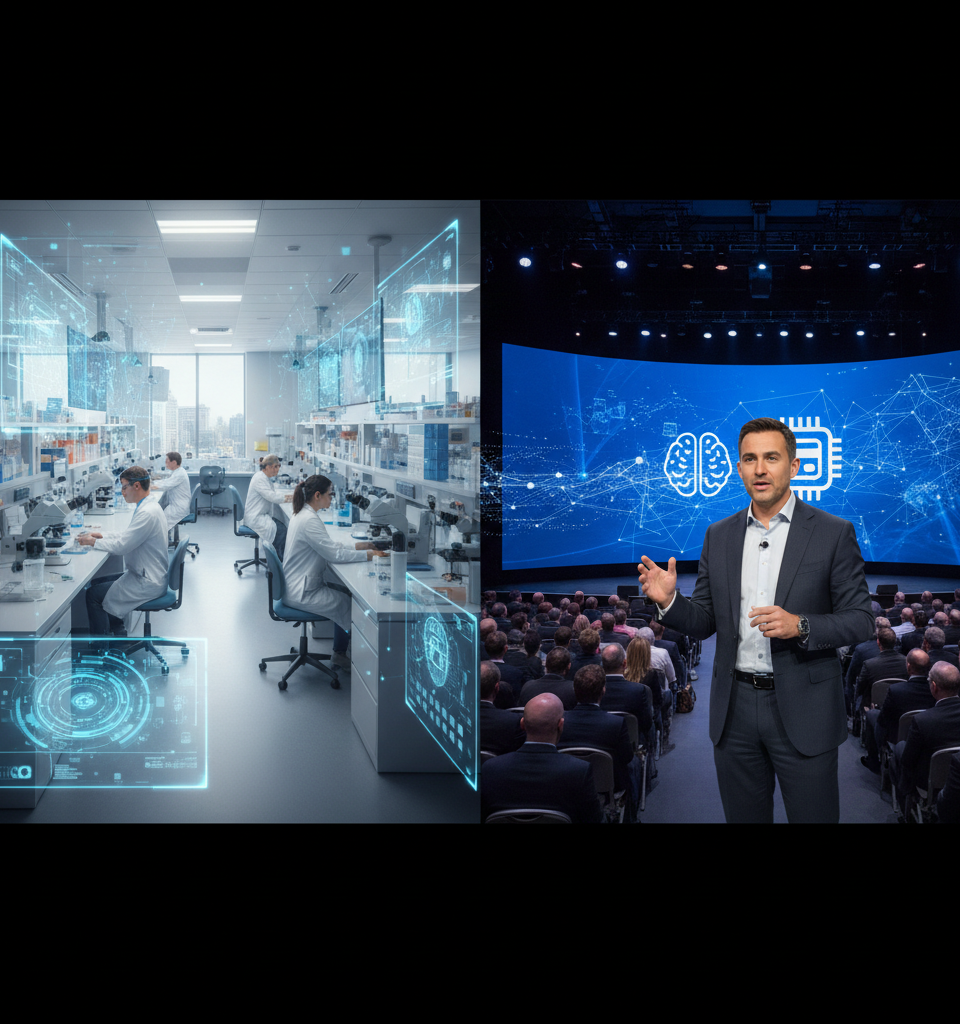
Leading pharmaceutical giant Merck is demonstrating substantial advancements in its operational efficiency, notably accelerating drug discovery cycles by one-third and slashing the time required to ship compliant marketing materials by up to 80%. These remarkable gains are directly linked to the company's pioneering use of AI agents, a strategy echoed by financial services formidable Mastercard, which is also witnessing tangible results from its agentic AI deployments. Sean Finnerty, Merck's VP of Digital Platforms, emphasizes that the efficacy of these AI initiatives is fundamentally contingent upon the prior establishment of a resilient and comprehensive technological infrastructure.
This deliberate, infrastructure-first approach has enabled Merck to leverage AI in ways that directly impact its core business functions. The pharmaceutical industry is notoriously complex, characterized by lengthy research and development timelines, stringent regulatory requirements, and a high-stakes environment where speed and accuracy are paramount. By automating and streamlining critical processes through AI agents, Merck is systematically addressing perennial bottlenecks that have historically constrained product development and market outreach.
The early outcomes from Merck's AI integration are proving particularly promising. The company reports that AI is now capable of generating marketing drafts that achieve an impressive “99% right” status concerning compliance. This level of accuracy is drastically reducing the need for extensive manual review, effectively shrinking review cycles from what traditionally took months down to mere days. Consequently, the speed of delivery for marketing materials has soared, accelerating by an estimated 70% to 80%. Such efficiencies free up human capital for more strategic tasks and ensure that critical market communications can be deployed with unprecedented agility.
The strategic investment in foundational "plumbing" before deploying sophisticated AI agents represents a crucial lesson for other corporations eyeing similar transformative technologies. Without a sturdy and well-integrated backend—encompassing data architecture, computing power, and connectivity—the most advanced AI models are likely to underperform or fail. Both Merck and Mastercard's experiences underscore that AI is not merely a software layer but requires deep integration into an existing, well-prepared digital ecosystem.
Merck's ability to cut drug discovery cycles by a third signifies a potentially revolutionary shift within the pharmaceutical sector. Expedited discovery means new treatments can reach patients faster, potentially saving lives and significantly improving public health outcomes. This also translates into substantial competitive advantages, allowing Merck to bring innovative therapies to market ahead of rivals, thereby capturing market share and maximizing patent life.
For the broader industry, these successes at Merck and Mastercard serve as compelling case studies. They illustrate that agentic AI, when properly implemented, can move beyond theoretical promise to deliver concrete, measurable business benefits. This could catalyze a wider adoption curve across various sectors, prompting companies to re-evaluate their digital transformation strategies with a greater emphasis on foundational infrastructure and intelligent automation.
While specific details on Mastercard's AI agent deployments were not provided in the initial reports, their parallel success reinforces the viability of this approach across different industries, from healthcare to financial services. The common thread appears to be a meticulous focus on preparation and integration, laying the groundwork for AI agents to perform tasks with autonomy and precision.
The implications for future operational models are significant. As AI agents become more sophisticated and capable of handling complex, multi-step processes, companies may find themselves restructuring departmental workflows and reallocating human resources to focus on higher-level analytical and creative endeavors. The current trajectory suggests a future where AI handles much of the repetitive, rule-based, and compliance-intensive work, while human employees focus on innovation, strategy, and nuanced decision-making.
Looking ahead, the next phase for companies like Merck and Mastercard involves not only scaling these initial successes but also exploring new frontiers for AI agent application. This could include further automation of R&D processes, enhanced customer service through intelligent digital assistants, or even more intricate supply chain optimizations. The foundational work already completed positions both organizations to remain at the forefront of AI innovation, demonstrating how strategic infrastructural investment can unlock profound and sustained operational advantages. The industry will be closely watching for further developments and expanding use cases as these pioneers continue to refine and scale their agentic AI strategies.