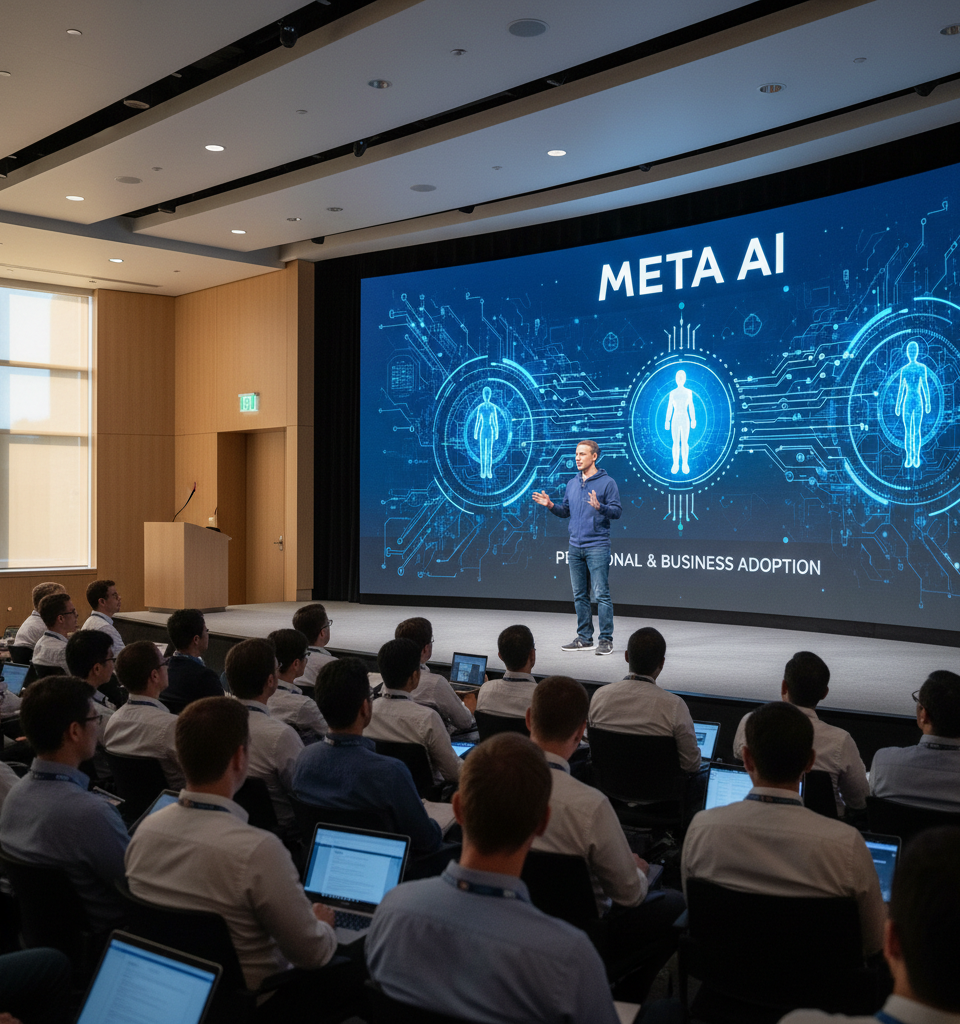
Mark Zuckerberg, CEO of Meta Platforms, recently announced a significant push into the development of sophisticated artificial intelligence agents designed for broad personal and business use. Speaking publicly, Zuckerberg underscored his vision for AI agents that are so intuitive and accessible that even his mother could effortlessly utilize them. This strategic gambit highlights Meta's intent to embed advanced AI functionalities deeply within its product offerings, from social media platforms to emerging metaverse technologies, potentially reshaping how individuals and enterprises interact with digital tools.
Strategic Context and Market Stakes
Meta's intensified focus on AI agents arrives at a pivotal moment, as the tech industry grapples with the transformative potential of generative AI. This initiative isn't merely an incremental update but a foundational bet on AI as the future interface for digital interaction, mirroring the paradigm shifts brought about by the internet and mobile computing. The company, which rebranded from Facebook to Meta in 2021 to emphasize its metaverse ambitions, is now re-centering its strategy around AI as the critical enabler for its long-term vision. This move is particularly salient given the fierce competition in the AI space, with industry giants like Google, Microsoft, and OpenAI investing billions in developing their own intelligent agents and large language models.
Key Developments and CEO's Vision
Zuckerberg elaborated on the dual-pronged approach, targeting both consumer-facing applications and robust business solutions. For individual users, the goal is to create AI assistants that can perform complex tasks, offer personalized recommendations, and enhance daily productivity and communication across Meta's family of apps, including Facebook, Instagram, and WhatsApp. On the business front, these agents are envisioned to revolutionize customer service, automate intricate operations, and provide data-driven insights to enterprises of all sizes.
Zuckerberg’s emphasis on simplicity and accessibility is a direct response to the often-steep learning curve associated with cutting-edge AI technologies, aiming for mass adoption rather than niche appeal. "If it's not easy enough for my mom to use, then we haven't done our job," Zuckerberg reportedly stated, illustrating the high bar for user experience.
Industry and Competitive Landscape Impact
This aggressive push into AI agents by Meta is set to significantly intensify competition within the burgeoning AI market, estimated to reach over $1.8 trillion by 2030. Meta's vast user base, exceeding 3.8 billion monthly active users across its platforms, provides an unparalleled testing ground and distribution network for these AI entities. Should Meta succeed, it could establish a dominant position in the AI agent market, challenging rivals that currently lead in specific AI niches. The integration of AI agents could also create new revenue streams through personalized advertising, subscription services, and enterprise solutions, helping to diversify Meta's business model beyond its traditional reliance on digital advertising, which accounted for approximately 98% of its $117.9 billion revenue in 2022.
Expert Analysis and Market Sentiment
Industry analysts view Meta's AI agent strategy with cautious optimism. Dr. Emily Chang, a leading AI ethicist and professor at Stanford, notes, "Meta's scale presents both an enormous opportunity and a significant ethical challenge. The widespread deployment of powerful AI agents needs careful consideration of data privacy, algorithmic bias, and autonomous decision-making." Financial analysts like Michael Pachter of Wedbush Securities believe that while the investment will be substantial, the potential for long-term growth and market disruption is immense. "This is a necessary and strategic move for Meta to remain competitive. Their ability to integrate these agents into their existing platforms gives them a unique advantage, potentially unlocking billions in new value," Pachter commented, though he cautioned about the high research and development costs involved.
The Road Ahead: Challenges and Opportunities
The development of truly intelligent, versatile, and user-friendly AI agents presents numerous technological and ethical hurdles. Meta will need to overcome significant challenges in natural language understanding, contextual awareness, and the prevention of AI 'hallucinations' or biased outputs. Beyond the technical aspects, user trust and data security will be paramount, particularly given Meta's past scrutiny over privacy concerns.
The company plans to leverage its Reality Labs division, which has been at the forefront of metaverse development, to explore how AI agents can enhance immersive experiences. Upcoming milestones include alpha and beta testing phases, with preliminary rollouts of specific agent functionalities expected within the next 12 to 18 months, leading to a broader public release thereafter. The success of this initiative will largely determine Meta's standing in the next generation of digital technology.