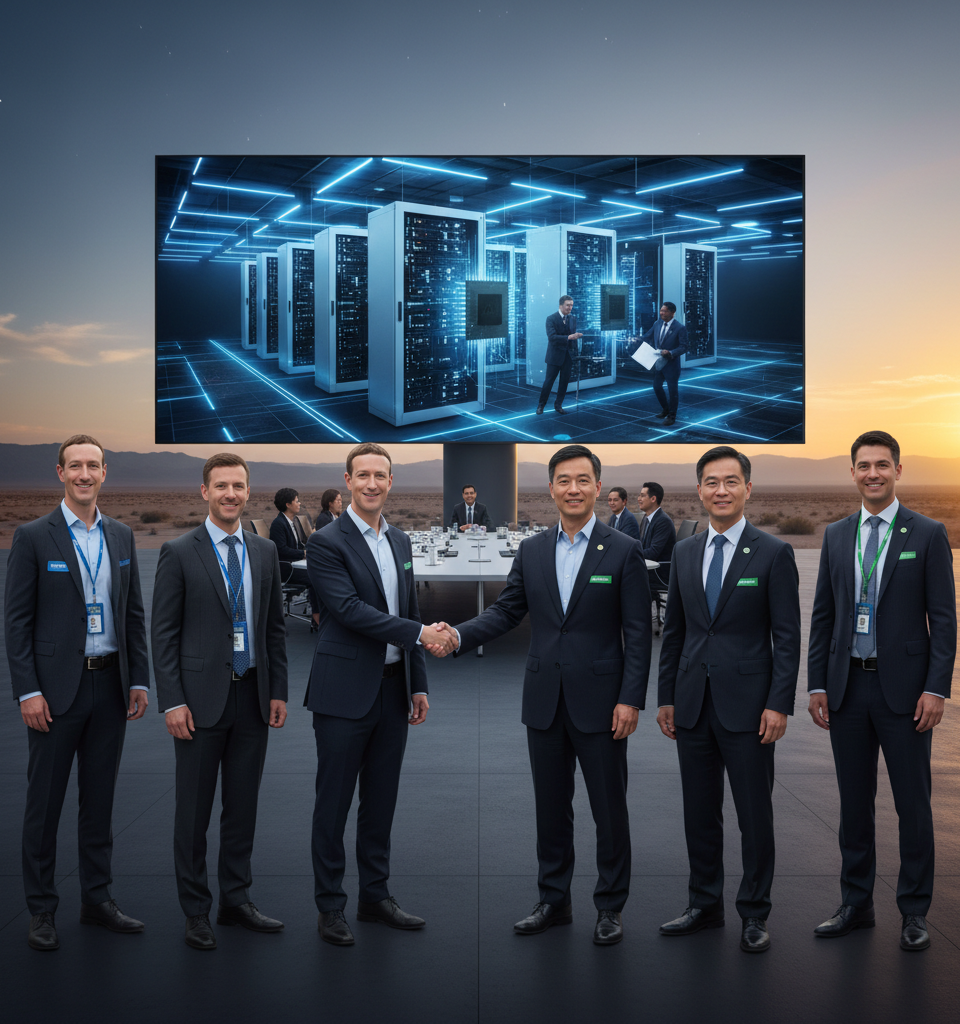
MENLO PARK, CA & SAN JOSE, CA – October 24, 2023 – Meta Platforms, Inc. (NASDAQ: META) has unveiled a sweeping multi-year agreement to deploy an extraordinary one gigawatt (1 GW) of its custom-designed MTIA (Meta Training and Inference Accelerator) chips, co-engineered with Broadcom Inc. (NASDAQ: AVGO). This monumental commitment, announced Tuesday, underscores Meta's aggressive push to establish a cutting-edge, vertically integrated AI infrastructure capable of powering its ambitious metaverse and generative AI initiatives. The news arrives amidst a significant shift in the strategic partnership, as Broadcom CEO Hock Tan is set to depart from Meta's board of directors, effective with the company's next formal election of directors.
Strategic Context and Meta's AI Imperative
This agreement represents a critical inflection point in Meta's long-term strategy, solidifying its commitment to proprietary hardware development as a cornerstone of its AI ambitions. For years, Meta has grappled with the immense computational demands of its vast user base and increasingly complex AI models, often relying heavily on third-party silicon providers. The decision to invest heavily in custom MTIA chips – first publicly detailed in May 2023 – reflects a broader industry trend among hyperscalers like Google and Amazon, who have pursued in-house chip development to optimize performance, control costs, and secure supply chains. This 1 GW commitment translates into an unprecedented number of chips, signaling a decisive move away from general-purpose GPUs for specific workloads and toward highly specialized, efficient accelerators.
Deepening Partnership and Board Transition Details
Under the terms of the expanded multi-year agreement, Broadcom will continue to be a pivotal co-development and manufacturing partner for Meta's MTIA chips. While specific financial terms were not disclosed, industry sources suggest the deal could be valued in the tens of billions of dollars over its lifespan, reflecting the scale of the 1 GW commitment. Concurrently, Broadcom CEO Hock Tan, a seasoned veteran of the semiconductor industry and a key architect of Broadcom's strategic growth, has expressed his intention to step down from Meta's board. Tan, who joined Meta's board in 2022, cited the increasing demands of his role at Broadcom and a desire to avoid potential conflicts of interest as the partnership deepens. His departure is widely seen not as a weakening of the Meta-Broadcom alliance, but rather a clarification of roles as the relationship transitions from board-level oversight to direct operational collaboration on a massive scale.
Industry Repercussions and Competitive Landscape
This announcement sends ripples across the semiconductor and technology industries. For Broadcom, the deal cements its position as a critical partner in the burgeoning custom silicon market for AI, diversifying its portfolio beyond networking and connectivity solutions. It also poses a formidable challenge to NVIDIA, long the dominant player in AI accelerators, as hyperscalers increasingly opt for tailored solutions to reduce reliance and optimize for specific workloads. Analysts project that Meta's aggressive in-house chip strategy, backed by a 1 GW deployment, could significantly impact NVIDIA's market share in the long run, particularly for inference and potentially even training workloads at Meta. Other cloud providers and enterprises may also be spurred to accelerate their own custom silicon initiatives.
Expert Analysis and Market Sentiment
Industry analysts have largely lauded Meta's strategic foresight. "This 1 GW commitment is a game-changer," commented Dr. Emily Chen, lead semiconductor analyst at TechInsights. "It signals Meta's unwavering dedication to AI and its willingness to invest massively in proprietary infrastructure. The partnership with Broadcom is robust, and Hock Tan's board departure, while notable, shouldn't overshadow the operational deepening of this critical relationship." Investment analysts anticipate a positive reaction from shareholders, viewing the move as a de-risking strategy against fluctuating GPU supply and pricing, and a long-term investment in Meta's competitive AI advantage. Initial market reactions saw a modest uptick in Meta's stock, reflecting investor confidence in its AI roadmap.
Future Implications and Beyond 1 GW
Looking ahead, the successful deployment of 1 GW of MTIA chips will be crucial for Meta's ambitious plans, including the rollout of more sophisticated generative AI features across its platforms (Facebook, Instagram, WhatsApp) and the continued development of its metaverse vision. This initial deployment is likely just the beginning. As AI models grow in complexity and scale, Meta will undoubtedly seek to expand its custom silicon footprint, exploring future generations of MTIA chips and potentially other specialized accelerators for different AI tasks. The departure of Tan from the board also opens the door for a new independent director with potentially different expertise, further diversifying Meta's strategic guidance. The success of this massive undertaking will serve as a benchmark for the industry's shift towards bespoke AI hardware solutions.
Ultimately, this deal solidifies Meta's position as a serious contender in the AI race, leveraging strategic partnerships and significant capital to build an independent, optimized AI infrastructure. The collaboration with Broadcom, even with a board transition, represents a deep technical and manufacturing alliance that could redefine the future of AI hardware at hyperscale for years to come.