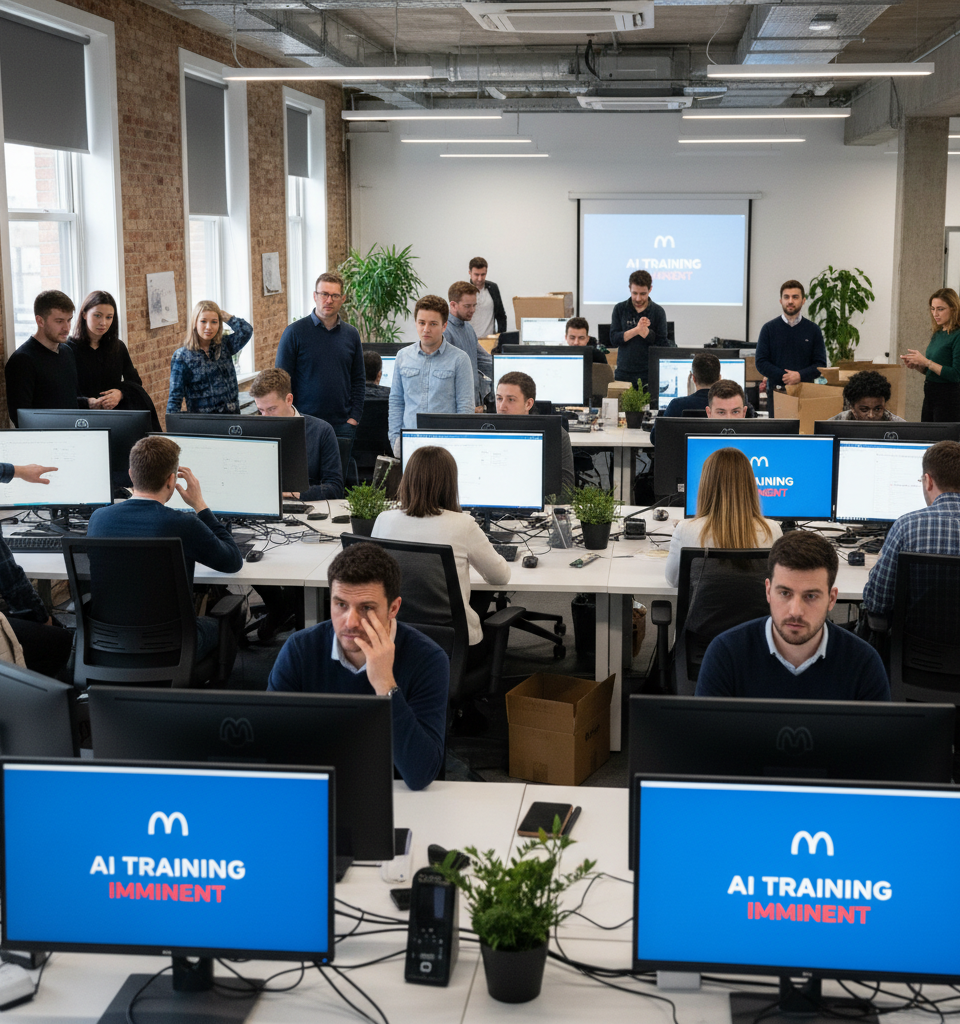
More than 700 individuals employed by a Meta contractor in Ireland are at imminent risk of redundancy, according to internal documents reviewed recently. These workers are primarily engaged in the crucial, yet often overlooked, task of training Meta's advanced artificial intelligence systems. The potential layoffs, which could impact a significant portion of the contractor's workforce, reflect broader shifts within the tech giant's operational strategies and its engagement with third-party service providers.
Context of AI Development and Outsourcing
This situation underscores a growing tension within the AI industry: the reliance on a vast, often outsourced, human workforce to refine and improve sophisticated algorithms. While large language models (LLMs) and generative AI capture headlines, their development heavily depends on human annotators, data labelers, and quality control specialists. Companies like Meta frequently contract out these labor-intensive tasks to third-party firms to manage costs, enhance scalability, and maintain operational flexibility. However, this model often leaves the contracted workforce vulnerable to sudden changes in project scope, budget reallocations, or shifts in a principal company's strategic priorities. The current scenario in Ireland echoes previous instances where contractor relationships have been abruptly curtailed in the tech sector, leaving large groups of workers in uncertain positions.
Key Details of the Potential Redundancies
The at-risk employees are understood to be primarily working on projects related to the refinement and validation of Meta's AI models, including content moderation and data labeling. Sources close to the situation, who requested anonymity due to the sensitivity of the matter, indicated that the contractor was informed by Meta of a significant reduction in required services, leading directly to the layoff considerations. While specific figures on the exact reduction were not disclosed, internal communications suggested a dramatic scale-back, impacting over 700 roles. One affected worker, speaking anonymously to express their frustration, described the situation as "undignified," highlighting the emotional toll and lack of job security associated with contract work for major tech corporations.
Industry and Market Impact
The potential mass layoffs in Ireland could send ripples through the AI training and data labeling industry, particularly within the competitive market for outsourced tech services. It signals that even as interest and investment in AI soar, the human component of its development remains susceptible to efficiency drives and strategic recalibrations by dominant tech firms. This move by Meta could prompt other tech giants to re-evaluate their own contractor relationships, potentially leading to similar cutbacks or a restructuring of how AI training work is handled. It also raises questions about the long-term stability of roles that are currently essential for AI development but could, in theory, be automated or streamlined in the future.
Expert Perspectives on Tech Contracting
Tech industry analysts suggest that such layoffs are often a consequence of large corporations optimizing their expenditures and workforce composition, especially during periods of economic uncertainty or rapid technological change. "Outsourcing provides flexibility, but that flexibility comes with inherent risks for the contracted workforce," notes Dr. Evelyn Reed, a labor market economist specializing in the tech sector. "Companies like Meta are constantly assessing the cost-benefit of insourcing versus outsourcing, and when priorities shift, or new AI tools make certain labeling tasks less necessary, contractors are often the first to feel the impact." She adds that the "undignified" sentiment expressed by workers is a common complaint within the contract labor ecosystem, where employees often lack the same protections and benefits afforded to direct hires.
Challenges and Future Implications For the affected workers and the contractor firm, the immediate challenge is managing the redundancy process and seeking alternative employment.
The broader implication for Meta, while potentially saving costs in the short term, could be a reputational hit and a potential weakening of trust among its contractor network. This incident also reignites discussions around fair labor practices for contracted workers in the tech industry, particularly in roles critical to AI development. As AI continues to evolve, the demand for human input will likely shift, not disappear, requiring new skill sets and potentially more stable employment models. Meta, like its peers, will increasingly grapple with balancing the ethical implications of its AI development with its business objectives, especially concerning the individuals who form the backbone of its advanced systems. Observers will be watching for any further statements from Meta regarding the strategic shift impacting these roles and how the company plans to mitigate the fallout among its vendor ecosystem.