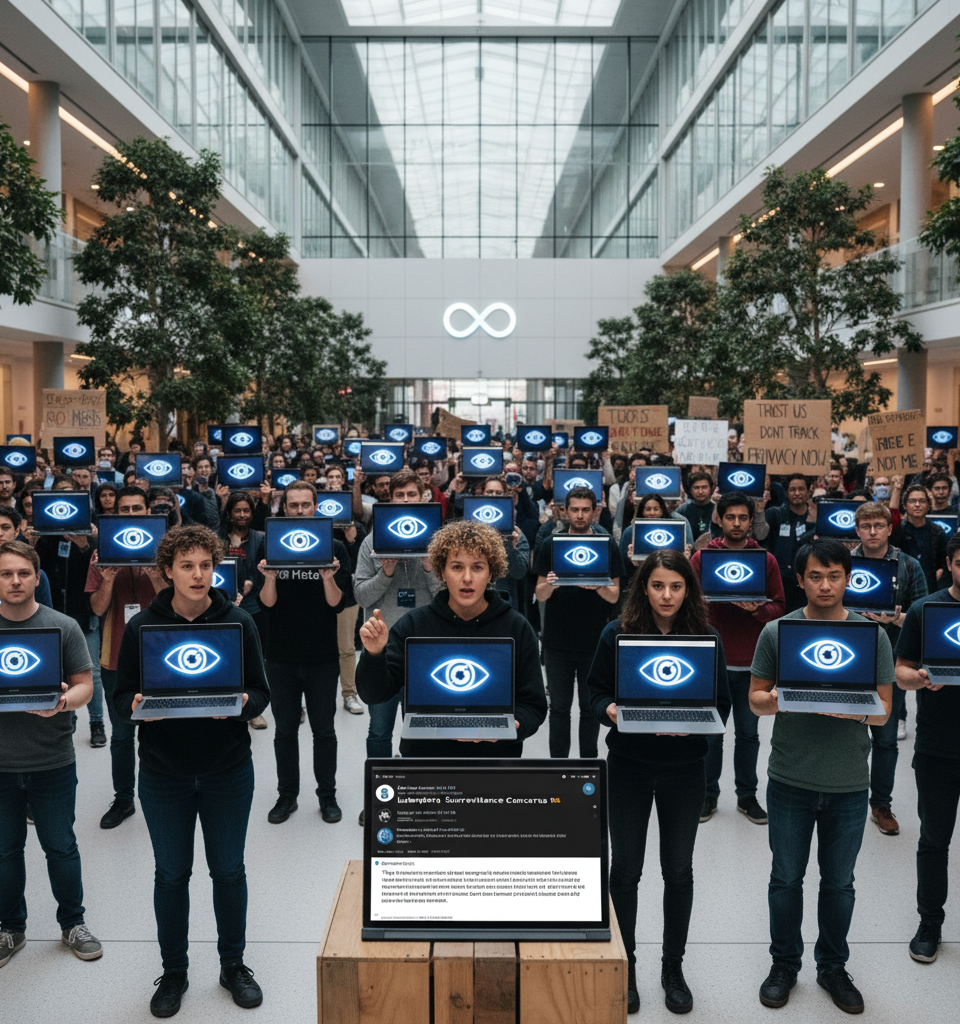
An internal uproar is brewing at Meta Platforms Inc., as employees across its U.S. and UK operations organize against new corporate software that monitors keystrokes and mouse movements on company-issued laptops. The catalyst for this pushback was a highly circulated internal post by a Meta engineer, sparking widespread debate and drawing significant attention to employee privacy concerns within the tech giant. This incident underscores a broader tension regarding employee surveillance and digital privacy in the modern workplace.
Mounting Employee Concerns and Surveillance Trends
This protest emerges amidst a turbulent period for Meta, characterized by significant layoffs and a relentless drive for increased productivity. The company, which reported over 66,000 employees as of late 2023, has been under intense pressure to optimize its workforce following billions of dollars in investments into ambitious projects like the metaverse. The deployment of productivity monitoring tools, often branded as "employee experience" or "workspace analytics" platforms, has become increasingly common across industries since the pandemic-driven shift to remote and hybrid work models. However, Meta's move is particularly sensitive given its self-proclaimed commitment to open communication and employee well-being.
The Viral Post and Its Repercussions
The engineer's original post, shared on Meta's internal forums, explicitly decried the new monitoring software as an invasion of privacy and a symptom of eroding trust between the company and its employees. While specific details of the software suite have not been publicly disclosed by Meta, internal discussions confirm its capabilities include tracking keyboard activity, mouse clicks, and application usage. The post quickly garnered thousands of reactions and comments, primarily in agreement, from employees in various departments and seniority levels. Many employees expressed feelings of being micromanaged and questioned the effectiveness of such tools in genuinely boosting productivity, arguing instead that they foster an environment of suspicion and anxiety.
Broader Industry Implications
Meta's situation is not an isolated incident but rather indicative of a burgeoning trend in corporate America and globally. The market for employee monitoring software, valued at an estimated $2.8 billion in 2022, is projected to grow to over $7 billion by 2030, reflecting a compound annual growth rate of 12.5%. Companies like Microsoft (with its Viva Insights), Teramind, and Hubstaff offer solutions that promise to enhance productivity and workplace efficiency. However, these tools frequently face criticism from privacy advocates and labor organizations for their potential to create a "digital panopticon," where every employee action is scrutinized, leading to increased stress and burnout. The pushback at Meta could serve as a bellwether for similar employee revolts within other major tech firms considering or implementing such surveillance measures.
Expert Perspectives on Digital Oversight
Workplace privacy experts and organizational psychologists generally caution against the indiscriminate use of such invasive monitoring tools. Dr. Eleanor Vance, a professor of organizational behavior, notes, "While intent might be to gather data for efficiency, the actual impact is often a significant drop in morale and a palpable sense of distrust. Employees feel devalued and their autonomy curtailed, leading to disengagement rather than increased output." She suggests that transparency, clear communication regarding data usage, and a focus on outcomes rather than activity are far more effective strategies for fostering a productive workforce. Legal experts also highlight potential challenges under data protection regulations, especially in jurisdictions like the UK and EU, where employee data privacy rights are robust.
The Path Forward for Employee-Employer Dynamics
The immediate future will likely see Meta's management grappling with this internal dissent, potentially through renewed dialogue or adjustments to its monitoring policies. The situation could lead to the formation of internal employee advocacy groups specifically focused on digital rights and workplace privacy, mirroring trends seen in other large tech companies. For the broader industry, this episode serves as a critical reminder that while technology can offer powerful insights, its application must be balanced with ethical considerations and respect for employee autonomy.
Companies must weigh the perceived benefits of granular surveillance against the very real risks of alienating their talent, fostering a culture of fear, and potentially facing legal challenges. The outcome of this internal struggle at Meta will undoubtedly influence how other major corporations approach employee monitoring in an increasingly remote and digitally integrated work environment.