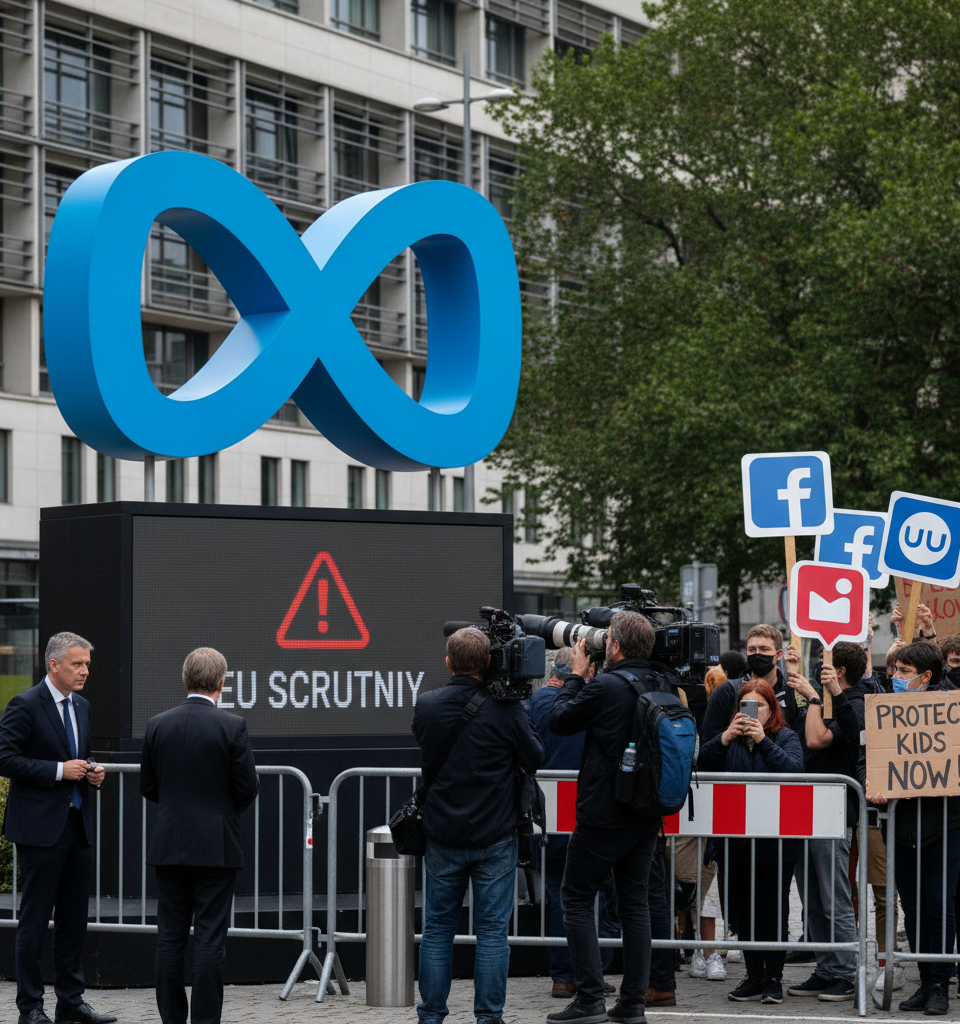
The European Commission has formally delivered a preliminary finding that Meta Platforms, Inc. is in violation of the Digital Services Act (DSA) due to its alleged failure to effectively prevent underage children from accessing its popular social media platforms, Facebook and Instagram. This unprecedented accusation, disclosed on Tuesday, places Meta under intense regulatory pressure and marks a pivotal moment in the EU's enforcement of online safety standards, particularly concerning minors.
The Commission's investigation suggests that Meta's age verification and access control mechanisms are insufficient, potentially exposing millions of European children to inappropriate content and interactions. This development is particularly significant because, historically, regulatory bodies have primarily directed similar accusations of insufficient age gating at websites explicitly featuring adult content. The application of these stringent standards to general-purpose social media platforms like Facebook and Instagram underscores a broader shift in regulatory focus.
The DSA, which fully came into force for all online services in February 2024, mandates that very large online platforms (VLOPs) implement robust measures to protect minors, including age verification and content moderation. This case highlights the EU's proactive stance in holding tech giants accountable for the real-world impact of their digital products on vulnerable populations. Key aspects of the Commission's preliminary findings are expected to revolve around Meta's current age verification processes.
Critics have long argued that these systems, often relying on self-reported ages or perfunctory checks, are easily circumvented by tech-savvy minors. The DSA Article 28 specifically requires VLOPs to implement appropriate and proportionate measures to ensure a high level of privacy, safety, and security for minors. A Meta spokesperson indicated that the company is reviewing the Commission's preliminary findings and stressed its commitment to protecting young people online, citing the development of new tools like AI-powered age estimation.
However, the Commission's stance suggests these efforts may not yet meet the stringent requirements of the DSA. The implications for the broader social media industry are substantial. This action against Meta could set a precedent for other major platforms like TikTok and YouTube, compelling them to significantly overhaul their age verification and child protection protocols.
9 billion**, could amount to over $8 billion. The market may see a ripple effect, with increased investment in sophisticated age verification technologies and more restrictive access policies becoming the norm across the sector. Expert analysis suggests that this move by the European Commission is not merely a punitive measure but a strategic effort to redefine the responsibilities of online platforms.
Dr. Elena Kitanova, a digital policy expert at the University of Amsterdam, commented, “The EU is unequivocally signaling that 'self-regulation' in child protection is no longer sufficient. VLOPs are expected to employ cutting-edge technology and consistent enforcement to ensure their platforms are genuinely safe for minors. ” Analysts predict that the legal battle, if it proceeds, will be closely watched globally, potentially influencing regulatory frameworks in other jurisdictions.
Looking ahead, Meta now has the opportunity to respond to the Commission's preliminary findings before a final decision is reached. This period will involve intense dialogue, with Meta likely presenting further evidence of its protective measures and potentially proposing enhancements to its existing systems. Should Meta fail to adequately address the Commission's concerns, the next step would be formal infringement proceedings, potentially leading to significant fines and mandated operational changes.
The case is expected to unfold over the coming months, with a final ruling anticipated by late 2024 or early 2025. The outcome will undoubtedly shape the future of child safety on social media across Europe and beyond.