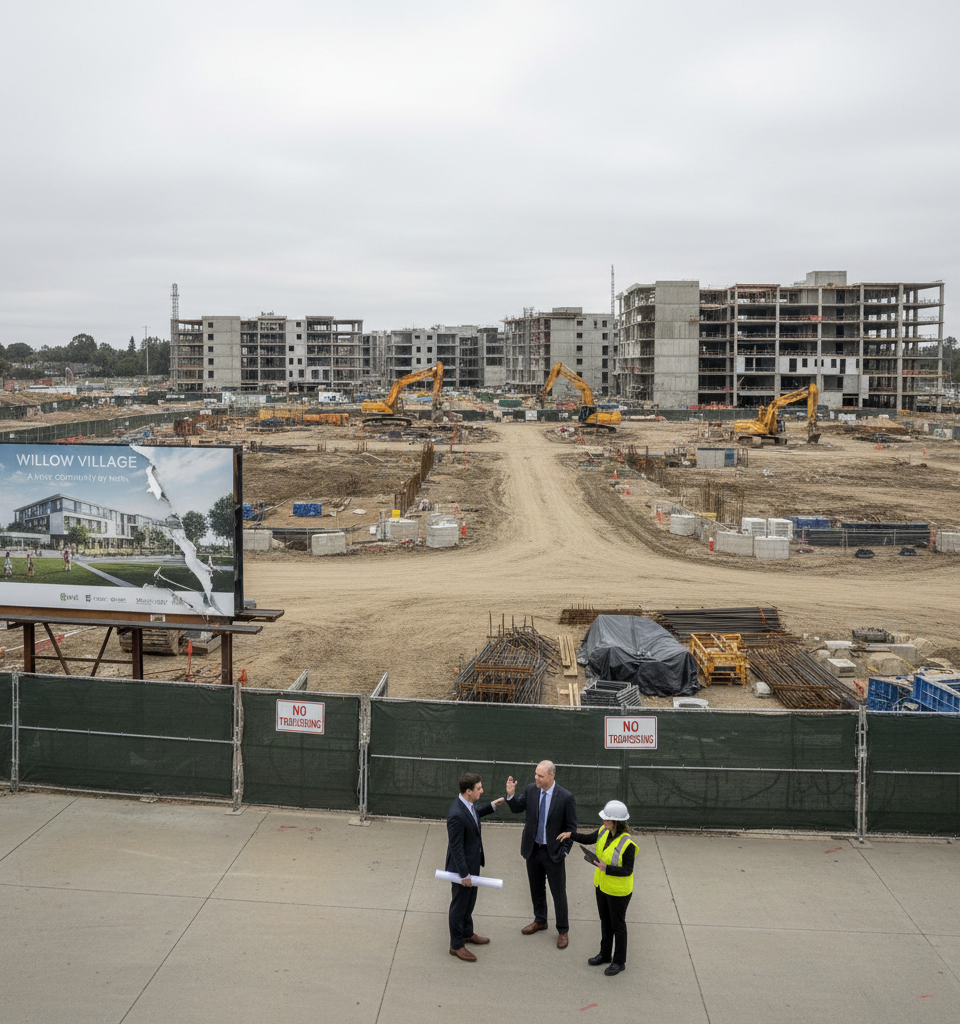
Meta Platforms, the parent company of Facebook and Instagram, has announced the indefinite postponement of its sprawling 1.6 million-square-foot Willow Village mixed-use development in Menlo Park. The project, which aimed to transform a former industrial site into a vibrant hub of office, retail, and residential spaces, is being placed on hold due to a confluence of factors, primarily attributed to evolving market dynamics and a notable reduction in space requirements from prospective commercial tenants. This move reflects a broader trend of tech companies re-evaluating their physical footprint in the post-pandemic era.
Context and Background
Dubbed as a cornerstone of Meta's long-term growth strategy and a significant investment in its home city, the Willow Village project was initially conceived to offer a dynamic environment for employees and the local community alike. It encompassed a substantial allocation for office space, coupled with retail establishments, residential units, and public amenities. The vision behind Willow Village was not merely to expand Meta's campus but to create a self-sustaining ecosystem, fostering innovation and community engagement. The decision to halt such a high-profile development underscores the unprecedented challenges currently facing the commercial real estate sector, particularly within the tech-centric Bay Area.
Key Details and Specifics
The Willow Village project, located on the former Prologis site at 1350 Willow Road, was slated to include 1.25 million square feet of office space, a 175-room hotel, a 180,000-square-foot retail village, and up to 1,730 housing units. While the commercial components are now on hold, sources close to the development indicate that Meta may proceed with certain residential aspects of the project, albeit on an adjusted timeline. The initial approvals for the project were obtained in 2021, and the site had undergone extensive demolition and preliminary groundwork. This pause represents a significant financial pivot for Meta, which has been aggressively cutting costs across its operations, including a reduction in its workforce by over 20,000 employees since late 2022.
Industry and Market Impact
The suspension of such a large-scale project by a major tech player like Meta sends a strong signal to the commercial real estate market, particularly in Silicon Valley. It highlights the sustained impact of remote and hybrid work models, which have fundamentally altered corporations' demand for traditional office space. This decision contributes to the increasing vacancy rates observed in the Bay Area, which have climbed from single digits pre-pandemic to over 25% in some submarkets. Developers and investors are now scrutinizing their pipelines, anticipating further adjustments and re-evaluations of projects that were planned during a period of seemingly endless growth for the tech sector. The ripple effect could lead to a slowdown in new construction and a greater emphasis on repurposing existing structures.
Expert Perspective
Real estate analysts are interpreting Meta's move as a pragmatic response to a rapidly changing economic landscape. “This isn’t just about Meta; it’s emblematic of a broader recalibration across the tech industry,” stated Dr. Emily Chang, a senior economist specializing in commercial real estate at Stanford University. “The era of unlimited growth and expansion for physical office spaces seems to be over, at least for the foreseeable future. Companies are prioritizing efficiency, flexibility, and a more distributed workforce, which directly impacts their real estate needs. Expect more companies to follow suit, leading to a prolonged period of adjustment for the Bay Area’s commercial property market.” Dr. Chang also noted that the high cost of construction and financing in California further exacerbates the situation.
What's Next
While the commercial components of Willow Village are on indefinite hold, Meta has emphasized its commitment to assessing market conditions and revisiting the plans when opportune. The company has not provided a specific timeline for when development might resume or if the project's scope will be fundamentally altered. For Menlo Park, the decision means a delay in the anticipated economic injection and housing stock that the project was expected to deliver. Local authorities and community groups will be closely monitoring Meta's future announcements, as the project's ultimate fate will have significant implications for local employment, housing availability, and property taxes. The immediate focus for Meta appears to be on optimizing its existing real estate portfolio rather than expanding it.