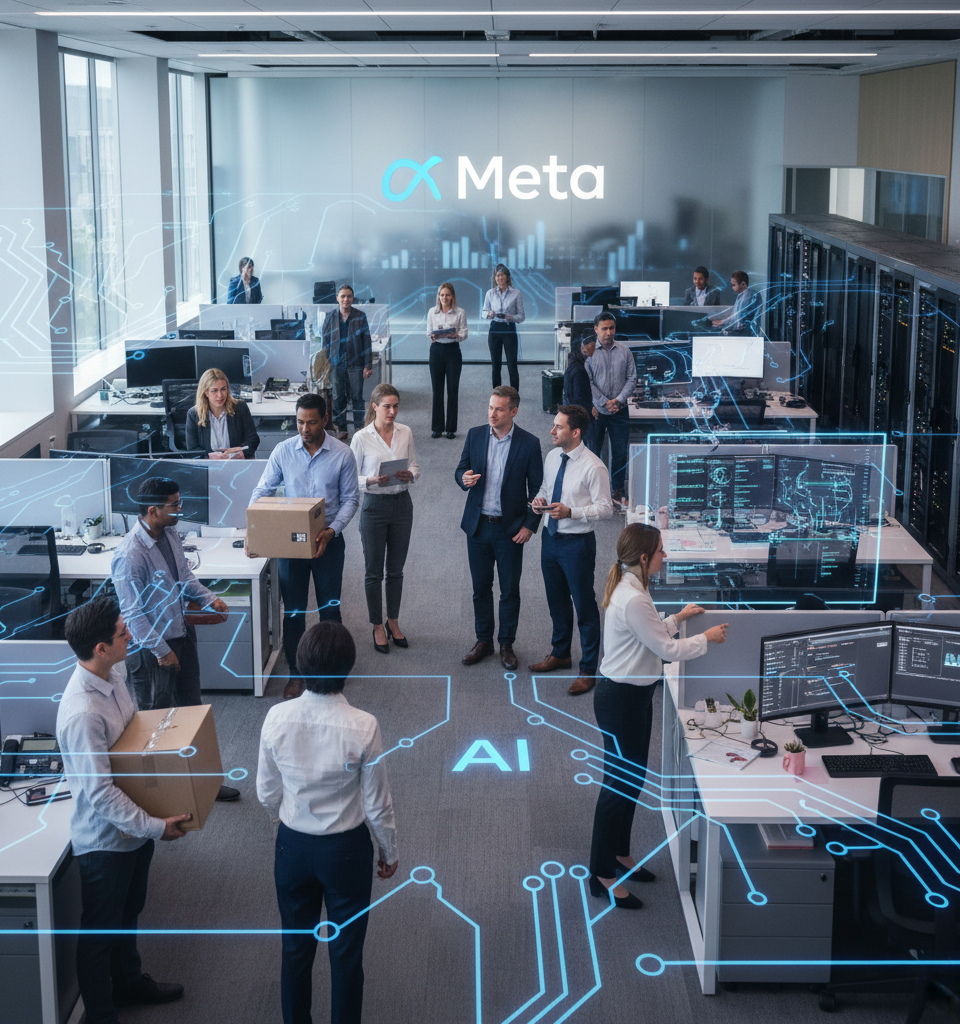
Meta Platforms, the social media and technology giant, is reportedly undertaking a substantial internal reorganization that will see around 7,000 employees transitioned into roles dedicated to artificial intelligence. This strategic pivot, as reported by The New York Times and Reuters, underscores Meta's intensified focus on becoming a leader in the rapidly evolving AI landscape. The reassignments are said to involve moving personnel into four newly established organizations tasked with developing innovative AI-powered tools and applications across the company's diverse product portfolio.
Strategic Shift Towards AI Dominance
This reported internal realignment comes at a critical juncture for Meta, which has been vigorously pursuing AI integration into its core products and exploring new frontiers like the metaverse. The company's CEO, Mark Zuckerberg, has repeatedly emphasized AI as a central pillar of Meta's future growth strategy, highlighting its potential to enhance user experiences, improve content moderation, and unlock new revenue streams. By dedicating a substantial portion of its workforce to AI development, Meta appears to be signaling a long-term commitment to embedding artificial intelligence at the heart of its operational and product development frameworks.
Internal Reorganization Details
According to the reports, the 7,000 affected employees are being allocated to four distinct internal organizations. While specific details regarding the structure and mandate of these new groups remain under wraps, their collective objective is clear: to accelerate the creation and deployment of cutting-edge AI technologies. This move is not merely about increasing headcount in AI but rather a strategic reallocation of existing talent, suggesting a belief that many current employees possess transferable skills that can be repurposed for AI-centric projects with appropriate training and guidance. The internal nature of these reassignments could also imply an effort to leverage institutional knowledge and ensure a seamless integration of AI initiatives within Meta's existing corporate culture.
Broader Industry Implications
Meta's reported restructuring is indicative of a broader trend sweeping across the technology industry, where major players are fiercely competing for supremacy in artificial intelligence. Companies like Google, Microsoft, and Amazon have all made significant investments in AI research and development, viewing it as the next frontier for innovation and competitive advantage. Meta's focus on reassigning a substantial number of its workforce specifically to AI roles could be seen as an aggressive maneuver to catch up or even surpass rivals, particularly in consumer-facing AI applications that leverage its vast user base and data reserves. This could intensify the talent war for AI professionals and further accelerate the pace of AI innovation across the sector.
Prospects for Future Development
The implications of this strategic shift are far-reaching. By funneling resources into these new AI organizations, Meta is likely setting the stage for a new wave of product enhancements and novel application launches. These could range from more sophisticated AI assistants and personalized content feeds to advanced AI-driven features within its metaverse platforms and advertising systems. Success in these endeavors could significantly bolster Meta's market position, potentially driving user engagement and advertiser spend. Conversely, the challenge lies in effectively integrating such a large number of employees into new, highly specialized roles and ensuring these new organizations can deliver tangible innovations in a competitive and rapidly evolving field.
Observational Analysis
Analyst observations suggest that this move aligns with Meta's stated long-term vision, even as the company navigates ongoing challenges related to its metaverse investments. The reported reassignments suggest a pragmatic approach, focusing on leveraging existing human capital rather than solely engaging in external hiring. This could potentially lead to more efficient talent utilization and foster a company-wide culture that prioritizes AI literacy and innovation. The success of this internal pivot will likely depend on effective leadership, robust training programs for reallocated employees, and the ability of these new AI organizations to quickly develop and deploy impactful technologies that resonate with users and stakeholders.
What Lies Ahead
Looking forward, the tech community will closely monitor the output of these newly formed AI organizations. The impact of these reassignments is not expected to be immediate but rather unfold over the coming months and years as Meta rolls out its next generation of AI-powered products and features. This strategic workforce redeployment signals Meta's strong intent to solidify its standing in the AI race, potentially leading to significant advancements in how users interact with its platforms and how the company leverages artificial intelligence to shape its future trajectory.