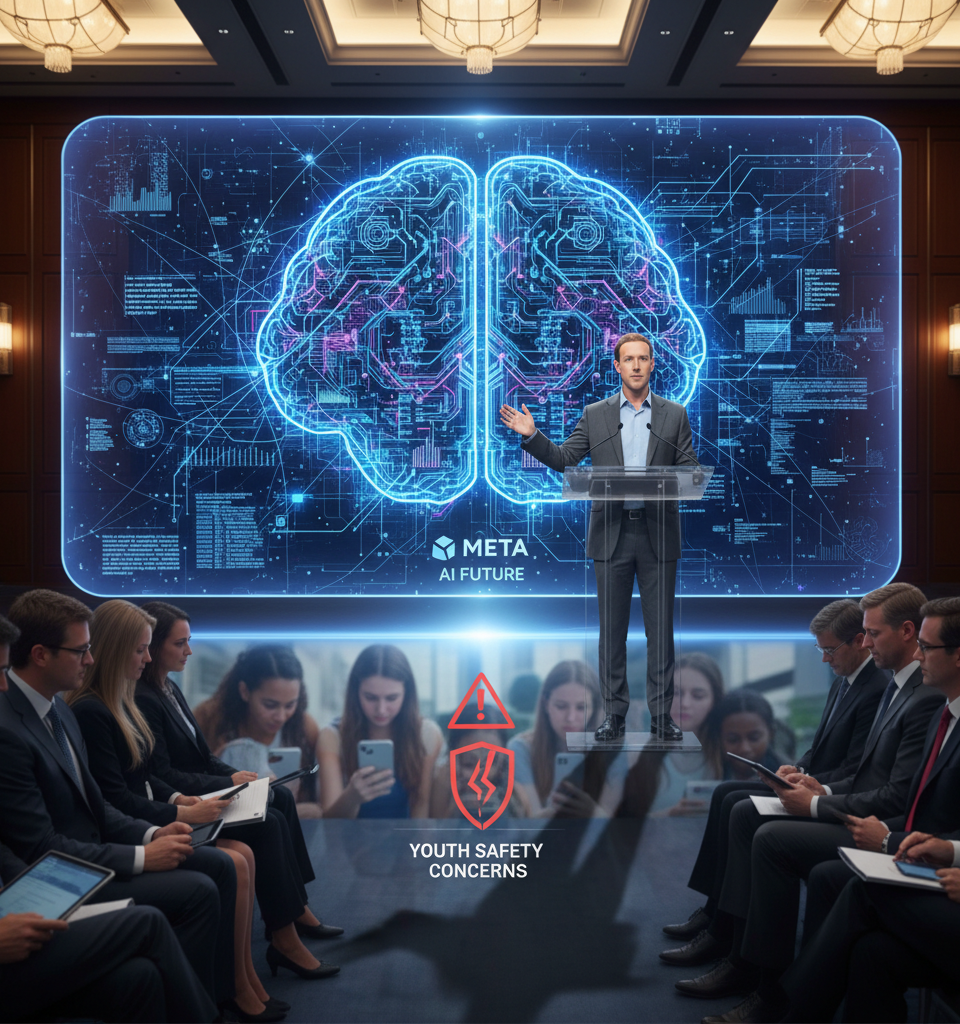
Meta Platforms' most recent earnings call, held last week by CEO Mark Zuckerberg, largely centered on the company's aggressive pivot towards artificial intelligence and its substantial capital expenditure plans. Discussions revolved around projections of deploying between $125 billion and $145 billion in capital expenditure by 2026, a massive investment underscoring Meta's commitment to AI development, including its Llama models and recommendation engines. The call also highlighted the impressive performance of Meta's advertising systems, which generated a substantial $56 billion in quarterly revenue. Conspicuously absent from the nearly hour-long discourse, however, was any substantive inquiry from investors regarding the well-being or safety of children on Meta’s platforms, a topic that has drawn increasing scrutiny from regulators and the public.
The Unasked Question
This oversight is particularly notable given the escalating global concerns surrounding the mental health impacts of social media on young users and the various legislative and legal challenges Meta faces in this domain. Recent months have seen a heightened public discourse, featuring congressional hearings and numerous lawsuits, all addressing the potential harms children encounter on platforms like Instagram and Facebook. The absence of investor questions suggests a prevailing focus on financial performance and technological advancement over social responsibility, at least within the immediate context of a high-stakes earnings presentation. This pattern reflects a broader tension between rapid technological innovation and the emergent societal challenges it presents.
Financial Priorities and AI Dominance
The earnings call painted a picture of a company relentlessly focused on establishing dominance in the AI landscape. Zuckerberg emphasized the strategic importance of this investment, framing it as essential for long-term growth and competitiveness. The projected capital expenditure for 2026 represents a significant allocation of resources, demonstrating Meta's belief that AI will be the primary driver of its future revenue streams, particularly through enhanced advertising capabilities and new product offerings. This financial commitment is designed to scale Meta's compute infrastructure, crucial for training advanced AI models and delivering more sophisticated user experiences across its family of apps.
Broader Industry Implications
The laser focus on AI and the sheer scale of Meta's investment have significant implications for the broader technology industry. It signals an accelerating arms race in AI development among tech giants, potentially driving up talent costs and intensifying competition for computational resources. Smaller players may find it increasingly difficult to compete with the vast financial firepower deployed by companies like Meta, raising concerns about market concentration and the potential for a few dominant players to dictate the future of AI. Furthermore, the emphasis on AI-driven advertising systems could reshape digital marketing strategies, pushing advertisers towards more sophisticated, data-intensive targeting methods.
Analyst Perspectives on Meta's Strategy
Financial analysts, while acknowledging the strategic imperative of AI investment, largely interpreted the earnings call as a strong bullish signal for Meta's future profitability. Many praised Zuckerberg’s clear articulation of the company’s vision and its commitment to long-term growth, even at the expense of short-term quarterly fluctuations. However, some industry observers privately expressed surprise at the complete omission of children’s safety issues, suggesting a potential blind spot or a calculated decision by Meta to steer the narrative towards its strengths. One analyst, speaking on background, noted, "While AI is undoubtedly critical, the lack of investor interest in regulatory and ethical challenges around youth safety indicates a disjunction between Wall Street's immediate concerns and broader societal expectations."
What Lies Ahead
Looking forward, Meta's immediate trajectory is firmly set on AI development and deployment. The company is expected to continue rolling out more advanced versions of its Llama models and integrating AI capabilities more deeply into its core products, from content recommendation to metaverse experiences. However, the external pressure regarding youth safety is unlikely to abate.
Regulators and parent advocacy groups will continue to push for greater accountability and more robust protective measures. It remains to be seen whether Meta's substantial AI investments will ultimately be scrutinized for their potential impacts on children, or if the company can successfully navigate these challenges while simultaneously innovating at an unprecedented pace. The next earnings calls will likely continue to emphasize AI, but the enduring question of Meta's responsibility to its youngest users will undoubtedly persist outside the strictures of quarterly financial reporting.