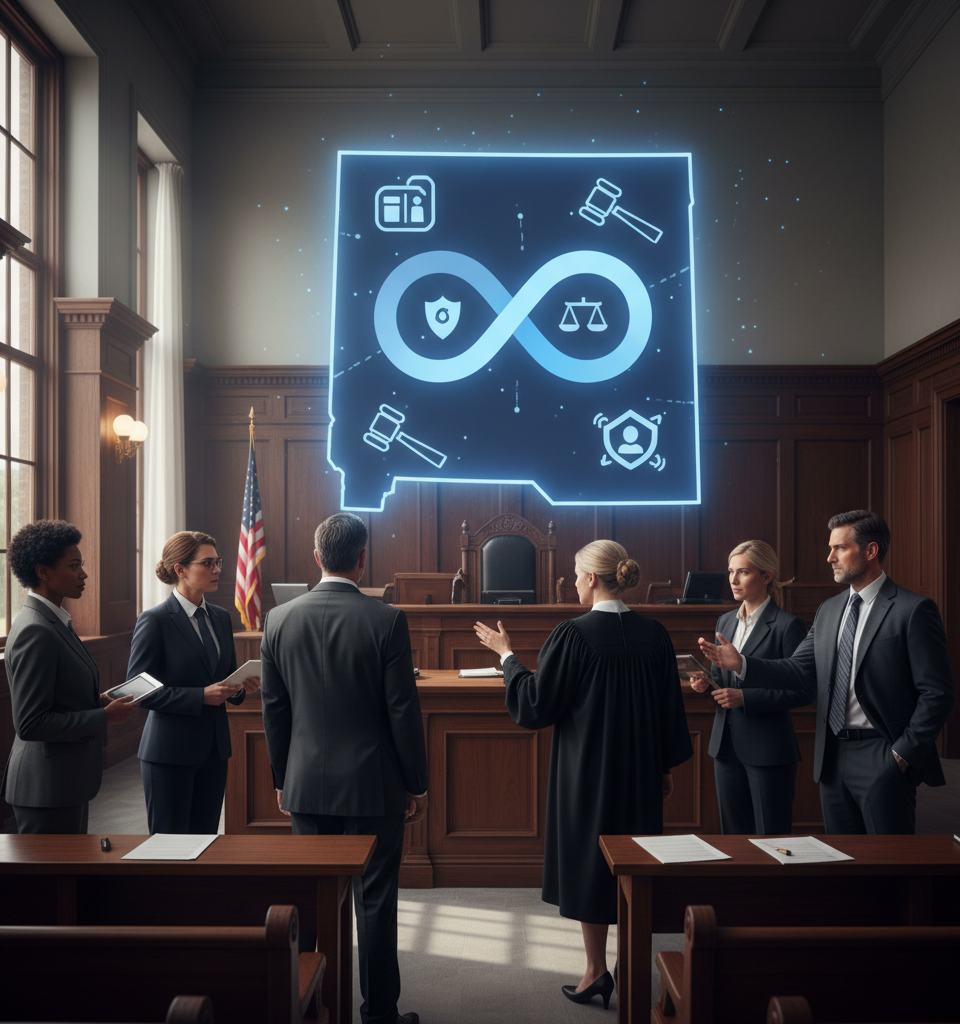
Meta Platforms has signaled a potential full withdrawal of its applications, including Facebook and Instagram, from New Mexico if a state judge upholds and enforces the demands put forth by the New Mexico Attorney General's office. This ultimatum, delivered in court filings on, marks an escalating legal battle over online child safety regulations and Meta's responsibility in content moderation within the state's borders. The move could leave millions of New Mexico residents without access to some of the world's most ubiquitous social media platforms.
This dispute stems from a lawsuit filed by New Mexico Attorney General Raúl Torrez, alleging that Meta's platforms facilitate and profit from the sexual exploitation of children. The state is demanding significant changes to Meta's platform architecture, content moderation policies, and data handling practices, which Meta argues are technically unfeasible, economically prohibitive, or infringe upon its operational autonomy. The standoff highlights a growing national tension between state regulators seeking to protect minors online and tech companies grappling with the challenge of implementing such protections without fundamentally altering their business models or user experience.
Key details of New Mexico's demands reportedly include mandatory age verification for all users, proactive AI-driven content scanning for child exploitation material with real-time reporting to law enforcement, and stricter privacy controls for minors. Meta, in its defense, claims that some of these demands would require a wholesale redesign of its backend infrastructure, potentially costing hundreds of millions of dollars and setting a precedent that could splinter its global operations into 50 different regulatory frameworks across the United States. A source within Meta, speaking on condition of anonymity, stated, "Complying with New Mexico's specific interpretation of these laws would effectively make it impossible to operate our services there while maintaining a consistent global product and user experience."
The potential exit of Meta from New Mexico would have significant repercussions across the tech industry and the regulatory landscape. It could embolden other states to pursue similar, equally stringent regulations, potentially Balkanizing the internet within the United States. From a market perspective, a company of Meta's size threatening to pull out of an entire state, albeit a smaller market in the grand scheme, sends a powerful message about the perceived overreach of state-level regulation. Investors are closely watching, with Meta's stock as the market assesses the broader implications for tech companies facing increasing government scrutiny.
Legal experts and tech analysts are divided on the feasibility and wisdom of Meta's threat. Professor Elena Gutierrez, a cybersecurity and digital law expert at the University of New Mexico, commented, "While Meta has a right to challenge what it deems as overly burdensome regulations, threatening to withdraw is a high-stakes gamble that could backfire, potentially strengthening the state's resolve and setting a negative precedent for its public image." Conversely, some industry analysts suggest that Meta's hardline stance serves as a necessary deterrent against what they view as technologically naive or overly aggressive legislative attempts that could stifle innovation and fragment digital services nationwide.
Looking ahead, the immediate future hinges on the New Mexico judge's ruling regarding the state's proposed injunctions and demands. Should the judge side with the state, Meta will face a stark choice: comply with the unprecedented regulations or make good on its threat to pull services. This outcome could trigger a protracted legal appeals process, potentially reaching federal courts, and would undoubtedly set a significant precedent for how tech companies operate within state jurisdictions. The outcome will also be closely watched by legislators in other states considering similar child safety legislation, making this localized legal clash a bellwether for the future of internet regulation in the U.S.