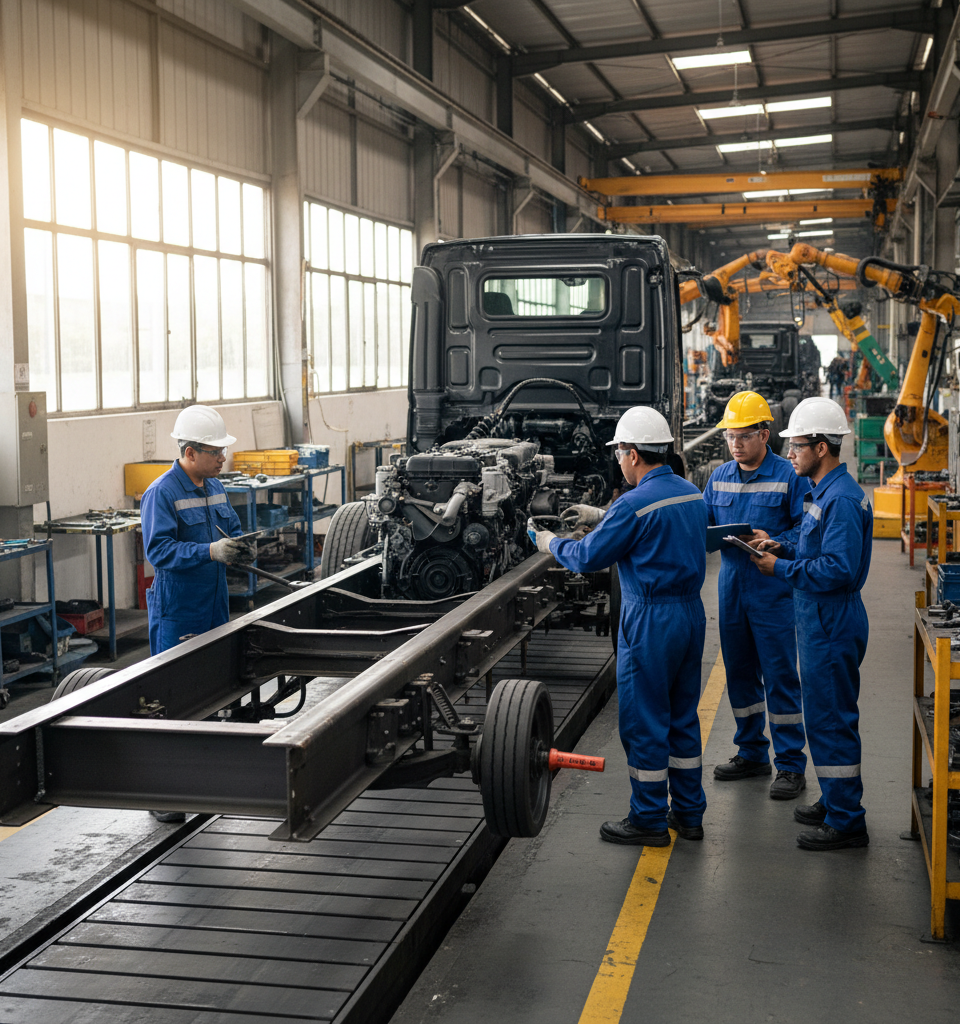
Mexico's heavy-duty vehicle manufacturing sector experienced a significant turnaround in May, registering its first month of production growth in 17 months. This long-awaited rebound offers a glimmer of optimism for an industry that has faced considerable headwinds, including supply chain disruptions and fluctuating demand. The increase marks a pivotal moment after a prolonged period of decline, suggesting a potential stabilization or even recovery in the coming months.
Context and Historical Performance
This recent positive development is crucial when viewed against the backdrop of the sector's performance over the past year and a half. For the first four months of 2026, Mexican heavy-duty vehicle production, encompassing both trucks and buses, stood at 41,071 units. This figure represented a substantial 21.97% decline compared to the same period in the previous year. The consistent contraction underscored challenges ranging from global semiconductor shortages to regional economic pressures impacting procurement and investment in new fleets. The industry, a vital component of Mexico's manufacturing output and export economy, had been under considerable pressure to reverse this downward trend.
Key Details and Figures
While specific figures for May's year-on-year growth were not immediately available, the confirmation of any growth after such a protracted downturn is significant. Industry analysts had been closely monitoring production output as a bellwether for the broader economic health of Mexico's industrial base. This sector is heavily integrated into the North American supply chain, with a substantial portion of its output destined for export, primarily to the United States and Canada. The precise increase in units produced and the percentage growth in May will be critical data points for assessing the strength and sustainability of this recovery.
Industry and Market Impact
The implications of this rebound extend beyond the factories themselves. A healthier heavy-duty vehicle production sector positively impacts a vast ecosystem of ancillary industries, including component suppliers, logistics companies, and maintenance services. Improved production figures can also signal renewed confidence among fleet operators and transportation companies, who are the primary purchasers of these vehicles. On a macroeconomic level, a robust manufacturing sector contributes positively to Mexico's GDP, employment rates, and foreign exchange earnings, reinforcing the country's position as a key manufacturing hub.
Expert Perspective
Industry experts and economic analysts view this development with cautious optimism. Dr. Mariana Rodriguez, an automotive sector specialist at a prominent financial institution, commented, "While one month of growth doesn't constitute a full recovery, it's an incredibly important indicator. It suggests that some of the underlying challenges, particularly those related to supply chain stability, may be beginning to ease. Attention will now shift to whether this can be sustained and if order books are strong enough to support continued expansion across Q3 and Q4." The sentiment among financial markets is likely to reflect this guarded but positive outlook, potentially influencing investment decisions in the automotive supply chain.
What's Next: Future Implications
The immediate future will be critical for determining if May's rebound is an isolated event or the beginning of a sustained recovery. Industry stakeholders will be closely watching factors such as global economic stability, commodity prices, and the ongoing efforts to diversify and localize supply chains. Furthermore, the push towards electric and alternative-fuel heavy-duty vehicles presents both opportunities and challenges, requiring significant investment in new manufacturing capabilities and technology. The Mexican heavy-duty vehicle sector's ability to adapt to these evolving market dynamics will define its trajectory in the coming years, with expectations for gradual but consistent growth gaining momentum if current trends hold.