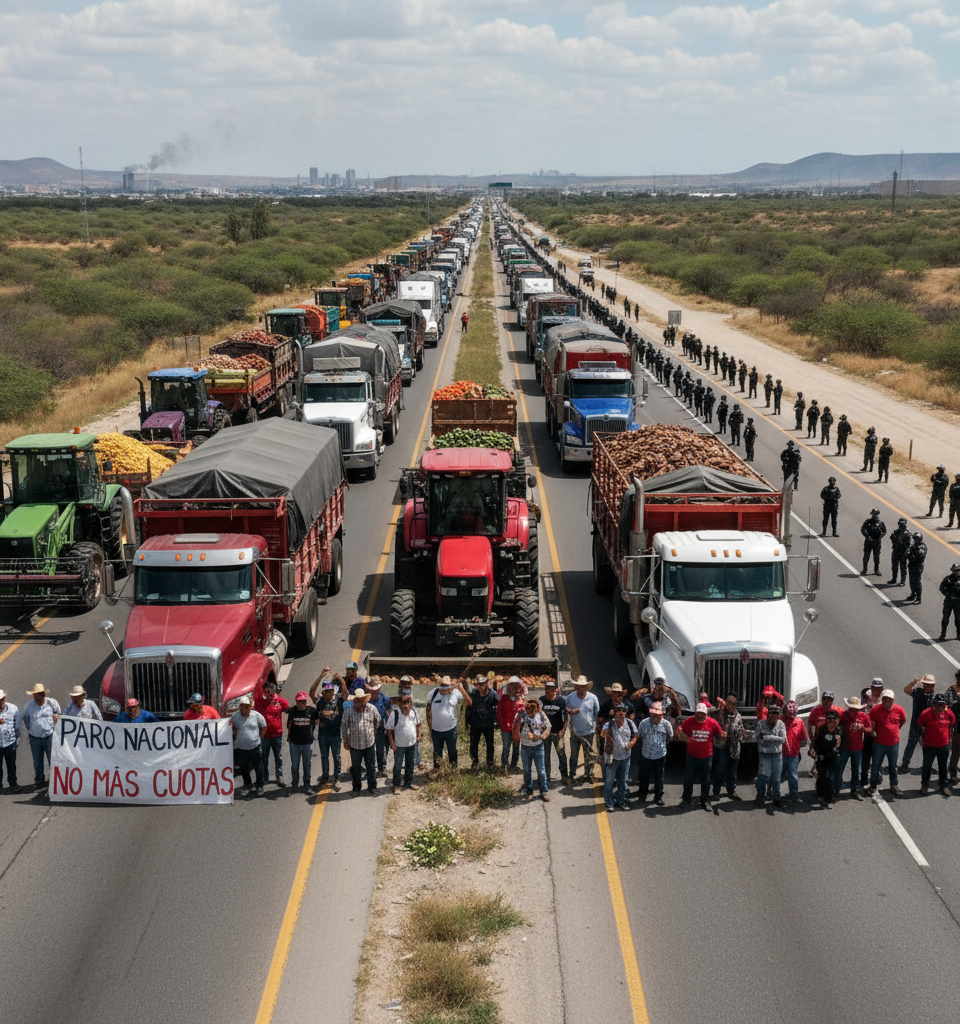
MEXICO CITY – A widespread and strategically coordinated nationwide strike by Mexican truckers and farmers on Monday, February 5, effectively crippled major freight corridors and critical border crossings across the country. The industrial action, impacting vital arteries for both domestic and international trade, has brought significant portions of Mexico's logistics network to a grinding halt, raising immediate concerns about supply chain disruptions and economic repercussions.
This protest is not an isolated incident but rather the culmination of longstanding frustrations among these vital sectors. Truckers have consistently voiced concerns over escalating highway violence, including armed robberies and extortion, which have plagued freight transport for years. Farmers, on the other hand, are protesting against what they perceive as inadequate government support, low commodity prices, and rising input costs, making their livelihoods increasingly precarious. The simultaneous action amplifies their collective bargaining power and underscores the severity of their grievances against the current administration's policies and inaction.
The strike saw significant blockades on key highways leading to major industrial hubs such as Mexico City, Monterrey, and Guadalajara. Crucially, several vital border crossings with the United States, including those in Nuevo Laredo, Ciudad Juárez, and Tijuana – gateways for billions of dollars in cross-border trade annually – were either partially or fully obstructed. Unconfirmed reports and social media posts detail miles-long queues of stalled commercial vehicles and significant delays for goods attempting transit. Initial estimates suggest that hundreds of millions of dollars in goods, ranging from automotive parts to agricultural produce, could be delayed or spoiled if the strike persists.
Far-Reaching Industry Impact
The immediate impact on industries is profound and far-reaching. The automotive sector, heavily reliant on just-in-time inventory management and cross-border component flows with the United States, is particularly vulnerable. Any prolonged disruption could lead to production line halts at assembly plants on both sides of the border. Similarly, agricultural exports, a cornerstone of Mexico's economy, face spoilage risks, jeopardizing contracts and farmer incomes. Retailers and consumers will also feel the pinch as shelves may become sparsely stocked, and prices could rise due to shortages and increased transportation costs once routes reopen.
Supply chain analysts are ringing alarm bells, drawing parallels to previous, albeit smaller, logistical bottlenecks. "This isn't just about delayed deliveries; it's about the fragility of cross-border supply chains that have been painstakingly built over decades," stated Dr. Elena Ramirez, a logistics expert at the National Autonomous University of Mexico. "The timing is critical, with companies still navigating post-pandemic disruptions and geopolitical uncertainties. A sustained strike could force businesses to reconsider their supply chain resilience strategies, potentially impacting nearshoring investments." Ramirez highlighted that the economic cost extends beyond direct losses to include reputational damage and reduced investor confidence.
Potential Outcomes and Government Response
The immediate focus now shifts to the Mexican government's response. Initial statements from authorities have called for dialogue and de-escalation, but concrete measures to address the truckers' security concerns or farmers' economic plight have yet to be fully articulated. Historically, similar protests have been resolved through negotiations, sometimes involving concessions on toll fees, fuel subsidies, or increased policing efforts. However, the coordinated nature and scale of this protest suggest that superficial remedies may not suffice this time.
Looking ahead, the duration and resolution of this strike will be critical. If the blockades persist for more than 48-72 hours, the economic fallout will escalate dramatically, potentially affecting Mexico's GDP growth projections for the current quarter. Businesses are already exploring alternative routes and modes of transport, though viable options are limited for high-volume freight. The coming days will test the government's ability to balance civil liberties with economic stability and address deep-seated grievances that threaten the nation's commercial arteries. The unfolding situation underscores the urgent need for comprehensive solutions to improve road safety and economic viability for key sectors of the Mexican economy.