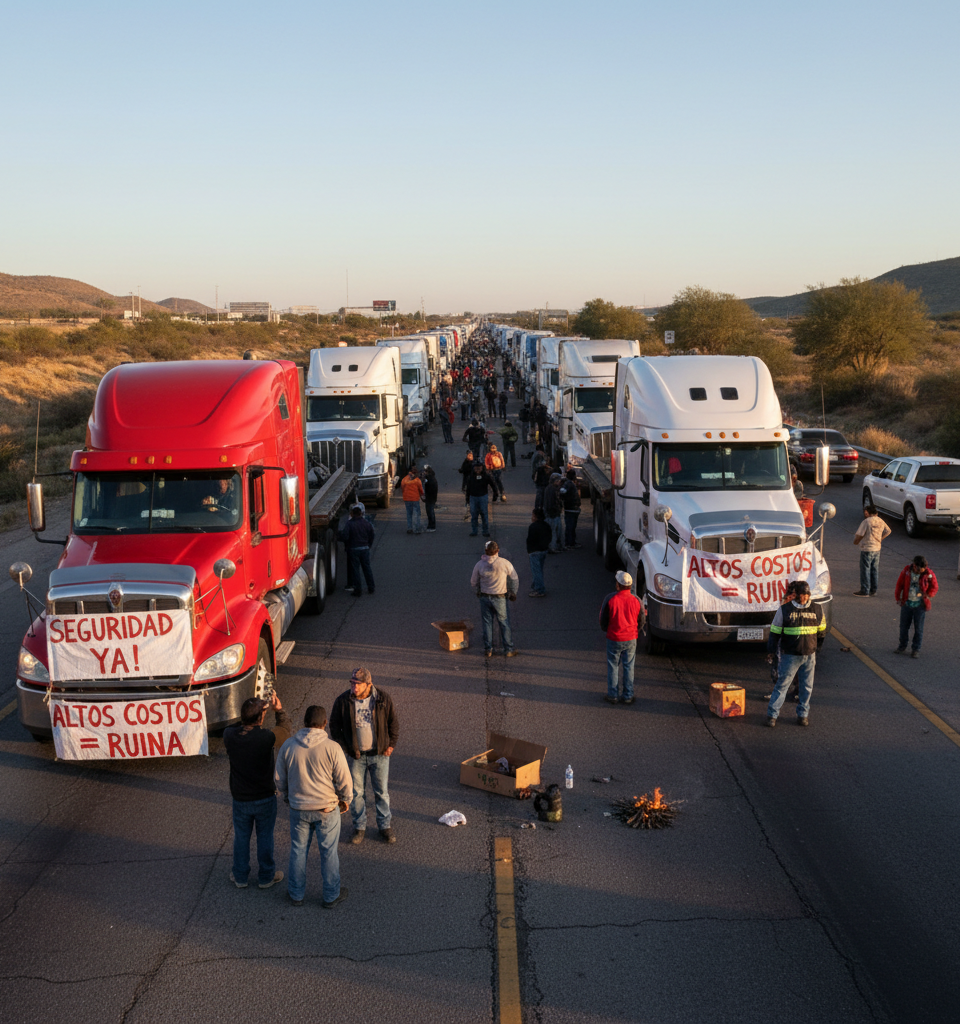
Mexico's vital supply chains remain in disarray as a persistent wave of trucker protests, fueled by mounting security concerns and surging operational expenses, faces increasing internal division. The prolonged disruption, which has seen key highways intermittently blocked across various states including Puebla, Veracruz, and Mexico State, is not only snarling domestic commerce but also significantly impacting cross-border trade, particularly with the United States. This fracturing within the trucking industry itself complicates government efforts to negotiate a resolution, leaving businesses scrambling and consumers facing potential shortages and higher prices.
Context: A Nation on Edge
These protests are the latest manifestation of deep-seated issues plaguing Mexico's transport sector. The primary grievances include a dramatic increase in highway robberies, extortion, and violence targeting truck drivers, with some reports indicating a 40% surge in cargo theft incidents year-over-year in certain regions. Concurrently, rising fuel prices, toll fees, and insurance premiums have eroded profit margins for often-marginalized independent truckers and smaller operators. While some factions, like the Mexican Alliance of Carrier Organizations (AMOTAC), have adopted more confrontational tactics including road blockades, others, such as the National Chamber of Freight Transport (CANACAR), advocate for dialogue and warn against actions that further damage the economy.
Key Details: Divisions and Demands
The schism became particularly evident when AMOTAC proceeded with nationwide blockades despite CANACAR's calls for restraint and engagement with authorities. AMOTAC's demands are clear: increased federal security presence on highways, prosecution of criminals, and government subsidies or regulatory measures to mitigate rising operational costs. Conversely, CANACAR, representing larger fleet operators and logistics companies, acknowledges the severity of the problems but emphasizes the economic costs of direct action, preferring negotiations with the Secretaría de Infraestructura, Comunicaciones y Transportes (SICT) and other government bodies. Industry reports suggest that each day of significant disruption can cost the Mexican economy hundreds of millions of dollars in lost productivity and damaged goods.
Industry Impact: Domino Effect on Commerce
The ongoing gridlock is creating a ripple effect across Mexico's diverse industrial landscape. Manufacturers are facing delays in receiving raw materials and shipping finished products, jeopardizing production schedules and supply commitments. The automotive industry, a cornerstone of Mexico's export economy, is particularly vulnerable, with parts shortages threatening assembly lines. For perishable goods, agricultural producers are incurring significant losses as fresh produce remains stranded, highlighting the fragility of just-in-time inventory systems. Furthermore, the uncertainty is deterring foreign investment and could lead to companies reconsidering their logistics strategies within Mexico, potentially impacting nearshoring initiatives.
Expert Perspectives: A Looming Economic Threat
Economists and logistics experts warn that without a unified approach and decisive government action, the situation could escalate from a transport challenge to a broader economic crisis. Dr. Elena Ramirez, a logistics analyst at the Autonomous University of Mexico (UNAM), notes, "The internal fragmentation of the trucking industry empowers neither side and creates a vacuum that prolongs the crisis. The government needs to engage credibly with all stakeholders, not just the loudest voices, to find a sustainable solution to security and cost issues." She adds, "A prolonged disruption risks jeopardizing Mexico's competitiveness as a manufacturing and export hub, particularly in its relationship with the USMCA trade agreement partners."
Future Implications: Navigating a Fractured Path
The immediate future hinges on the government's ability to bridge the divide within the trucking sector while delivering tangible improvements on security and cost pressures. While some recent reports indicate partial lifting of blockades following initial government talks, a lasting resolution remains elusive. The long-term implications could see a restructuring of Mexico's logistics networks, with companies exploring alternative modes of transport or rerouting supply chains to mitigate risk. Furthermore, should the government fail to adequately address the root causes, the protests could resurface with greater intensity, threatening to destabilize an economy already grappling with inflationary pressures and global uncertainties. The cohesion, or lack thereof, within the trucking sector will be a critical factor in determining how Mexico navigates this challenging period.