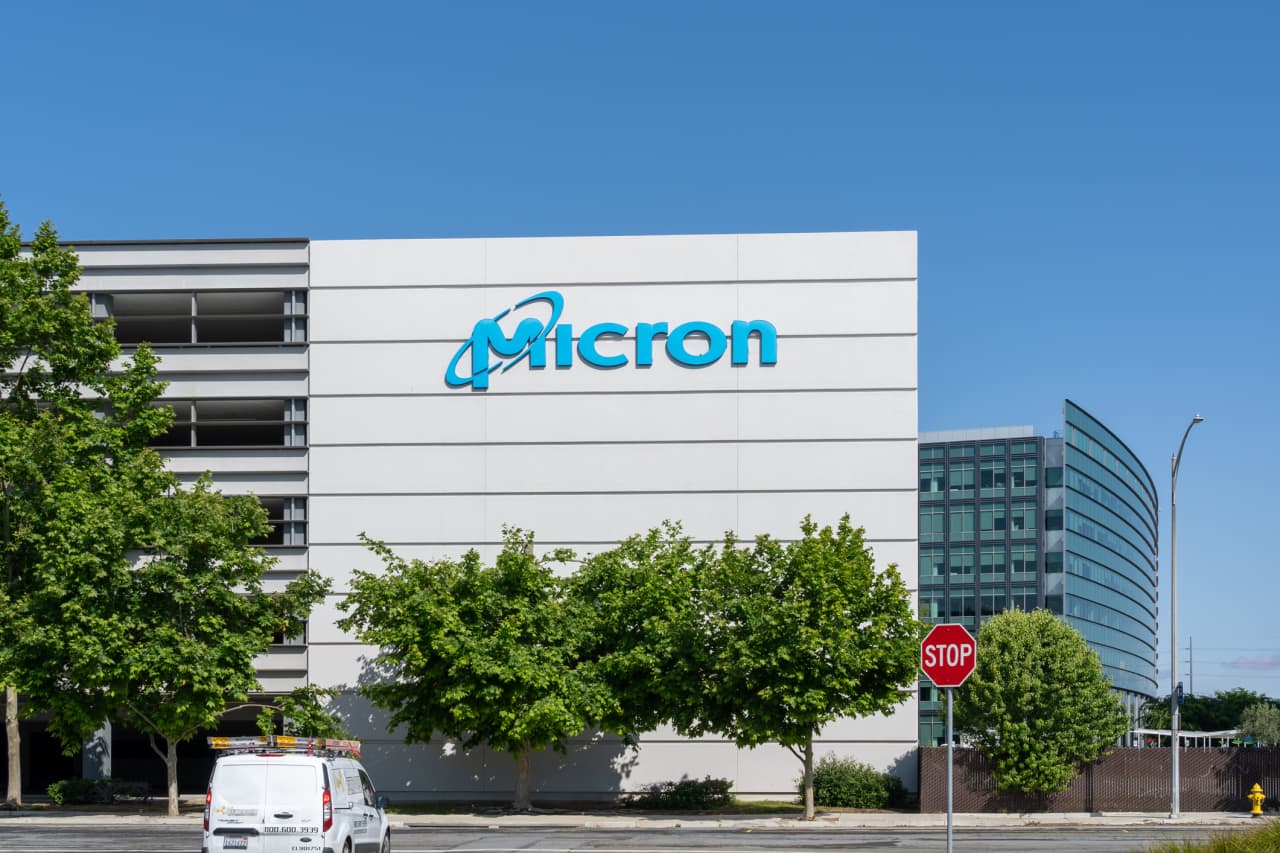
New York, NY – [Date] – Shares of Micron Technology (NASDAQ: MU) saw a significant uptick in trading today, recovering from recent declines, as Bank of America Global Research issued a reassuring assessment regarding the perceived threat from Google's recent announcements on memory efficiency. Investors had reacted with palpable concern following reports of Google's advancements in AI memory optimization, particularly for large language model (LLM) inference. However, BofA analysts, led by Vivek Arya, moved to assuage these fears, suggesting that the market's reaction was an overblown panic not fully grounded in the immediate commercial realities of the semiconductor memory sector.
Contextualizing the Google Factor
The apprehension surrounding Google's revelations stemmed from the fear that increased memory efficiency could lead to a reduction in demand for high-bandwidth memory (HBM) and dynamic random-access memory (DRAM) – key product categories for Micron. As technology giants like Google continue to push the boundaries of artificial intelligence, particularly in generative AI, the consumption of memory has soared, making any potential efficiency gains a double-edged sword for memory manufacturers. The market initially interpreted Google's announcement as a direct challenge to the fundamental demand drivers benefiting Micron at a time when the industry is just beginning to emerge from a protracted downturn.
BofA's Reality Check: Sustained Demand Ahead
Bank of America's analysis, however, paints a more nuanced picture. The firm highlighted that while Google's innovations are indeed impressive from a technical standpoint, their immediate impact on overall memory demand for hyperscale data centers is likely to be marginal rather than transformative. Arya's team underscored that the relentless expansion of AI capabilities and the increasing complexity of new models will continue to drive colossal demand for memory. They project that any efficiency gains will likely be offset by the sheer growth in the scale and scope of AI applications, coupled with the persistent need for faster and higher-capacity memory solutions. The analyst note specifically emphasized that the long-term structural tailwinds for high-performance memory, such as HBM for AI accelerators, remain robust.
Industry Implications and Market Dynamics
The broader semiconductor memory industry has been navigating a volatile landscape, characterized by cyclical demand swings and rapid technological evolution. Micron, a leading player in both DRAM and NAND flash memory, is particularly sensitive to these shifts. The BofA commentary serves as a crucial counter-narrative to the prevailing pessimism, reminding investors that technological breakthroughs, while potentially disruptive in the long run, often take time to translate into significant market share shifts or demand erosion. The prevailing sentiment prior to BofA's intervention had been that such efficiency gains could dampen the recovery in average selling prices (ASPs) and ultimately impact Micron's revenue growth projections for 2024 and beyond.
Expert Perspective: Underestimated Growth Drivers
According to Bank of America, the market is potentially underestimating the magnitude of future memory demand fueled by the AI boom. They argue that the growth in AI model parameters, the proliferation of multimodal AI, and the expansion of inference workloads across diverse applications will ensure sustained, if not accelerated, demand for memory. The firm reiterated its 'Buy' rating on Micron stock and an ambitious price target of $150, signaling strong conviction in the company's fundamentals and its position within this high-growth sector. This stands in contrast to some bearish outlooks that have pointed to increasing capital expenditures by hyperscalers on proprietary AI chips and potential in-house memory optimizations as threats to merchant memory suppliers.
Looking Ahead: Innovation and Adaptation
The immediate future for Micron and its peers will undoubtedly involve a continuous race to innovate. While efficiency gains are important, the industry's ability to deliver higher bandwidth, lower latency, and greater capacity will be paramount. Investing in advanced packaging technologies, such as HBM3e and beyond, and optimizing manufacturing processes will be critical for maintaining competitive advantage. Moreover, the long-term trajectory of AI development suggests that while software optimizations can reduce memory footprints for certain tasks, the overall appetite for raw compute power and associated memory capacity will only intensify as AI models become more sophisticated and ubiquitous across enterprise and consumer applications.
Continued Resilience Amidst Evolution
Micron's recent performance suggests a degree of resilience, even as the landscape evolves. The company's strategic investments in advanced technology nodes and diversified product offerings are expected to help it weather both cyclical downturns and technological shifts. While Google's innovations are indicative of a broader industry trend towards more efficient AI infrastructure, BofA’s analysis serves as a vital reminder that the growth curve for AI-driven memory demand remains steep, providing ample room for key players like Micron to thrive. Investors will undoubtedly continue to monitor developments from hyperscale customers and memory manufacturers alike, but for now, the immediate panic surrounding Google's memory advancements appears to have been effectively quelled by a dose of analytical pragmatism.