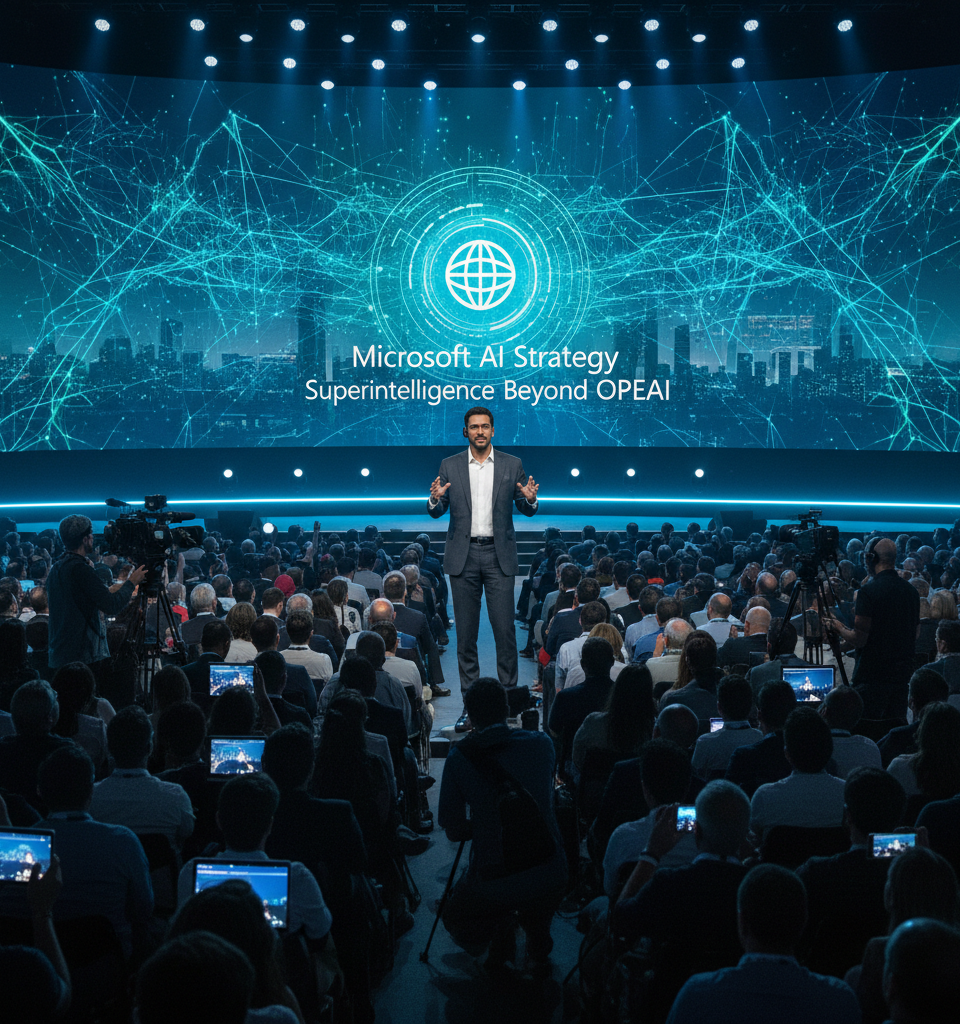
Microsoft's artificial intelligence trajectory, long defined by its deep and financially substantial partnership with OpenAI, is reportedly entering a new phase. According to remarks from Microsoft's recently appointed AI chief, Mustafa Suleyman, the technology giant has been "set free" from its prior reliance on OpenAI to chart its own course towards achieving superintelligence. This strategic recalibration suggests a significant shift in how Microsoft intends to develop and deploy its advanced AI capabilities.
The OpenAI Era: A Defining Partnership
For approximately three years, Microsoft's AI story was largely synonymous with its alliance with OpenAI. This collaboration, fortified by a cumulative investment exceeding $13 billion from Microsoft, granted the Redmond-based corporation early, privileged access to some of the most cutting-edge AI models globally. This access proved instrumental in integrating advanced AI functionalities, notably through its Copilot products, into the mainstream enterprise landscape. The partnership was a major catalyst, contributing hundreds of billions of dollars to Microsoft's market capitalization and firmly establishing its position in the rapidly evolving AI sector. For many external observers, Microsoft's AI strategy was OpenAI, a perception Suleyman now aims to redefine.
Shifting Dynamics and Independent Pursuits
Suleyman's assertion that Microsoft is now "set free" from OpenAI highlights a potential reorientation of the company's long-term AI ambitions. While the specifics of this newfound independence are still emerging, it signals a strategic intent to broaden Microsoft's internal AI development efforts, potentially moving beyond the reliance on a single external partner, however significant. This shift could involve increased investment in first-party research, talent acquisition, and the development of proprietary AI models tailored to Microsoft's extensive ecosystem.
The implications of this strategic pivot are multifaceted. Internally, it could empower Microsoft's AI divisions with greater autonomy and direct control over the direction and ethical frameworks of its superintelligence research. Externally, it might lead to a diversification of partnerships or the acceleration of in-house projects that were previously overshadowed by the OpenAI collaboration. The move underscores the intensity of the competition in the superintelligence race, where leading technology firms are keen to establish independent dominance.
Industry Repercussions and Future Outlook
This announced strategic adjustment could send ripples across the AI industry. For OpenAI, it might necessitate a re-evaluation of its own strategic partnerships and future funding models, though the original investment from Microsoft remains substantial. For Microsoft's competitors, it signals an intensified commitment to internal AI innovation, potentially accelerating the race for AI supremacy. The enterprise market, which has rapidly adopted Microsoft's AI-enhanced Copilot products, will be watching closely to see how this strategic shift influences future product roadmaps and AI capabilities.
Looking ahead, observers will be eager to see how Microsoft’s expanded independent pursuit of superintelligence manifests. This could involve major announcements regarding new research initiatives, advanced model developments, or further organizational restructuring within its AI departments. The aim, as articulated by Suleyman, is to establish Microsoft’s own distinct narrative in the field of artificial intelligence, one that is not solely defined by its association with OpenAI, but by its own forward-looking pursuit of advanced AI systems.