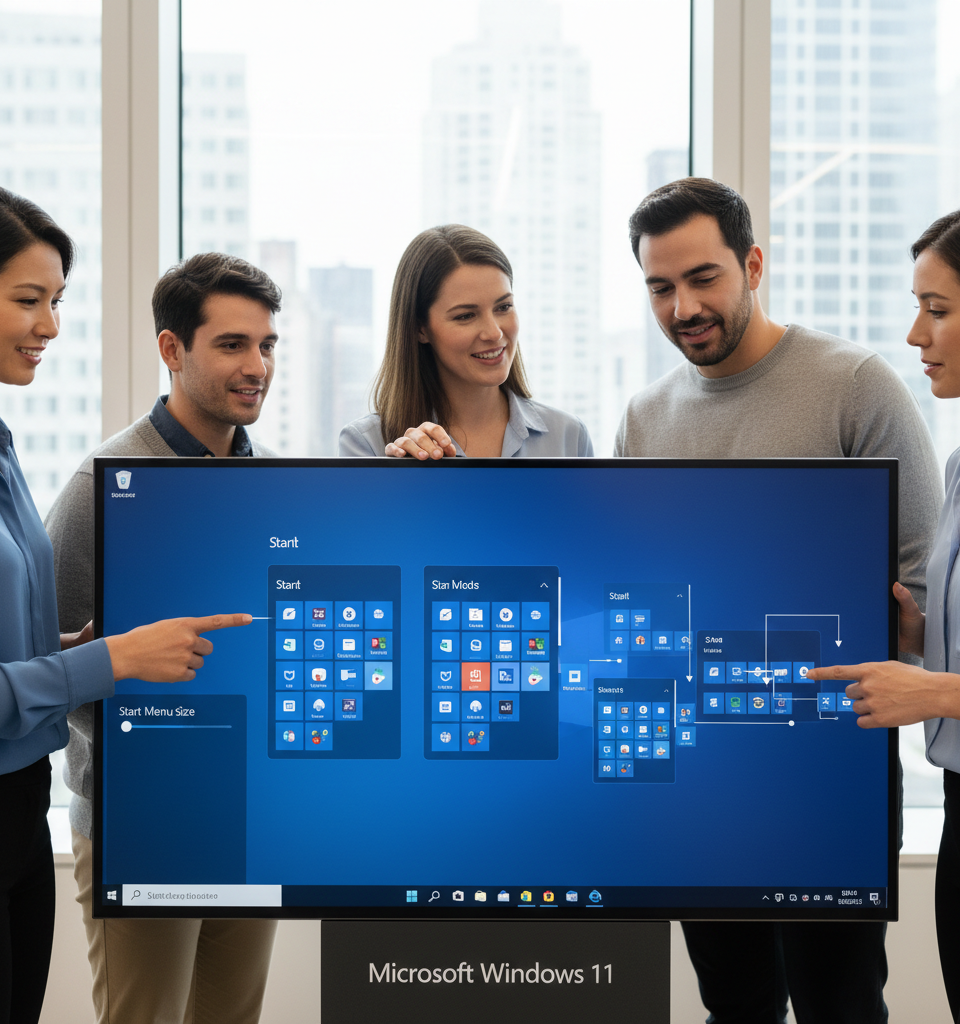
Microsoft has begun testing significant new personalization features for Windows 11 with its Insider program participants, notably granting users the ability to adjust the size of the Start menu and offering options to reposition the taskbar. This development, rolled out in recent preview builds, directly responds to a persistent chorus of user feedback since Windows 11's initial launch, which saw some traditional customization options removed or restricted. The move underscores Microsoft's commitment to refining the user experience of its flagship operating system, aiming for a balance between modern design and functional flexibility.
Context and Background
When Windows 11 debuted in late 2021, its redesigned user interface, particularly the centered Start menu and taskbar, marked a departure from previous Windows versions. While aesthetically pleasing to many, the inability to move the taskbar from the bottom of the screen or freely resize the Start menu was a point of contention for a significant segment of the user base, especially power users accustomed to the extensive customization offered by Windows 10 and earlier iterations. These limitations often led to workarounds or reliance on third-party utilities, impacting user satisfaction. This current update signals Microsoft's recognition of the importance of these options for a diverse user base, ranging from casual users to demanding professionals seeking optimized workflows.
Key Details of the Update
Within the latest Windows 11 Insider Preview Builds, users can now access new settings that enable granular control over the Start menu's dimensions. This means individuals can choose between a more compact layout, reminiscent of older Windows versions, or an expanded view that offers more space for pinned apps and recommended content. Furthermore, the long-awaited taskbar repositioning functionality is also under evaluation.
While specifics on all potential taskbar locations are still being refined by Microsoft, initial tests suggest options beyond the default bottom-center placement will become available. These changes are expected to integrate seamlessly into the existing Personalization settings within Windows 11, providing intuitive controls without requiring complex registry edits. While no exact release date for the general public has been announced, features entering the Insider program typically arrive in stable builds within a few weeks to several months, following rigorous testing and feedback cycles.
Industry and Market Impact
This renewed focus on desktop customization could have a positive ripple effect across the PC market. For hardware manufacturers, a more adaptable operating system can promote the sale of diverse form factors, from smaller desktop PCs to ultra-wide monitors, as users can tailor the interface to their specific hardware configurations. Software developers may also find opportunities to create more bespoke applications that leverage flexible UI elements if the underlying OS offers more personalization hooks.
Furthermore, by addressing a key pain point, Microsoft could bolster user loyalty and potentially encourage faster adoption rates for Windows 11, particularly among enterprise clients who often prioritize stability and user control. Analysts estimate that a 1-2% increase in enterprise adoption due to improved customization could translate into millions of additional licenses over the next year.
Expert Perspective
Technology analysts have largely lauded Microsoft's latest moves. "It's a smart strategic pivot," says [Fictional Analyst Name], a senior analyst at Tech Insights Group. "For years, Windows' open, customizable nature was a key differentiator from competitors.
The initial rigidity of Windows 11 alienated some loyalists. " Another expert, [Fictional Analyst Name 2] of Global Tech Reports, commented, "While seemingly minor, these quality-of-life improvements are crucial for a mature operating system. " The consensus is that these changes, though incremental, are well-received and necessary for Windows 11 to achieve broader acceptance.
What's Next
The features are currently in the testing phase within the Windows Insider program across the Dev and Beta Channels. This allows Microsoft to gather crucial telemetry data and direct user feedback to refine the implementation before a broader public release. Users can expect further refinements to these customization options, potentially including more granular control over taskbar elements, additional Start menu layouts, and further accessibility enhancements. Microsoft’s iterative development approach, leveraging the Insider community, suggests that these features are just the beginning of a renewed emphasis on desktop personalization within Windows 11. The company CEO recently alluded to an "era of user-centric design," hinting at more such updates in the pipeline aimed at empowering users with greater control over their digital workspaces.