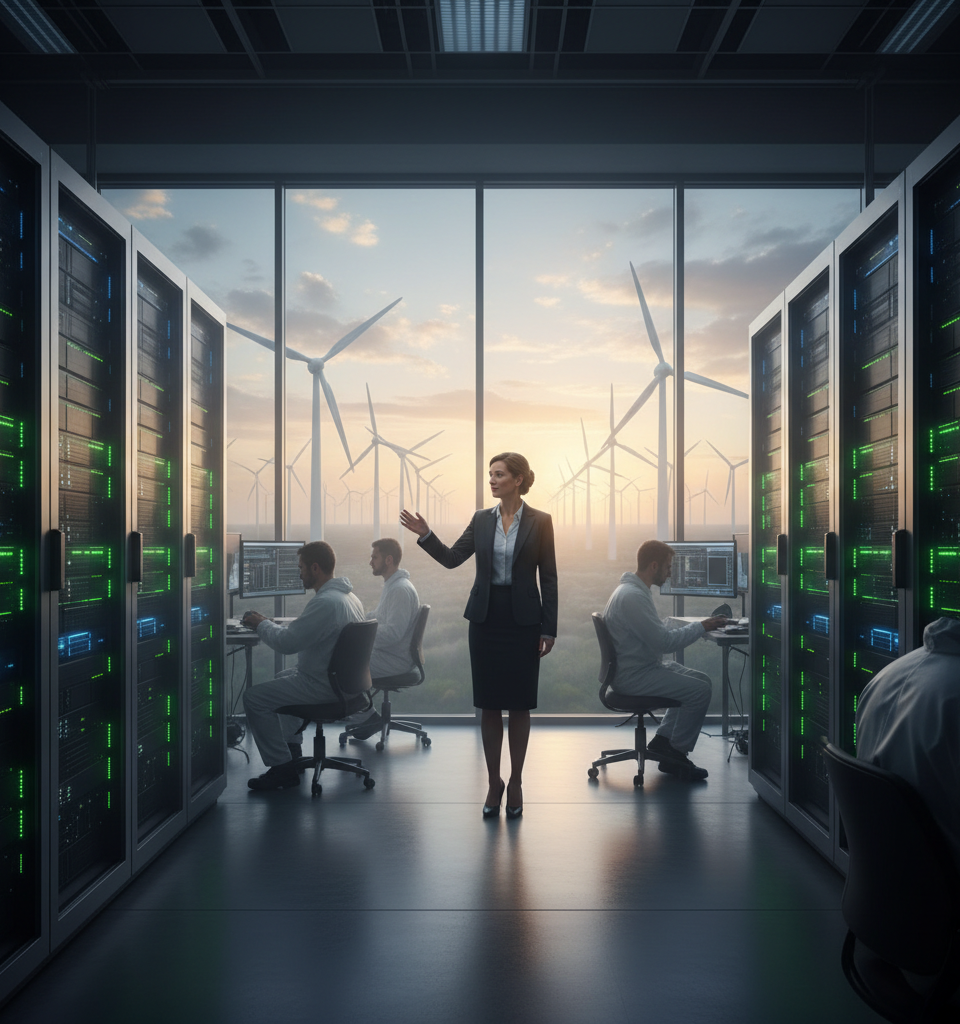
Microsoft, a leading technology giant, is facing an escalating conflict between its rapid expansion of Artificial Intelligence capabilities and its stated commitment to achieving 100% clean energy by 2030. The unprecedented demand for computational infrastructure, primarily driven by large language models and other AI applications, necessitates the construction of numerous new data centers globally. This surge in energy consumption presents a formidable hurdle for the company's environmental sustainability objectives, raising questions about the feasibility of carbon-neutral AI development.
The AI Energy Imperative
The AI revolution is inherently energy-intensive. Training and operating sophisticated AI models, such as those underpinning Microsoft's Copilot and OpenAI's ChatGPT, require vast amounts of electricity to power servers, cooling systems, and networking equipment. Industry estimates suggest that the energy footprint of AI could dramatically increase in the coming years, potentially rivaling entire small countries' consumption. Microsoft has publicly committed to matching 100% of its electricity consumption with zero-carbon energy purchases on a 24/7 basis, across all its operations, by the end of the decade. However, the sheer scale and speed of data center deployment for AI are making this target increasingly difficult to achieve, particularly in regions where renewable energy infrastructure is not yet sufficiently developed or readily available.
Data Center Growth Outpaces Green Grid Development
Microsoft’s strategy involves building massive data centers, often measured in hundreds of megawatts, to support its cloud services and AI initiatives. While the company actively seeks to co-locate these facilities near renewable energy sources, the pace of new data center construction often outstrips the rate at which new solar and wind farms can be brought online and connected to the grid. This mismatch forces data centers to draw power from existing grids, which still rely heavily on fossil fuels in many parts of the world. Reports indicate that Microsoft recently had to delay its clean energy commitments in some regions due to lack of renewable supply, opting instead for standard grid power to meet immediate operational needs.
Industry-Wide Challenge and Environmental Implications
This dilemma is not unique to Microsoft; it represents a broader industry challenge facing all major tech companies investing heavily in AI. Google, Amazon, and Meta are also expanding their data center footprints at an accelerating rate, each with their own ambitious, but increasingly pressured, sustainability goals. The implications extend beyond individual corporate pledges; a failure to decarbonize AI infrastructure could significantly undermine global efforts to combat climate change. The increased demand for energy could exacerbate grid instability, drive up electricity prices, and slow the transition away from fossil fuels, particularly if data centers are forced to rely on natural gas-fired peaker plants during periods of high demand.
Expert Perspectives on Sustainable AI
Energy industry analysts and environmental experts are increasingly vocal about the sustainability risks of unbridled AI growth. Dr. Sarah Miller, a prominent energy policy researcher, recently commented, "The tech sector's clean energy targets are laudable, but the current trajectory of AI development presents an unprecedented challenge. We need innovative solutions, not just more renewable power, but also advancements in energy efficiency for AI hardware and software, and perhaps even a re-evaluation of how much computing power is truly essential." Others suggest that stricter regulatory oversight and incentives for green grid investment will be crucial to aligning AI expansion with climate goals.
The Path Forward: Innovation and Strategic Partnerships
Looking ahead, Microsoft and its peers are exploring various strategies to mitigate this impact. These include investments in advanced nuclear technologies like small modular reactors (SMRs), longer-duration energy storage solutions, and innovative grid management systems. Strategic partnerships with utility companies and governments will be essential to accelerate the deployment of new renewable capacity and strengthen grid infrastructure. Furthermore, considerable research is underway to develop more energy-efficient AI algorithms and hardware, moving toward a future where AI's benefits don't come at an unsustainable environmental cost. The coming years will be critical in determining whether the tech industry can successfully reconcile its technological ambitions with its environmental responsibilities, setting a precedent for sustainable innovation across sectors.