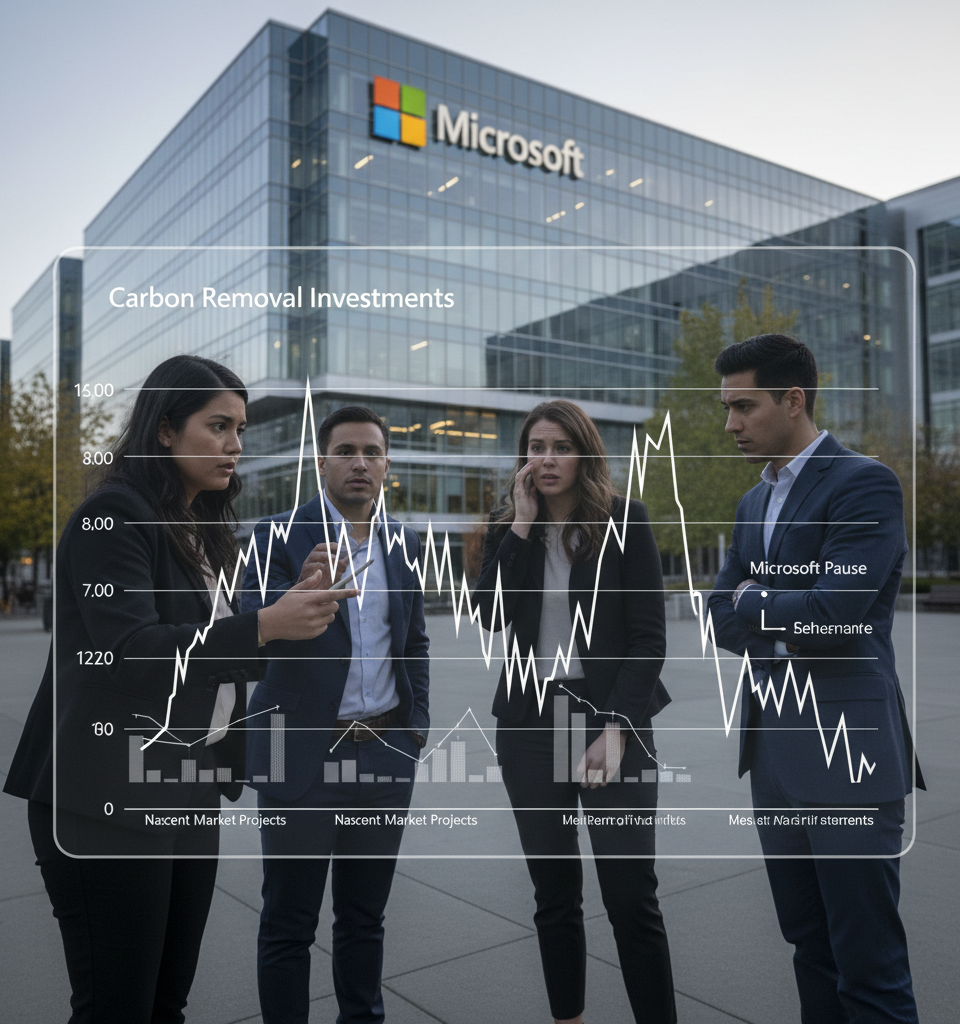
The burgeoning carbon removal industry is reeling from reports that tech giant Microsoft has paused its commitments to purchase carbon dioxide removal (CDR) credits. This unexpected development, first reported last month, marks a significant shift for a company that has been a leading pioneer and crucial anchor buyer in the nascent market. Microsoft’s previous deals included ambitious targets, such as removing a record 45 million tons of CO2 in fiscal year 2025 alone, demonstrating its substantial influence on market velocity and innovation.
Context and Significance
Microsoft’s engagement has been instrumental in providing critical early funding and validation for a sector struggling to scale. The company had structured various agreements, including new contracts with firms like Re.green, focused on Amazon rainforest restoration, and Vaulted, which employs organic waste burial for carbon sequestration. This aggressive procurement strategy not only offered financial lifelines to startups but also helped establish pricing benchmarks and technological standards. The reported pause signals a potential recalibration of strategy by one of the market's most influential players, prompting widespread concern and introspection within the industry.
Key Details and Market Reaction While
Microsoft has not yet issued a formal statement clarifying the reported pause or its duration, the news has generated considerable discussion among CDR developers, investors, and policymakers. The company’s prior commitments, totaling tens of millions of tons of CO2 removal, represent a substantial portion of the voluntary carbon market’s demand for high-quality, verifiable removal credits. This volume dwarfs many other corporate pledges and underscores the outsized impact Microsoft's participation has had. The immediate concern for many startups is the potential chilling effect on investment and long-term contract security, which are vital for financing costly and capital-intensive carbon removal projects.
Industry and Market Impact
This decision could lead to a slowdown in investment across the carbon removal ecosystem, particularly for early-stage companies heavily reliant on corporate pre-purchases. The market for high-integrity CDR is still in its infancy, characterized by high technological and operational risks. Anchor buyers like Microsoft provide the crucial revenue certainty needed for projects to secure additional financing, scale operations, and drive down costs through experience curves. A reduction in demand from such a prominent buyer could therefore impede the industry's progress toward commercial viability and broad deployment. This move could also intensify scrutiny on verification methodologies and the long-term efficacy of various removal technologies.
Expert Perspectives Industry experts are carefully analyzing the implications.
Many believe this isn't necessarily a retraction from Microsoft's climate goals but possibly a strategic pause to refine its procurement process, reassess vendor performance, or perhaps even address internal financial pressures unrelated to its overall sustainability commitments. Some analysts suggest that Microsoft might be seeking greater standardization or more robust measurement, reporting, and verification (MRV) protocols before re-engaging at scale. "This pause, while concerning in the short term, could ultimately lead to a more mature and resilient carbon removal market if it prompts clearer standards and more efficient deployment strategies," commented one leading climate tech investor, speaking on background.
What's Next The immediate future hinges on
Microsoft's next move. Will the pause be temporary, followed by a revised, perhaps more targeted, procurement strategy? Or does it indicate a more fundamental shift in its approach to achieving its ambitious net-zero targets? Developers in the carbon removal space will be closely watching for any official communication from Microsoft regarding its long-term strategy for CDR. This situation also underscores the urgent need for a diversified demand base for carbon removal, beyond a handful of leading corporations, to ensure the industry's stability and growth. The coming months will likely see increased dialogue within the sector about de-risking investments and diversifying procurement strategies to withstand potential fluctuations from individual corporate buyers.