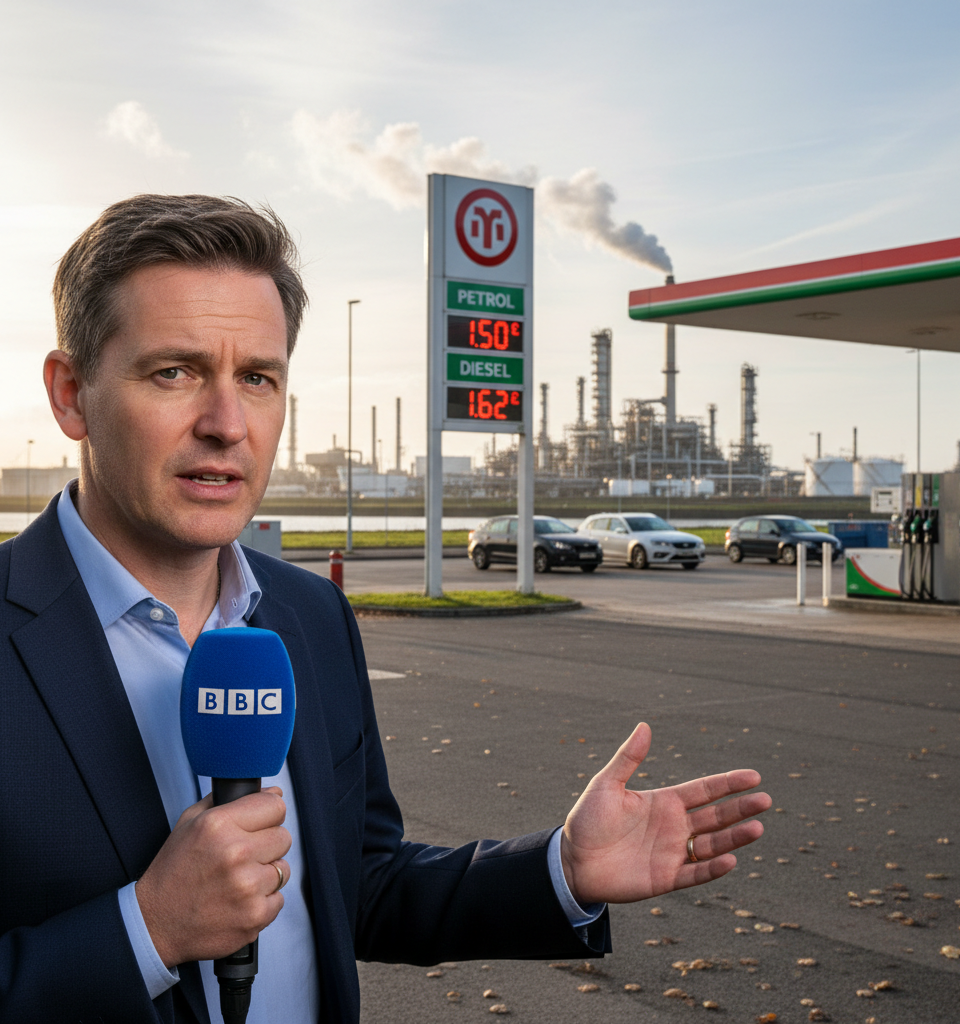
LONDON – The recent ceasefire agreement between the United States and Iran has sparked widespread optimism that consumers could soon see a significant drop in fuel prices. Announced earlier today, this diplomatic breakthrough in the Middle East has immediately shifted focus to its potential impact on global oil supplies and, consequently, the cost of petrol and diesel at the pumps across nations. BBC reporter Nick Marsh is among those closely monitoring whether this de-escalation of tensions will translate into tangible savings for motorists.
Unpacking the Diplomatic Shift and Its Market Implications
For months, geopolitical instability in the oil-rich Middle East has been a primary driver of elevated crude oil prices. Tensions between the U.S. and Iran, particularly concerning maritime security in the Strait of Hormuz – a critical chokepoint for global oil shipments – have consistently added a risk premium to crude benchmarks like Brent and WTI. This prolonged uncertainty curtailed investment in new production and led to speculative buying, pushing prices upwards. The ceasefire now represents a significant de-escalation, signaling a potentially more stable supply environment, which is typically a precursor to price reductions.
Key Factors Influencing Fuel Cost Dynamics
The immediate impact of the ceasefire hinges on several crucial factors. Firstly, the agreement could pave the way for a potential increase in Iranian oil exports. For years, U.S. sanctions have severely restricted Iran's ability to sell its crude on the international market, removing a substantial volume of supply from the global equation. Any relaxation or eventual lifting of these sanctions, even partially, could introduce millions of barrels per day back into circulation, significantly boosting global supply. Industry analysts estimate Iran possesses recoverable reserves in excess of 150 billion barrels and could ramp up production by 1-2 million barrels per day within months of sanctions relief.
Broader Market Responses and Industry Adjustments
The ripple effects of this geopolitical shift are already being felt across the energy sector. Oil futures markets reacted swiftly, with Brent crude immediately shedding approximately 3% upon confirmation of the ceasefire, settling around $78 per barrel, down from a recent high of $81.50. While significant, further sustained drops will depend on concrete actions regarding Iranian exports. Energy companies are now evaluating their supply chain strategies and potential investment in new extraction projects, considering the reduced geopolitical risk. The shipping industry, too, anticipates a reduction in elevated insurance premiums for vessels transiting the Persian Gulf, potentially lowering freight costs for oil transport.
Expert Prognosis: Cautious Optimism for Lower Prices
Energy economists and market analysts share a sentiment of cautious optimism. Dr. Eleanor Vance, a lead energy analyst at Global Insights Group, commented, "While the ceasefire is a monumental step, consumers shouldn't expect an immediate, dramatic collapse in prices. The market needs to see tangible increases in supply. However, the psychological impact of reduced geopolitical risk is significant, removing a considerable risk premium that has buoyed prices." Peter Thorne, Chief Market Strategist at Zenith Capital, added, "We are likely to see a gradual easing over the coming weeks and months, assuming the ceasefire holds and sanctions discussions progress positively. A 10-15 cent per litre drop at the pump within the next quarter isn't unreasonable if Iran's oil re-enters the market effectively."
The Road Ahead: Sanctions, Supply, and Consumer Relief
Looking ahead, the longevity and depth of fuel price reductions will largely depend on the specifics of the U.S.-Iran agreement and the timeline for any sanctions relief. Discussions around the Joint Comprehensive Plan of Action (JCPOA) could be reignited, potentially paving the way for a phased re-entry of Iranian crude onto the global market. Furthermore, OPEC+ nations will be closely monitoring these developments, potentially adjusting their own production quotas to maintain market stability. For consumers, the coming months will reveal whether this diplomatic breakthrough translates into sustained relief at the fuel pumps, marking a long-awaited respite from persistently high energy costs.
--