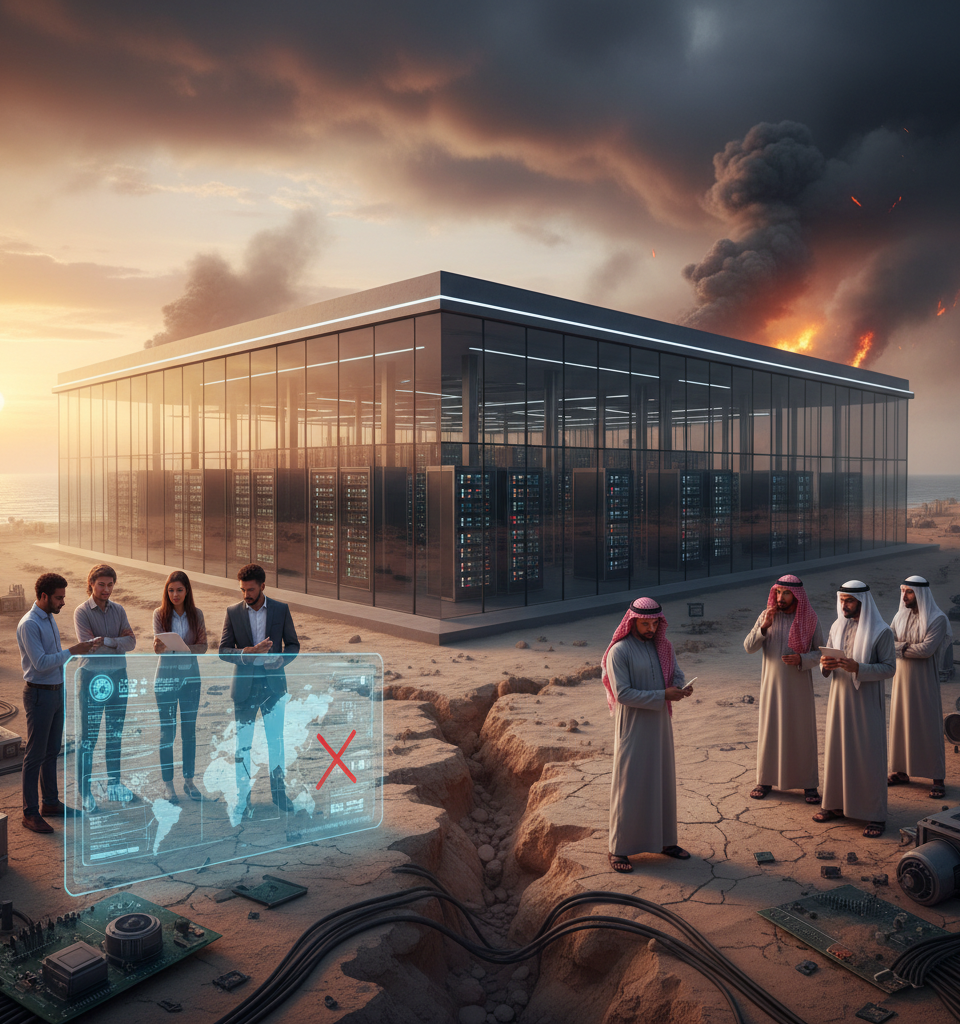
The persistent geopolitical instability stemming from the Middle East conflict is posing a significant challenge to the ambitious plans of Gulf states, which have heavily invested in positioning themselves as leading hubs for artificial intelligence. Analysts are observing a tangible shift in the operational considerations for data center operators, directly influenced by an uptick in attacks targeting these crucial facilities and the sustained elevated cost of energy resources.
Shifting Dynamics in Regional Investment
For years, Gulf nations have poured substantial capital into digital infrastructure, viewing AI and cloud computing as foundational pillars for economic diversification beyond oil. Saudi Arabia, the UAE, and Qatar, among others, have announced multi-billion dollar initiatives to attract tech giants, build hyperscale data centers, and cultivate local talent. This strategic pivot aimed to leverage their geopolitical position and financial strength, alongside a perceived stability, to create a thriving digital economy. However, the current regional tensions are now casting a shadow over these aspirations, forcing a re-evaluation of the investment landscape.
Impact on Data Center Infrastructure
The most immediate and quantifiable impact is on the data center sector, which forms the backbone of any AI ecosystem. Reports indicate an increase in kinetic and cyberattacks targeting data centers or critical infrastructure supporting them within the Middle East. While specific details on the scale and success of these attacks remain fluid, their mere occurrence introduces an unprecedented layer of risk that was not as prominent in initial investment models. Operators are now confronting the necessity for enhanced physical security, resilient power grids, and advanced cybersecurity measures, all of which add considerably to operational expenditures and could deter future foundational investments.
Energy Prices and Operational Costs
Compounding the security concerns are the persistently high energy prices. Data centers are notoriously energy-intensive, requiring vast amounts of electricity for processing and cooling. While Gulf states benefit from abundant access to fossil fuels, the global market price, driven partly by regional instability, directly impacts the profitability and sustainability of these operations. Operators are finding that the cost of powering these facilities is increasingly cutting into their margins, potentially making the region less competitive compared to areas with more stable or cheaper energy sources, or those with robust renewable energy infrastructures that offer price predictability.
Expert Perspectives on Future Viability
Industry analysts are keenly observing these developments, suggesting that the "calculus" for operators has fundamentally changed. They indicate that while the allure of the Gulf's market potential remains, the current risk profile demands a revised approach to investment and expansion. These experts anticipate that future projects may incorporate more robust redundancy measures, geographically diversified infrastructure within the region, or even a measured slowdown in the pace of new data center construction until stability improves. The long-term viability of the Gulf as the dominant AI hub will depend on its ability to mitigate these emerging challenges effectively.
Broader Economic and Geopolitical Repercussions
The challenges extend beyond just data centers. A slowdown or a recalibration in the AI sector could have broader implications for economic diversification goals. It threatens to delay the creation of high-tech jobs, the development of local AI talent pools, and the integration of advanced technologies across various sectors such as healthcare, finance, and logistics. Geopolitically, if the Gulf struggles to secure its digital frontiers, it could diminish its attractiveness as a strategic partner for global tech firms looking to establish a presence in the EMEA region.
The Road Ahead for Gulf AI Ambitions
Looking forward, the Gulf states face a critical juncture. Sustaining their AI ambitions will necessitate a multi-pronged strategy. This includes not only an intensified focus on regional de-escalation and long-term stability but also significant investment in next-generation cybersecurity, distributed data center architectures, and accelerated development of renewable energy sources to decouple operational costs from volatile global oil prices. The coming months will be crucial in determining how these nations adapt to the heightened risks and whether they can safeguard their vision of becoming a leading global AI powerhouse amidst a turbulent regional landscape.