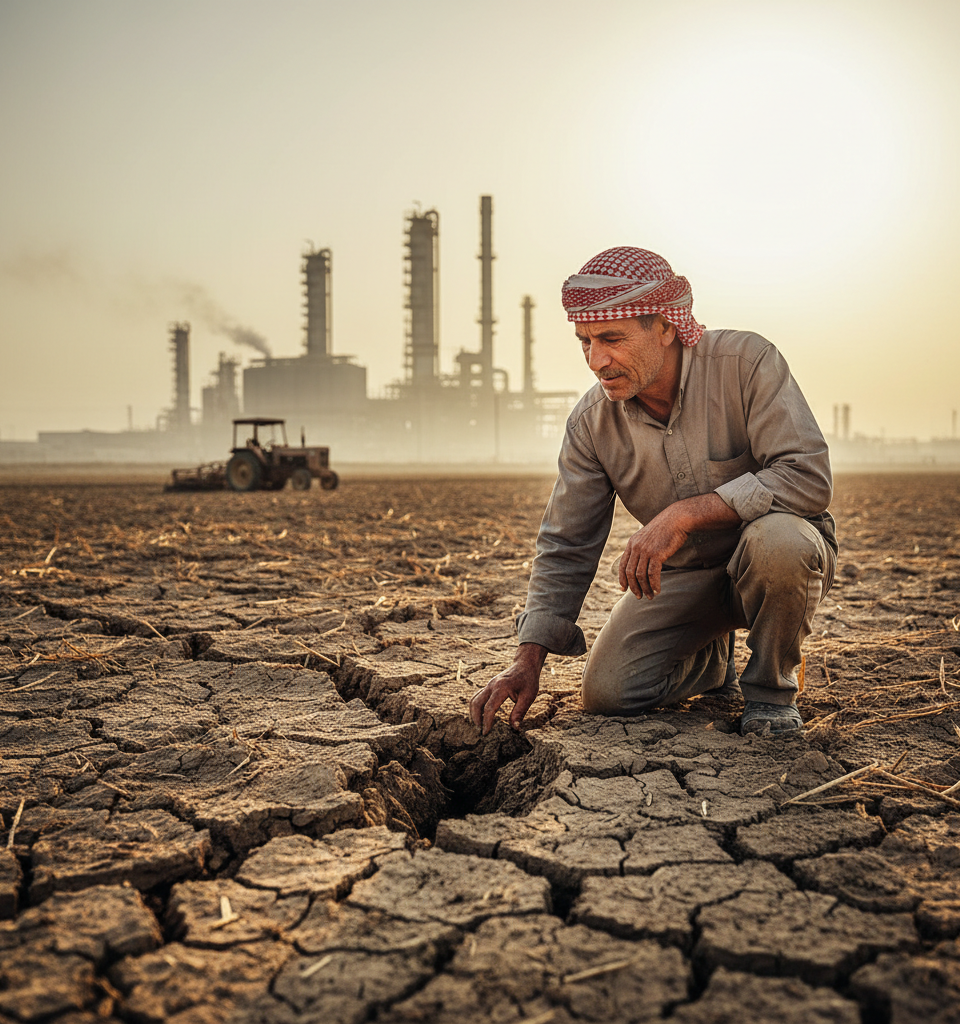
London, UK – Even if a ceasefire were declared today, the economic fallout from the protracted Iran conflict is poised to inflict lasting financial burdens on farmers worldwide, inevitably leading to a surge in global food prices. This stark warning, echoing through agricultural commodity markets, underscores the intricate web of dependencies linking geopolitical stability to everyday household expenses. The conflict, characterized by disrupted supply chains, heightened energy costs, and increased insurance premiums, has already begun a ripple effect that industry observers predict will continue for months, if not years.
The Unfolding Crisis: A Lingering Geopolitical Shadow
The current situation is not merely a transient blip; it represents a significant structural shift in global agricultural economics precipitated by heightened tensions in the Middle East. Historically, periods of geopolitical instability in oil-rich regions have invariably triggered spikes in energy prices, directly impacting the agricultural sector’s primary inputs. From the 1973 oil embargo to the Gulf Wars, the intertwining of energy security and food security has been repeatedly demonstrated. The recent escalations, even if resolved militarily, have baked in a new layer of risk premium across critical supply routes, particularly affecting maritime trade through vital chokepoints like the Strait of Hormuz.
Key Factors Driving Persistent Cost Pressures
The primary drivers of these impending cost increases are multifaceted. Firstly, energy prices remain stubbornly high, with global crude oil benchmarks like Brent trading around $85-$90 per barrel, up from an average of $70-$75 prior to the conflict's intensification. This directly affects fuel for farm machinery, transportation of goods, and the production of nitrogen-based fertilizers, a critical input whose manufacturing is energy-intensive. Fertilizer prices, for instance, have seen an average increase of 15-20% in key agricultural regions over the past six months. Secondly, shipping and insurance costs have soared. Risk surcharges for vessels transiting conflict-affected areas have jumped by as much as 50%, according to Lloyd's List Intelligence. This translates to higher freight costs for agricultural commodities, from grains to livestock feed, as they move along international trade routes. Finally, labor costs are also experiencing upward pressure due to inflation and supply chain disruptions, further squeezing farmers’ margins.
Broad Economic Ripple Effects and Consumer Impact
The knock-on effect of these elevated input costs extends far beyond the farm gate. Food processors, distributors, and retailers will all face higher operational expenses, which will ultimately be passed on to consumers. Estimates from organizations like the UN Food and Agriculture Organization (FAO) suggest that global food prices, already inflated by post-pandemic supply chain issues and climate change, could see an additional 3-5% increase over the next 12-18 months directly attributable to the lingering effects of the conflict. This will disproportionately impact low-income households, exacerbate food insecurity in vulnerable regions, and potentially fuel broader inflationary pressures across economies.
Expert Viewpoint: A Structural Shift, Not a Fleeting Event
Dr. Elara Vance, an agricultural economist at the Global Institute for Food Security, commented: "This isn't merely a temporary price fluctuation that will correct itself once the headlines fade. What we're witnessing is a re-evaluation of risk premiums within the global supply chain, particularly for energy and maritime transport. Farmers, operating on thin margins, have absorbed much of the initial shock, but their capacity to do so indefinitely is limited. We should anticipate a more structurally higher cost environment for agriculture going forward, irrespective of immediate geopolitical resolutions." She emphasized that robust policy interventions, potentially including subsidies or strategic reserves, might be necessary to buffer consumers from the full impact.
The Path Ahead: Navigating a Volatile Future
Looking ahead, the agricultural sector faces a period of heightened volatility and uncertainty. Governments and international bodies are urged to consider strategies beyond immediate conflict resolution, focusing on enhancing supply chain resilience, diversifying energy sources for agriculture, and supporting farmers through these challenging times. For consumers, the message is clear: the era of cheaply produced and transported food may be drawing to a close, a direct consequence of a world increasingly shaped by geopolitical forces. The long-term implications necessitate a fundamental re-evaluation of food production and consumption models to adapt to this new, more costly reality.