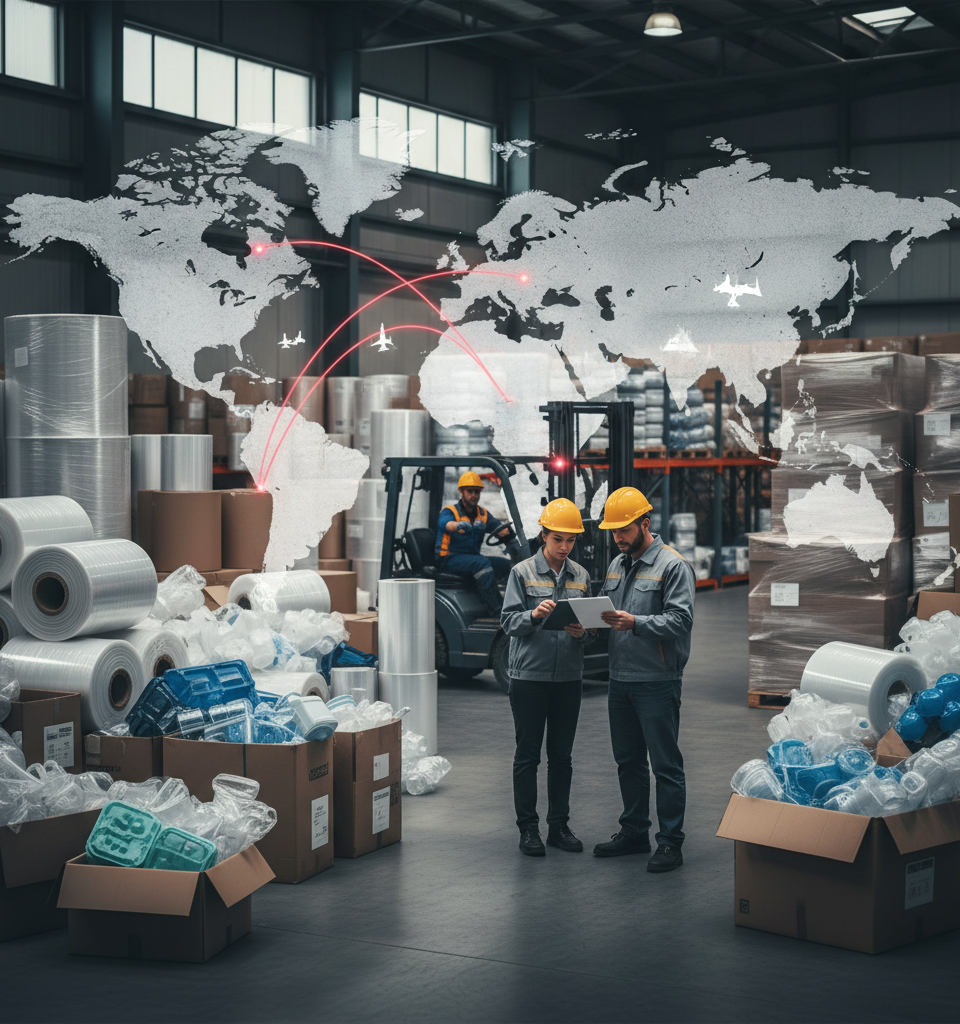
The global plastic packaging industry is grappling with significant upheaval, as suppliers report widespread supply chain disruptions and substantial price increases directly attributable to geopolitical tensions stemming from the Middle East. Industry analysts and manufacturers alike are expressing profound concern, indicating that the ripple effects of the conflict are pushing an already strained sector to its limits, with normalization not anticipated for at least another three to four years, specifically targeting 2027 as the earliest potential recovery period.
Escalating Geopolitical Impact on Global Supply Chains
This current crisis exacerbates existing vulnerabilities within the global supply chain, which had barely begun to recover from the shocks of the recent pandemic. The Middle East, a critical nexus for energy and trade routes, plays an outsized role in the production and transport of petrochemicals, primary raw materials for most plastic packaging. Disruptions in this region, particularly those affecting shipping lanes through the Red Sea and broader geopolitical instability, inevitably lead to increased transit times, higher insurance premiums, and ultimately, elevated costs of goods.
Raw Material Shortages and Soaring Production Costs
Reports from major packaging manufacturers highlight a critical shortage of key petrochemical derivatives, such as polyethylene (PE) and polypropylene (PP), which form the backbone of rigid and flexible plastic packaging. "We're seeing lead times for certain specialty polymers extend from weeks to several months," stated a procurement director at a leading European packaging firm recently. "Coupled with a 20-30% increase in freight costs over the last six months, the pressure on our profit margins is immense." These rising input costs are inevitably passed down to consumers, contributing to broader inflationary pressures across various industries dependent on plastic packaging, from food and beverage to pharmaceuticals.
Widespread Industry Repercussions
The impact is not confined to a single segment but reverberates across the entire packaging ecosystem. Small and medium-sized enterprises (SMEs) are particularly vulnerable, often lacking the purchasing power or logistical flexibility of larger corporations to mitigate these disruptions. Retailers are facing challenges in ensuring consistent product availability and are absorbing higher packaging costs, which may eventually translate into increased consumer prices for a vast array of goods. The automotive and electronics sectors, heavily reliant on specialized plastic components and protective packaging, are also experiencing significant delays and cost escalations, threatening production schedules and new product launches.
Expert Outlook: A Prolonged Period of Instability
Analysts from firms like S&P Global and McKinsey & Company concur that the current volatility is not a transient phenomenon. "The geopolitical premium is firmly embedded in commodity prices, and it’s unlikely to dissipate quickly," noted Dr. Elena Petrova, a senior analyst specializing in petrochemicals. "Companies need to re-evaluate their supply chain resilience, possibly looking into regionalizing production or diversifying their sourcing strategies significantly." The consensus is that as long as tensions persist in crucial shipping corridors and energy-producing regions, the structural challenges to plastic packaging supply will remain, making the 2027 normalization projection optimistic under current conditions.
Strategic Responses and Future Implications
In response, companies are exploring a variety of strategies, including securing long-term contracts with suppliers, heavily investing in inventory, and researching alternative materials. There's also a renewed push towards circular economy initiatives, such as increased use of recycled plastics (r-PET, r-PP), though supply for these materials also faces its own set of challenges. Looking ahead, the situation underscores the urgent need for global political stability and more robust, diversified supply networks. The long-term implications could include a permanent shift in manufacturing footprints, increased investment in regional production hubs, and potentially a re-evaluation of plastic's dominance as a packaging material if costs remain prohibitively high and supply unpredictable.